





A robot Ben Katz helped build at MIT ended up nearly cloned “to the millimeter” by a Chinese startup now worth $9 billion. The lab that made it possible was funded by the U.S. Army, which published the research for anyone to use.
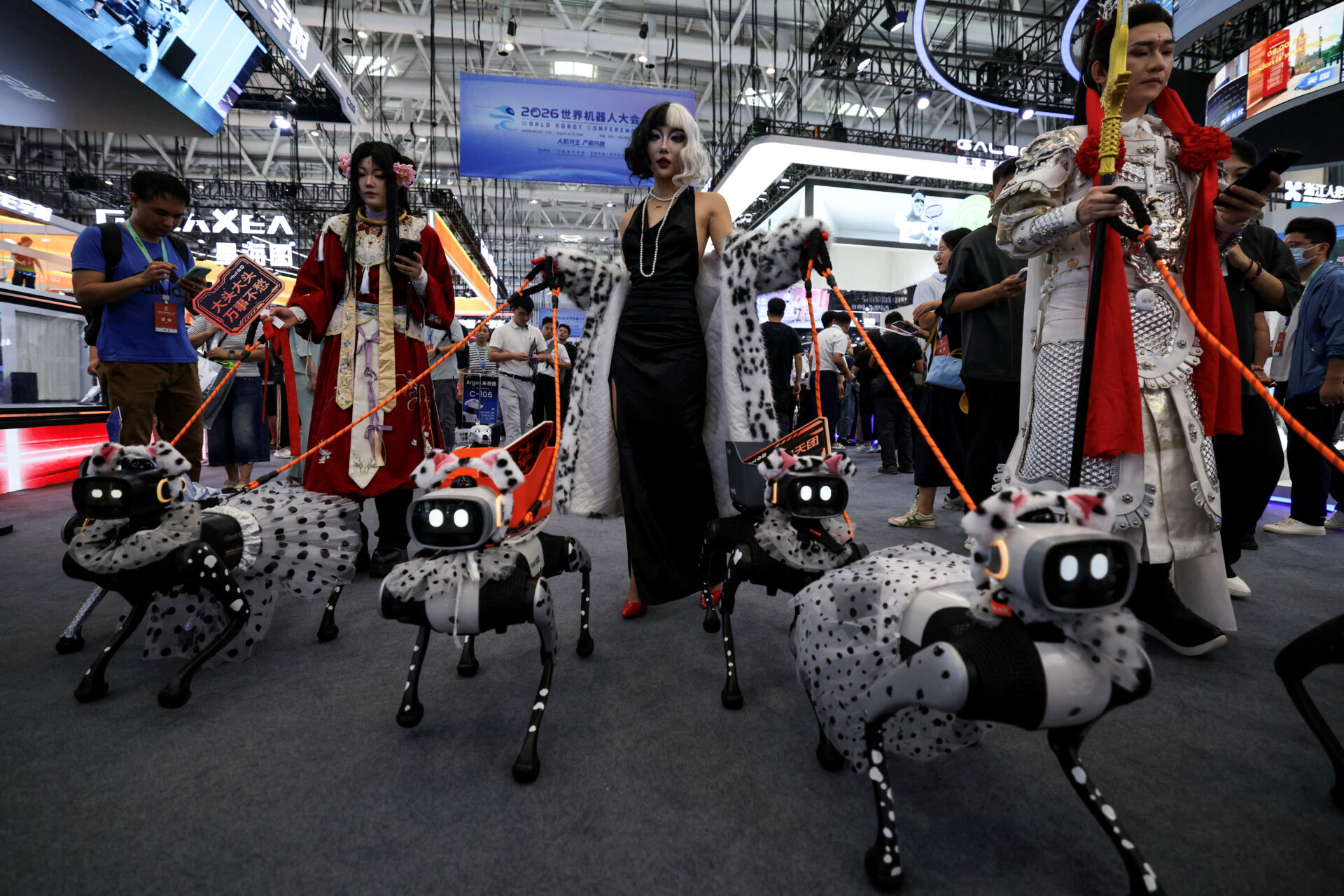
Unitree Robotics sold more than 5,500 humanoids and 18,000 quadrupeds last year and is valued at roughly $9 billion ahead of its Shanghai stock debut Wednesday. But the breakthroughs behind its best-selling robot dogs were funded by the U.S. military, according to a former defense official and three researchers interviewed by Reuters.
From 2010 to 2020, the Army funded the Robotics Collaborative Technology Alliance, which brought together researchers from the University of Pennsylvania, MIT, Boston Dynamics and NASA’s Jet Propulsion Laboratory. In 2016, UPenn engineers developed a design that moved the motors into the robots’ legs and eliminated heavy gearboxes. Three years later, MIT unveiled the Mini Cheetah, a four-legged robot capable of doing backflips.
Ben Katz, who worked at MIT’s Biomimetic Robotics Lab, says Unitree’s popular Go series is, “to the millimeter,” almost identical to the Mini Cheetah. Katz published a master’s thesis detailing the robot’s actuators and said that within six months, Chinese-made copies were available on AliExpress.
Unitree founder Wang Xingxing, who was 26 when he launched the company, cited MIT’s research and one of the Army-funded UPenn papers in his own 2016 thesis, crediting the lab’s “pioneering” contributions. There was nothing underhanded about it: The research was deliberately published openly, as is standard practice in academia, to help advance the field.
Unitree turned those advances into a mass-market product. Its $1,600 Go2, launched in 2023, helped the company dominate the global robot-dog market. No U.S. company has produced comparable robots at that scale, not even Tesla, which has spent years showing off Optimus prototypes. Ghost Robotics, founded by one of the UPenn researchers behind the original breakthroughs, charges upward of $165,000 per robot and has shipped only about 1,000.
The Pentagon added Unitree to its list of Chinese military companies in June. Chinese state television has shown its robots operating alongside People’s Liberation Army troops, including a modified model firing a mounted assault rifle. Unitree maintains that its products are intended for civilian use.
“This isn’t just a competition between U.S. and Chinese robotics companies,” Ghost Robotics founder Gavin Kenneally said. “It’s between private U.S. companies and China’s coordinated national strategy.”
Stay in the loop with Thought Catalog — follow us on Facebook or visit our website.