







Scientists may have found a way to regenerate the neurons that are lost due to conditions like Alzheimer’s disease, a new laboratory study hints.
The research, published Aug. 26 in the journal

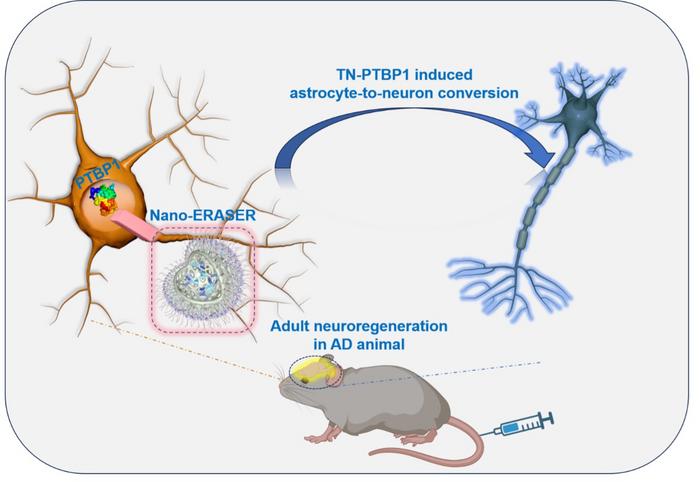
Scientists may have found a way to regenerate the neurons that are lost due to conditions like Alzheimer’s disease, a new laboratory study hints.
The research, published Aug. 26 in the journal
The team first tested the gel in human astrocytes grown in lab dishes. Over the course of days, astrocytes exposed to the gel lost their characteristic star shape and started to form axons — the wires from which neurons send messages. Proteins typically found in neurons also became more abundant in the astrocytes.
The cells later showed electrical activity that further confirmed that they were functioning similarly to neurons and could fire synchronously. The gel also showed similar results in miniature models of the brain, called organoids, which had been grown from human stem cells.
The researchers then tested the gel in mouse models of Alzheimer’s disease. These lab mice had lost neurons and had developed some characteristic features of Alzheimer’s disease, such as inflammation, loss of cognitive function, and sticky clumps of a protein in the brain.
The team gave these mice two intravenous doses of the gel, eight days apart. Over the next four weeks, behavioral tests suggested that the treated mice’s memories improved and they were able to build better nests than untreated mice; that’s an indication of improved behavioral function. Later, the researchers examined the brains of the treated mice, finding that the density of their neurons had increased while their levels of inflammatory molecules decreased.
However, while the lab-dish experiments indicated that astrocytes converted into neurons, that finding has not been confirmed in live mice, Xu said.
“We observed that neuron density increased in treated mice compared to untreated ones,” he said, “but we cannot yet eliminate the possibility that some other neural stem cells might have also converted into neurons.”
Wrann agrees that additional experiments would have been required to see whether a particular astrocyte in the mouse brain changed into a neuron. While the results are “intriguing,” a lot more research is needed to see the long-term effects of such a treatment on different types of brain cells, she said.
Xu and his team now plan to probe further into astrocyte conversion in live mice. Before they can move to clinical trials with people, he said, the safety and effectiveness of the treatment would need to be tested in nonhuman primates.
Notably, astrocytes themselves serve important functions in the brain. So there’s a question about what having “chronically reduced PTBP1 could do to the brain,” Wrann noted. She agreed that careful studies would be needed for this to translate to humans.
“That’s something that needs to be tested step by step,” she said.
See how much you know about the most complex organ in the human body with our brain quiz!