Post Views: 29
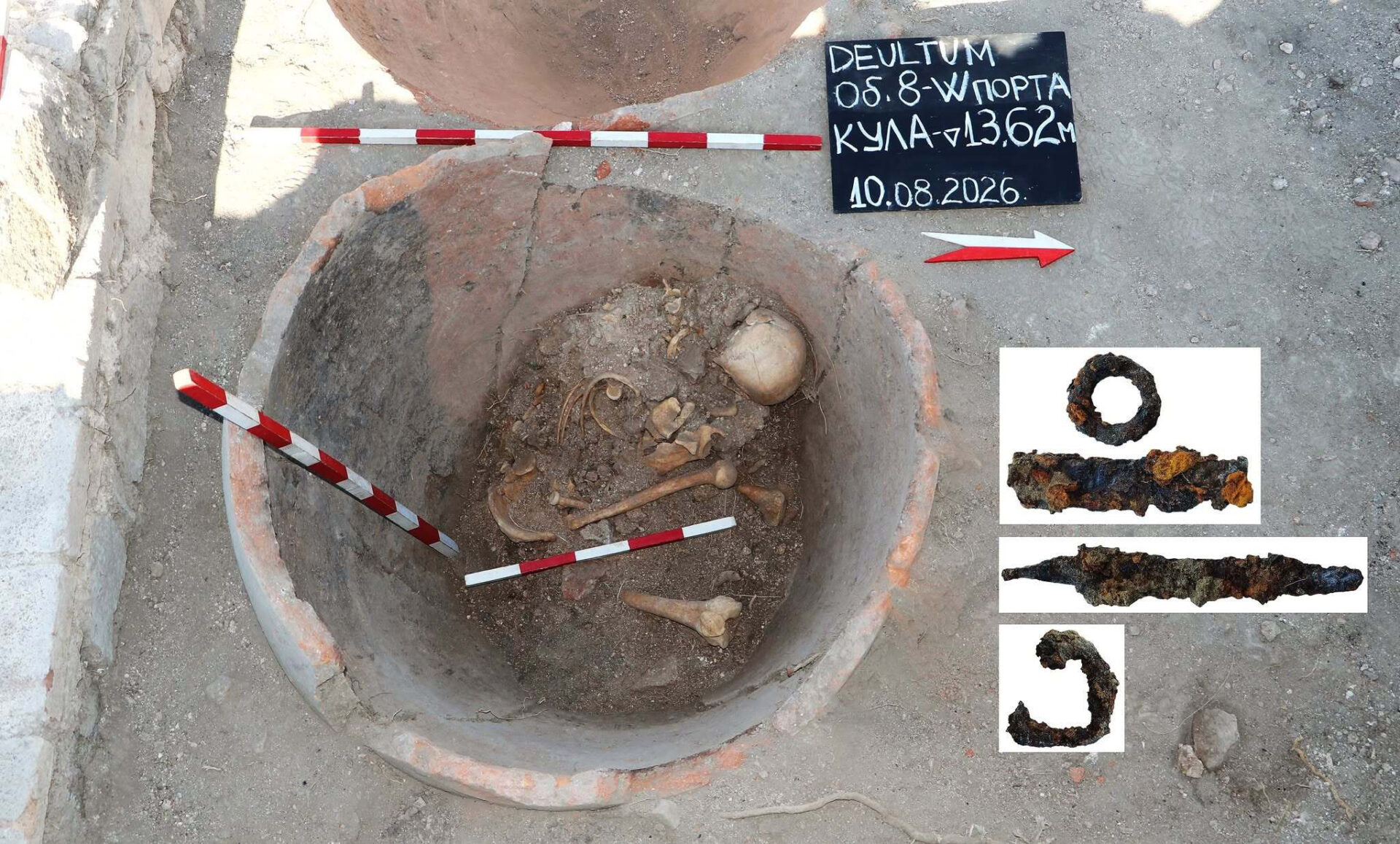
Archaeologists in Bulgaria have discovered a human skeleton inside a giant Roman jar. It’s likely that the individual sought shelter in the vessel during an enemy attack over 1,600 years ago but died as a fire swept through the area.
The team unearthed the gigantic jar in a Late Roman turret, or small tower, in the Roman colony of Deultum on Aug. 10. It’s unclear which battle led to the individual’s death, but Deultum faced many attacks from East Germanic tribes and
The individual climbed inside the giant vessel with two knives around 1,600 years ago. (Image credit: Archaeologia Bulgarica)
The team’s preliminary analysis dates the event to approximately A.D. 400, though they’ll have a more precise date after they process the rest of their field data, according to Vagalinski.
The young man was likely hiding from the raging fire in the empty dolium and held an iron knife between his legs to defend himself in case the attackers found him, Vagalinski explained. He had a second knife in his belt.
“In any case, he made no attempt to get out of the ceramic vessel,” Vagalinski said. The team determined this based on the individual’s position, similar to that of a sleeping man. “After the attack, the inhabitants of the city leveled the ruins of the tower and covered them with a new, higher floor.” They did not know that a fellow citizen was lying at the bottom of the dolium.
The skeletal remains have been moved to Sofia, the capital of Bulgaria, where they will be analyzed by a physical anthropologist, according to Vagalinski. Next summer, the team will head back to Deultum to try to unearth the entire western Late Roman gate, which dates to approximately A.D. 300. The researchers are “eager to reveal its whole plan and proper chronology,” Vagalinski said. They also aim to complete the investigation of the gate’s northern turret, where they found the dolium.
Earlier this year, the team discovered an older latrina, the Latin word for toilet, dating to between the second and third centuries, near the gate.
From Augustus to Nero, see how much you know about ancient Rome’s famous leaders with our Roman emperor quiz!