







Time management is a critical skill for busy professionals. To improve your productivity, start by identifying how you currently spend your time; this awareness can reveal patterns. Next, use the Eisenhower Matrix to prioritize tasks based on urgency and importance. By setting realistic schedules and deadlines, you can manage your workload more effectively. Want to learn how to incorporate breaks and self-care into your routine? Let’s explore practical strategies to enhance your time management skills.
Key Takeaways
- Set Specific Goals: Clearly define your objectives to maintain focus and direction in your tasks.
- Prioritize Tasks: Utilize the Eisenhower Matrix to distinguish between urgent and important tasks effectively.
- Track Your Time: Keep a time log to identify productivity patterns and eliminate time-wasting activities.
- Schedule Breaks: Incorporate regular breaks to boost creativity, reduce stress, and enhance overall productivity.
- Delegate Wisely: Assign tasks based on team members’ skills to improve efficiency and ensure quality outcomes.
The Impact of Poor Time Management on Professionals

When you struggle with poor time management, it can create a ripple effect that impacts your work and well-being. You might find yourself procrastinating, which leads to missed deadlines and lower-quality work. This can hurt your professional reputation and limit your career advancement opportunities.
To combat this, consider implementing time management strategies for high school students, like setting specific goals and prioritizing tasks.
Use a planner to list daily responsibilities, breaking them into smaller, manageable steps. This helps you stay organized and less overwhelmed.
Remember, effective time management tips for high school students include scheduling breaks to recharge and prevent burnout. It’s also essential to evaluate how you spend your time regularly, so you can adjust your approach.
Follow this time management advice, and you’ll not only reduce stress but also improve your productivity and overall health.
Identify and Track How You Spend Your Time

To improve your time management, it’s essential to identify and track how you spend your time each day. Start by keeping a time log, tracking your daily activities in 15-minute intervals. This practice reveals how time is spent and highlights areas for improvement. Regularly evaluate your logs to identify peak productivity times and tasks that consume excessive time. Consider using time-tracking apps for deeper insights into time-wasting behaviors.
Set specific time limits for each task, which encourages accountability and prevents tasks from dragging on. Analyzing how much time you spend on various activities guarantees that important responsibilities get the attention they deserve.
Here’s a simple table to help you track your time:
| Time Interval | Activity | Notes |
|---|---|---|
| 8:00 – 8:15 | Email Check | Should limit to 10 mins |
| 8:15 – 8:30 | Team Meeting | Productive discussion |
| 8:30 – 8:45 | Project Work | Focused, high energy task |
How to Prioritize Tasks for Effective Time Management?
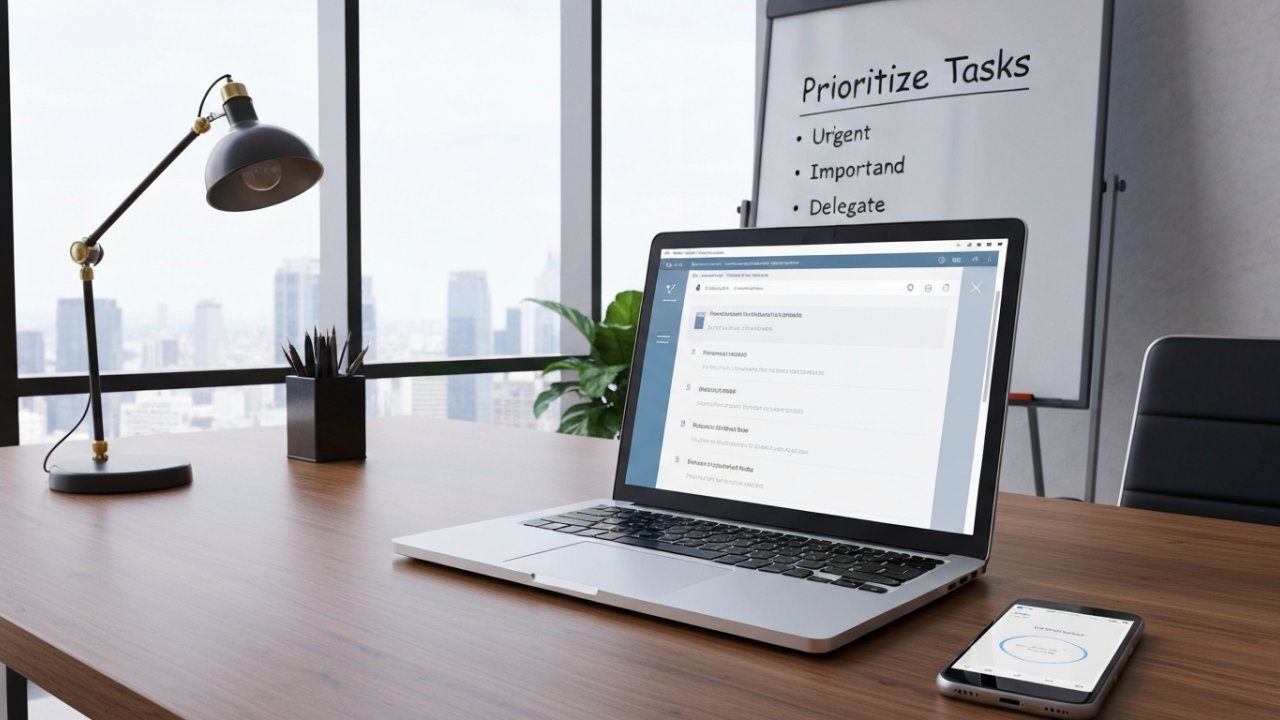
After identifying how you spend your time, the next step is figuring out how to prioritize your tasks effectively. Use the Eisenhower Matrix to categorize your tasks into four quadrants: urgent and important, important but not urgent, urgent but not important, and neither. This helps you see what truly needs your attention.
Break down larger goals into smaller, actionable steps to create clarity, making it easier to manage your workload.
Implement time blocking by allocating specific periods for high-priority tasks, allowing you to work without distractions. Regularly assess your priorities based on deadlines and importance; this flexibility can greatly boost your productivity.
Finally, don’t forget to prioritize self-care by scheduling breaks and downtime. Taking care of yourself helps maintain mental clarity, ensuring you’re making better decisions about what tasks deserve your focus.
Planning Tools for Better Organization

Effective organization is crucial for busy professionals, and the right planning tools can make a significant difference. Here are some tools you can use to enhance your organization:
| Tool | Purpose | Example |
|---|---|---|
| Digital Calendars | Schedule tasks and events | Google Calendar |
| Task Management Apps | Track projects and tasks | Notion, Trello |
| Email Management Tools | Manage communications | Outlook, Spark |
Start by using a digital calendar to record your tasks in one place. Consider apps like Notion or Trello to break down complex projects into smaller, manageable subtasks. You can also implement time-blocking techniques to focus on specific tasks and minimize distractions. Finally, use email management tools to categorize your messages, reducing clutter. Regularly review and adjust these tools to guarantee they meet your needs and align with your priorities.
How to Set Realistic Schedules and Deadlines?

Setting realistic schedules and deadlines can be a game-changer for busy professionals, especially when you want to manage your time effectively. Start by evaluating your current commitments to understand your time constraints. This helps you identify available slots for new tasks.
Next, prioritize your tasks using a tool like the Eisenhower Matrix, which categorizes tasks by urgency and importance. This guarantees you set deadlines based on what truly matters.
Break larger projects into smaller, manageable steps, allowing for better time estimation and reducing overwhelm. Additionally, set buffer times between tasks to accommodate unexpected delays. This enhances your schedule’s reliability.
Finally, regularly review and adjust your schedule weekly. This helps you evaluate your progress and make necessary changes, guaranteeing your deadlines remain realistic and achievable. By following these steps, you’ll create a more balanced and effective schedule.
Delegate for Better Time Management and Productivity

To manage your time better, start by identifying tasks that you can delegate.
Look for responsibilities that match your team members’ skills and interests, ensuring they’re capable of handling them.
Identify Delegable Tasks
Identifying tasks you can delegate is an essential step in boosting your productivity. Start by listing your daily responsibilities and pinpoint tasks that are repetitive or administrative. These are prime candidates for delegation, freeing you up for high-priority work that needs your expertise.
For instance, if you spend hours on data entry, consider delegating that to a team member who can handle it efficiently. Remember, effective delegation can boost team productivity by 25-30%.
Clearly communicate your expectations and desired outcomes, ensuring the tasks align with your team members’ strengths. This not only improves efficiency but also helps your colleagues grow in their roles, fostering a more capable team environment.
Start delegating today for better time management!
Choose Right Delegates
Choosing the right delegates can greatly enhance your time management and productivity. Start by identifying team members who’ve the necessary skills and interest in the tasks you’re delegating. This guarantees not only quality outcomes but also boosts team motivation.
Clearly communicate your expectations and deadlines; remember, about 70% of failed delegations result from lack of clarity. Regularly review the progress of these tasks to provide feedback and support, as this can increase your team’s productivity by up to 25%.
Additionally, consider utilizing project management tools to track delegated tasks, ensuring accountability and transparency in your team’s workflows. By making these choices, you’ll free up to 30% of your time for higher-priority responsibilities.
Incorporate Breaks and Self-Care Into Your Routine

To boost your productivity, start scheduling regular breaks throughout your workday.
Try the Pomodoro Technique: work for 25 minutes, then take a 5-minute break to recharge your mind.
Alongside that, prioritize your physical well-being by incorporating self-care activities, like exercise or proper nutrition, to enhance your focus and resilience against stress.
Schedule Regular Breaks
Taking regular breaks is essential for maintaining productivity and focus throughout your busy day. Schedule short breaks—try the Pomodoro Technique, where you work for 25 minutes and then take a 5-minute pause. This method not only keeps your mind fresh but can also boost your task completion rates.
During these breaks, step away from your workspace. Stretch, grab a snack, or simply breathe deeply. Research shows that these small pauses can enhance your creativity and problem-solving skills.
Aim to incorporate these breaks into your daily routine, as workers who do report higher job satisfaction. Remember, taking time for yourself isn’t a luxury, it’s a necessity for reducing stress and preventing burnout.
Prioritize Physical Well-Being
Maintaining physical well-being is key to sustaining productivity, especially when your schedule is packed. Start by incorporating regular breaks—aim for a short pause every 90 minutes to recharge your mind and body. Use this time to stretch, hydrate, or take a quick walk; studies show these breaks can boost productivity by up to 62%.
Engage in self-care activities like exercise or mindfulness to enhance mental clarity and resilience. Prioritize proper hydration and nutrition; this can greatly improve cognitive function and help with effective time management.
Finally, schedule downtime in your calendar. Not only does this prevent burnout, but it also aids in mental recovery, creating a healthier work-life balance that keeps you focused and energized.
Frequently Asked Questions

How Can I Improve My Focus During Work Hours?
To improve your focus during work hours, start by breaking tasks into smaller chunks.
Use a timer to work in intervals, like 25 minutes on, followed by a 5-minute break.
Limit distractions by silencing your phone and closing unnecessary tabs.
Keep a tidy workspace to minimize visual clutter, and prioritize your tasks using a to-do list.
Finally, make sure you’re taking regular breaks to recharge, which can boost your overall productivity.
What Are Common Time-Wasting Activities to Avoid?
To avoid common time-wasting activities, steer clear of excessive social media scrolling, unproductive meetings, and multitasking.
Set specific times for checking emails instead of doing it constantly.
Limit distractions by creating a focused workspace, and use tools like timers to keep yourself on track.
When you catch yourself wandering off-task, pause and refocus on your priorities.
Regularly reviewing your tasks can also help you identify and eliminate inefficiencies.
How Do I Handle Unexpected Interruptions?
To handle unexpected interruptions, first, stay calm and assess the situation. If it’s urgent, address it briefly, then return to your task.
Set specific times for checking emails or messages, so you’re not constantly distracted. Use “do not disturb” features on your devices during focused work periods.
Finally, if interruptions are frequent, evaluate their source and consider discussing boundaries with colleagues to minimize future disruptions.
Can Technology Help With Time Management?
Yes, technology can definitely help with time management.
Use calendar apps to schedule your tasks, set reminders for deadlines, and block out time for focused work.
Task management tools like Trello or Asana help you organize projects and track progress.
You can also use time tracking apps to see where your time goes, allowing you to identify distractions.
What Are Signs That I Need a Time Management Overhaul?
You need a time management overhaul if you frequently miss deadlines, feel overwhelmed, or struggle to prioritize tasks.
If you’re constantly multitasking but still feel unproductive, that’s another sign.
Start by tracking your daily activities for a week to identify time drains.
Then, set clear priorities and use tools like calendars or task lists to organize your workflow.
Finally, consider delegating tasks when possible to lighten your load and improve efficiency.
Conclusion

By implementing these time management tips, you can take control of your day and boost your productivity. Start by prioritizing tasks with the Eisenhower Matrix, then schedule your high-priority activities using time blocking. Keep track of how you spend your time and don’t hesitate to delegate tasks when possible. Remember to schedule breaks to recharge, and aim for a healthy work-life balance. With these strategies, you’ll find yourself managing time more effectively and reducing stress.
Image via Google Gemini
This article, “7 Essential Time Management Tips: Advice for Busy Professionals” was first published on Small Business Trends