






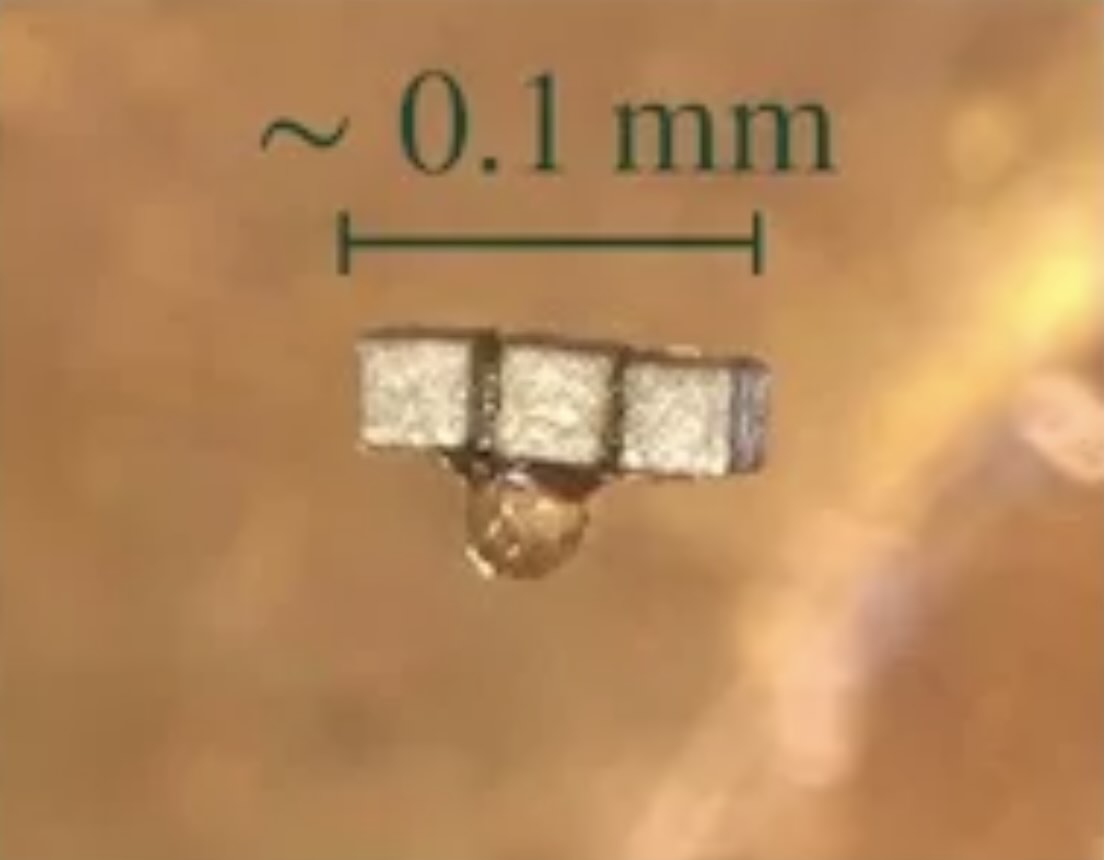
In a promising advancement in the search for dark matter, scientists have transformed a tiny magnet into a detector that can sense some of nature’s faintest forces—with a little help from levitation.
The research could help researchers detect some of the heaviest particles that are believed to have ever inhabited the universe, according to physicists.
Led by Rice University physicist Christopher Tunnell, the achievement was made using a tiny permanent magnet—one around the size of a grain of sand—which they levitated over a superconductor that was chilled to freezing cold temperatures just above absolute zero.
Since the magnet floats without encountering any surfaces, this dramatically reduces friction, allowing the Rice team to carefully monitor its movements, some of which are as small as around one-hundredth of a single atom. Such subtleties of its motion offer a novel possibility: that the magnet’s faint movements could serve as an effective signal if a massive dark matter particle passed through the detector.
Unusual Candidates for Dark Matter Particles
“Dark matter could be hiding at masses that our traditional experiments were never built to reach,” Tunnell said in a recent statement, noting that by leveraging the team’s novel detector, “we can begin searching a part of the dark matter landscape that has largely been out of experimental reach despite being the focus of extensive theoretical study by my Rice cosmology colleague Andrew Long.”
Among the most mysterious phenomena in the universe, dark matter is believed to comprise most of the matter that populates the cosmos and exerts gravitational effects that influence the formation and behavior of galaxies. Despite this, scientists have remained unsuccessful in detecting it or even determining what it is comprised of.
There are several experiments that hunt for hypothetical dark matter particles, which scientists believe have masses that are similar to those of atoms or subatomic particles. Still, there are some theoretical models which suggest much heavier particles could also qualify—some approaching sizes as large as a human cell.
A Novel Means of Detecting Dark Matter
Detecting something so large would require a very different kind of dark matter detector. To search for the kinds of interactions that smaller particles would be expected to generate, the Rice researchers instead looked for an impulse—one more likely to result from such an “ultraheavy” dark matter particle as it interacted with the detector.
“Instead of looking for a steady signal, we are waiting for very small knocks,” explained Rice postdoctoral researcher Juehang Qin.
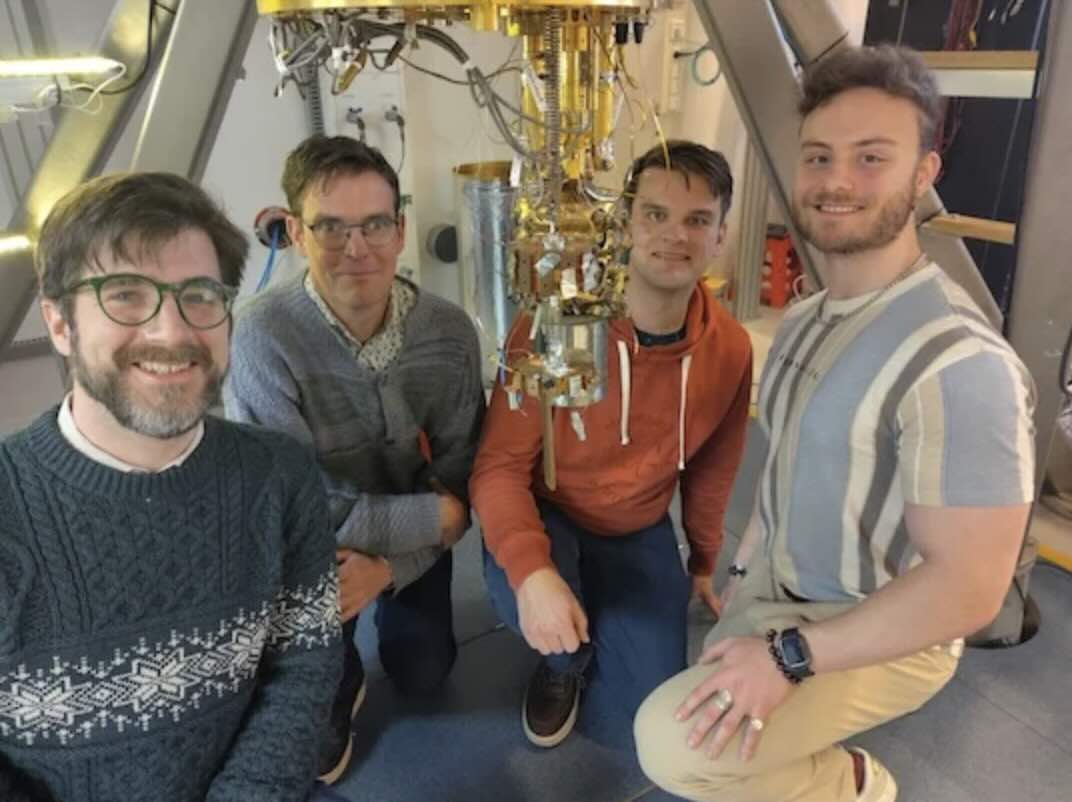
Over the course of one month, the team collected observations that focused mainly on quiet overnight periods when vibrations and other environmental disturbances were minimized. Unfortunately, no promising detections were made during this time.
Still, important results can also be derived from a lack of any definitive discoveries, especially when it comes to a field like particle physics. In this case, that’s because the absence of a signal allowed the researchers to place a few constraints on the combinations of dark matter masses and interaction strengths that should have been expected to produce detectable effects.
Altogether, the team’s experiment looked at nine orders of magnitude in its search for possible dark matter particle passes, which included searches for particles as much as 10 million times heavier than those investigated in past similar experiments.
Next Steps
Going forward, the next step would be to increase the experiment’s sensitivity by cooling the magnet even further, observing for longer periods, and eventually successfully levitating several magnets simultaneously. Multiple detectors could also help scientists determine whether real interactions involving dark matter are occurring, as opposed to false positives that might arise from vibrations or other kinds of interference.
Although the Rice team’s work is only a first step, their experiments with a tiny levitating magnet mark a promising pathway toward future potential detections, which may finally unlock new clues to the universe’s mysterious dark matter landscape.
The team’s research was detailed at the 2026 International Conference on Particle Physics and Cosmology, and additional details can be found here.
Micah Hanks is the Editor-in-Chief and Co-Founder of The Debrief. A longtime reporter on science, defense, and technology with a focus on space and astronomy, he can be reached at micah@thedebrief.org. Follow him on X @MicahHanks, and at micahhanks.com.