





Halifax-based Galaxia Space Systems has raised $4.5 million CAD to build out sovereign compute infrastructure in space.
The news: Galaxia announced the funding round, co-led by Montréal-based VC Amiral Ventures and provincial business development agency Invest Nova Scotia, on Thursday. The startup is developing satellites with compute power and AI built right in, allowing space missions to process and analyze data in orbit, and reducing the need to wait for the satellite to send the data down to Earth for processing.
Galaxia said the funding will support its next phase of growth, including the deployment of its satellite systems and hybrid space networking capacity, as it looks to scale up its offering to both commercial and government customers.
From the source: “We are building the foundation for a new class of space systems which deliver intelligence, not just data,” Galaxia CEO Arad Gharagozli said in a statement. “This funding enables us to scale that capability, strengthen sovereign capacity, and accelerate the transition to real-time, software-defined operations in orbit.”
The context: Galaxia says its platform is built on Canadian innovation and intellectual property, and looks to provide sovereign space capabilities for Canada and its allies. Demand for sovereign space infrastructure has increased since the federal government designated space-based intelligence, surveillance, and satellite communications as a key sovereign capability in the Defence Industrial Strategy earlier this year.
Galaxia isn’t the only Canadian option for orbital compute. Toronto-based Kepler Communications recently brought its very own commercial space data relay service online. Similar to Galaxia, Kepler’s relay allows data to be processed and analyzed directly in space, rather than waiting for a downlink to Earth.
Final thought: More companies are looking to store compute in the stars. Google, Starlink, and Amazon have been transparent about their desire to launch orbital data centres, which could take advantage of solar power and the cold space environment. Some experts argue, however, that orbital compute could pollute the atmosphere, or is simply impractical.
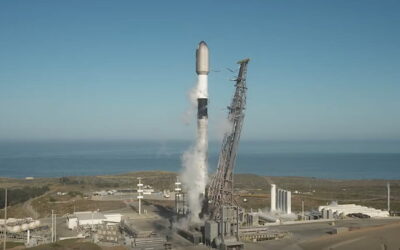
Feature image courtesy Galaxia.
The post Galaxia raises $4.5 million to bring satellite computers to Canada’s space race first appeared on BetaKit.