




Welcome to this edition of The Intelligence Brief… This week, SpaceX launched USSF-153, a classified U.S. Space Force mission carrying a mysterious payload into orbit aboard a Falcon 9 rocket, highlighting the growing intersection between commercial spaceflight and U.S. national security operations. In our analysis, we’ll be looking at 1) what we currently know about the highly secretive USSF-153 mission, 2) how details surrounding its flight path may offer clues that classified satellites potentially based on SpaceX’s Starshield platform were aboard, 3) how the mission comes amid growing concerns about an emerging era of military competition and potential conflict in Earth’s orbit, and 4) why the launch represents another milestone for SpaceX as reusable commercial rockets play an increasingly important role in national security space missions.
Quote of the Week
“SpaceX’s ongoing work with the Department of Defense and other partners demonstrates our ability to provide in-space and on-ground capability at scale.”
– SpaceX Statement
If you enjoy the news and perspectives offered by The Debrief, make sure that you aren’t missing our stories by making us one of your “preferred sources” on Google News. You can simply follow this link to add The Debrief to your list of favorites, and you can read more about Google’s preferred sources in our article here.
RECENT NEWS from The Debrief
- Scientists challenge the lizard brain myth, revealing two distinct neural systems that may explain how mammalian brains evolved.
- Analysis of the 4,000-year-old Devil’s Arrows stone pillar monument has finally revealed the site’s mysterious origins.
- A recent discovery is revealing fascinating new insights about Tyrannosaurus Rex.
- Get all the latest stories from The Debrief, with more breaking stories at the end of this week’s newsletter.
A Classified Mission is Carried to Orbit
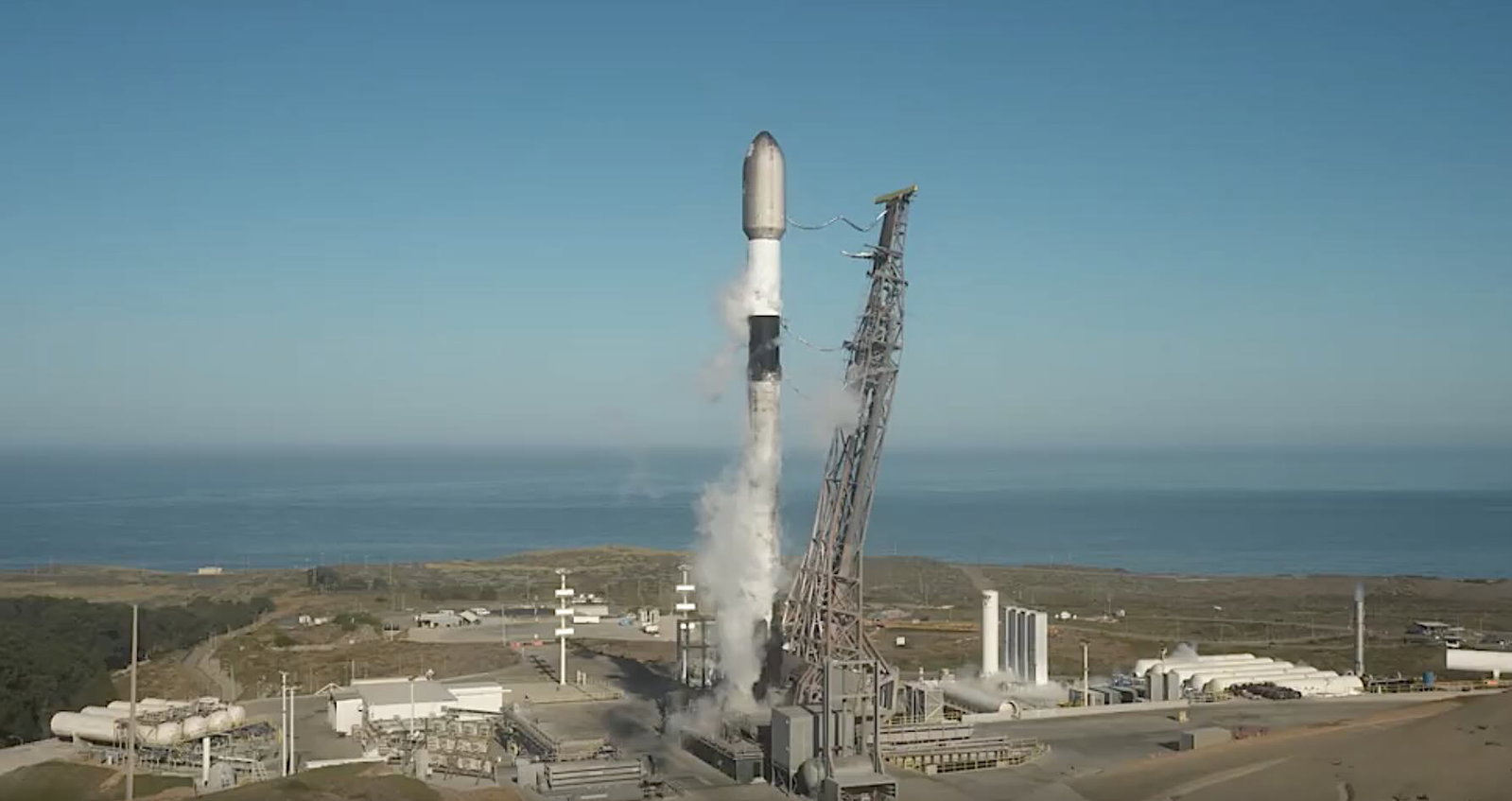
Earlier today, SpaceX launched a classified mission for the U.S. Space Force, which carried a mysterious payload to orbit on one of the company’s Falcon 9 rockets.
The mission, officially known as USSF-153, lifted off from Vandenberg Space Force Base in California at around 11:37 a.m. EDT on Thursday. Beyond that, little else is known about what, exactly, the classified payload carried aboard the Falcon 9 might have been.
Here’s a look at what we currently know about this morning’s secretive launch, and how it may be related to other recent developments involving the growing use of Earth’s orbit in the advancement of U.S. national security objectives.
USSF-153 Mission
According to the company’s website, SpaceX says the USSF-153 mission marks the 27th flight for the first stage SpaceX rocket booster supporting this mission.
The same booster was previously used for the launches of missions that included the Crew-7, CRS-29, PACE, Transporter-10, EarthCARE, NROL-186, Transporter-13, TRACERS, NROL-48, COSMO-SkyMED Second Generation FM3, and 16 Starlink missions, according to an update on the USSF-153 mission page.
“Following stage separation, the first stage will land on the Of Course I Still Love You droneship, which will be stationed in the Pacific Ocean,” the SpaceX update read, noting that it may be possible for sonic booms to be heard in the region around Santa Barbara and surrounding communities, adding that “what residents experience will depend on weather and other conditions.”
Clues About a Classified Payload
The launch was live-streamed by SpaceX, and the moment of takeoff of the classified mission was subsequently added to the company’s official X account. However, few additional details about the exact nature of the mission were revealed, although experts have noted that at least a few details about the rocket’s mission could be discernible from its planned flight path, offering some clues about what USSF-153 might be carrying.
Some outlets have noted the similarity between the current mission’s rocket-stage drop zones and those from past SpaceX Starlink Group 15 missions, which could mean that a group of classified satellites, possibly built using SpaceX’s Starshield satellite platform, may be part of what’s on board.
Serving as the national-security counterpart to the technologies driving SpaceX’s massive Starlink broadband constellation, the program reportedly uses the company’s existing satellite and launch technology to support national security missions. If this is indeed a part of USSF-153’s mission, it would add to the increasingly important role commercial space technologies are playing in U.S. military and intelligence operations.
A New Cold War in Space
Last week’s Intelligence Brief newsletter covered recent concerns about potential future conflict in space, which include the use of sophisticated military capabilities in space by the U.S. and foreign adversary nations.
Experts warn that Earth’s orbit might become a critical battlefield in future conflicts, with recent examples of technologies currently being tested for this that include China’s secretive Shenlong spaceplane, as well as the U.S. and its allies demonstrating similar “dogfighting,” rendezvous, and other potentially military operations in orbit.
Additionally, Russia’s longstanding pursuit of anti-satellite weapons adds to the emerging threats that may soon occupy Earth’s orbit. Although it remains unknown whether Thursday’s mission could be related to such capabilities and other technologies aimed at leveraging Earth’s orbit for military purposes, its classified nature does leave this possibility open.
A New Milestone for SpaceX
Finally, Thursday’s mission also represents a milestone in SpaceX’s busy 2026 launch schedule, with USSF-153 expected to become the company’s 104th Falcon 9 mission of the year.
Eighty of those launches have been dedicated to expanding the company’s ever-growing Starlink constellation, which now consists of more than 11,000 active satellites in low Earth orbit.
Despite the unusual secrecy surrounding its cargo, the USSF-153 launch showcases the new reusable commercial rocket industry SpaceX has developed, which is now frequently relied on by the U.S. military for carrying national-security hardware into orbit.
That concludes this week’s installment of The Intelligence Brief. You can read past editions of our newsletter at our website, or if you found this installment online, don’t forget to subscribe and get future email editions from us here. Also, if you have a tip or other information you’d like to send along directly to me, you can email me at micah [@] thedebrief [dot] org, or reach me on X: @MicahHanks.

Here are the top stories we’re covering right now…
- 66-Million-Year-Old Footprint Discovery Reveals Something About Tyrannosaurus That Researchers “Never Imagined”
- Mysterious Origins of Britain’s 4,000-Year-Old ‘Devils’ Arrows’ Stone Monument Have Finally Been Solved
- Scientists Say the “Lizard Brain” Is a Myth, But the Truth About How Our Brains Evolved May Be Even Stranger
- 4,500-Year-Old Egyptian Tomb Discovery Reveals Something Archaeologists Say They Have Never Seen
- A New Cold War Is Unfolding in Orbit as China Advances Satellite Surveillance
- Scientists Discover Bacteria Growing Microscopic “Electrical Wires” With Extraordinary Conductivity
- LSD, Psilocybin, and 2C-B Each Leave a Distinct Fingerprint on the Brain, New Study Finds
- A New Organism’s “Alien” Reproduction, Levitation and Dark Matter, and Genetic Evidence of an Ancient Killer
- Biologists Were Wrong About the “American Cheetah” According to New Genetic Findings
- “We Couldn’t Believe What We Were Seeing”: Scientists Have Discovered a Bizarre New Microbe with an “Alien” Reproductive Strategy
- Astronomers Detected Three Mysterious “Glitches” in a Pulsar That Had Gone Silent for Years
- Physicists Report Levitation Experiment That May Signal a Breakthrough in the Search for Mysterious Dark Matter
- 4,000-Year-Old Tomb of Ancient Egyptian ‘Keeper of the Secrets’ Discovered at Saqqara
- New Genetic Evidence of an Ancient Killer Has Surfaced After Being Concealed in Medieval Texts for Centuries
- 15,000-Year-Old Cave Discovery in Ireland Could Push Back Earliest Evidence of Humans on the Island by 5,000 Years