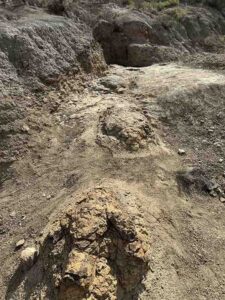








A Curtin University-led research team has successfully identified the mysterious origin of several 4,000-year-old 25-ton stones, which ancient architects used to construct Britain’s iconic Devil’s Arrows, as Birmingham Rocks in North Yorkshire, over 11 miles (18 kilometers) from the monument’s location.
The researcher behind the first-ever geological source identification of the ancient stone monument said the quarry’s distance and the work required to move such massive stones suggest the ancient architects intentionally selected the material used to construct Devil’s Arrows.
Unraveling the Mysterious Origin of the 4,000-Year-Old Devil’s Arrows
Announcing the discovery, the research team, which included scientists from the University of York, UK, noted that the famous stone pillars stand up to seven meters (22 feet) tall. The team also said the site is unusual because such alignments are rare in lowland settings. Still, researchers have struggled to locate the mysterious origin of the massive stone pillars used to create the over 4,000-year-old monument.
The Curtin-led team noted that previous studies determined that the stones used in Devil’s Arrows were transported to the site during the Late Neolithic or Early Bronze Age. This range means the site could have been constructed as early as 2000 BC.
Lead author Dr Anthony Clarke, from Curtin’s School of Earth and Planetary Sciences, noted the significant challenges with moving the stones over such difficult terrain.
“Each stone weighs more than 25 tonnes, so moving them would have required incredible planning, coordination and engineering skill,” the researcher explained.
Dr. Clarke also highlighted the value this effort suggests these ancient Britons “placed real importance” on the material used in the monument’s construction and the landscape itself.
“It wasn’t just about convenience – the location the stones came from likely held meaning for them,” the researcher explained.
Low Impact Sampling Method Confirms Ancient Stone’s ‘Fingerprints’
To unravel the ancient site’s mysterious origin, the researchers placed tiny pieces of low-adhesion tape on the stones and then removed them. The team said this “low impact” sampling process collected several tiny mineral grains on the tape without measurable damage to the ancient monuments.
According to the statement announcing their solution to the Devil’s Arrows origin mystery, the team performed an analysis of the “fingerprints” of the selected grains. The results matched material from Brimham Rocks.
Critically, the mystery’s solution also addressed the possibility that glacial movement or other natural processes moved the stones over the needed distance. Instead, the team said their results demonstrated that “the stones were intentionally transported by people.”
“Our research shows these stones weren’t simply taken from the nearest available source – they were deliberately chosen from a challenging landscape 18 kilometers away,” Dr Clarke said.
Clarke also said that the results eliminate the nearer site of Plimpton Rocks, which “had previously been identified as the probable source of the stones.”
“Our findings instead point to Brimham Rocks, showing that prehistoric builders transported these enormous stones significantly further than thought,” he explained.
Solving Similar Stone Monument Origin Mysteries
After discovering the mysterious origin of the 4,000-year-old pillars, Dr Clarke said the team will apply its low-impact sampling method to similar stone monument origin mysteries. The team also hopes to conduct future “targeted excavations” at the Devil’s Arrows site and the newly identified source.
Dr. Clarke said that analysis might help explain how these ancient architects moved the massive stone pillars several miles over rugged terrain over 4,000 years ago. The research said the work could also unravel “how these extraordinary monuments were constructed.”
Co-author Dr Jim Leary from the University of York echoed Dr Clarke’s sentiments, while also suggesting that the team’s findings ‘reshaped’ how researchers understand the art of prehistoric monument-building.
“These results show that ancient communities were making deliberate and meaningful choices about where their stones came from,” Dr Leary explained.
The York researcher said their solution to the Devil’s Arrows origin mystery also “highlights the importance of landscape and shared belief systems, as well as the remarkable effort involved in transporting and raising stones of this size.”
The study, “Deliberate Prehistoric Sourcing of the Devil’s Arrows, Britain’s Tallest Stone Row,” was published in the Proceedings of the Royal Society.
Christopher Plain has spent the last six years as Associate News Editor and Head Science Reporter at The Debrief. Follow and connect with him on X, learn about his novels at plainfiction.com, or email him at christopher@thedebrief.org.