







The Mysteries of the Unknown Ancient Site: Sanxingdui.
The people of the Masked Kingdom along the Yangtze brought rice cultivation to ancient Japan.
Beneath the Sanxingdui Ruins in Sichuan Province, China, lay secrets that overturned conventional wisdom about ancient civilizations. And from the numerous bronze artifacts unearthed at this site of a civilization that flourished 5,000 years ago, an astonishing hidden history emerged—one connecting the Yangtze Rice-Growing Culture with Japan!
Take a look at the bronze standing figure on the left. I asked many people what they thought it was. The answers included “alien,” “modern art,” “Jomon Medusa,” and “sun-shielding clay figurine.”
This bronze standing figure was discovered in 2022 at the Sanxingdui Ruins, located 40 kilometers north of Chengdu, Sichuan Province, China.
Bronze standing statue unearthed at the Sanxingdui site in 2022. The history of the Sanxingdui civilization dates back approximately 5,000 years (Photo: Author.).
The Sanxingdui Ruins made headlines in the summer of 1986 as the greatest archaeological discovery of the 20th century. Some may remember the NHK Special that aired a one-hour program titled “The Mysterious Kingdom of Masks” in 1992.
Chengdu is located in a remote area along the upper reaches of the Yangtze River (Chang Jiang), the world’s third-longest river. No one could have imagined that an ancient civilization possessing such advanced bronze technology existed in this isolated region. Yet today, the Sanxingdui site is recognized as part of the Yangtze River civilization, regarded alongside the Yellow River civilization as the twin pillars of Chinese civilization.
This means it is as ancient as the Yellow River civilization, having emerged around the same time as the ancient Indus Valley Civilization. While the Great Pyramids of ancient Egyptian civilization are said to have been built 4,500 years ago, a mysterious mask civilization was also flourishing in Chengdu around that time.
I visited the Sanxingdui Ruins because I had advised British author Graham Hancock for many years that he should investigate them. Graham Hancock is currently writing a book titled Children of the Gods and had planned to investigate the Sanxingdui Ruins. However, when I contacted him in the spring of 2025, his schedule was too packed to make it to China. Archaeological research in China isn’t easy. Meeting archaeologists and gaining access to sites requires permission from the Chinese government. So, I decided to visit the site myself, gather the latest information, and send it to Graham Hancock.
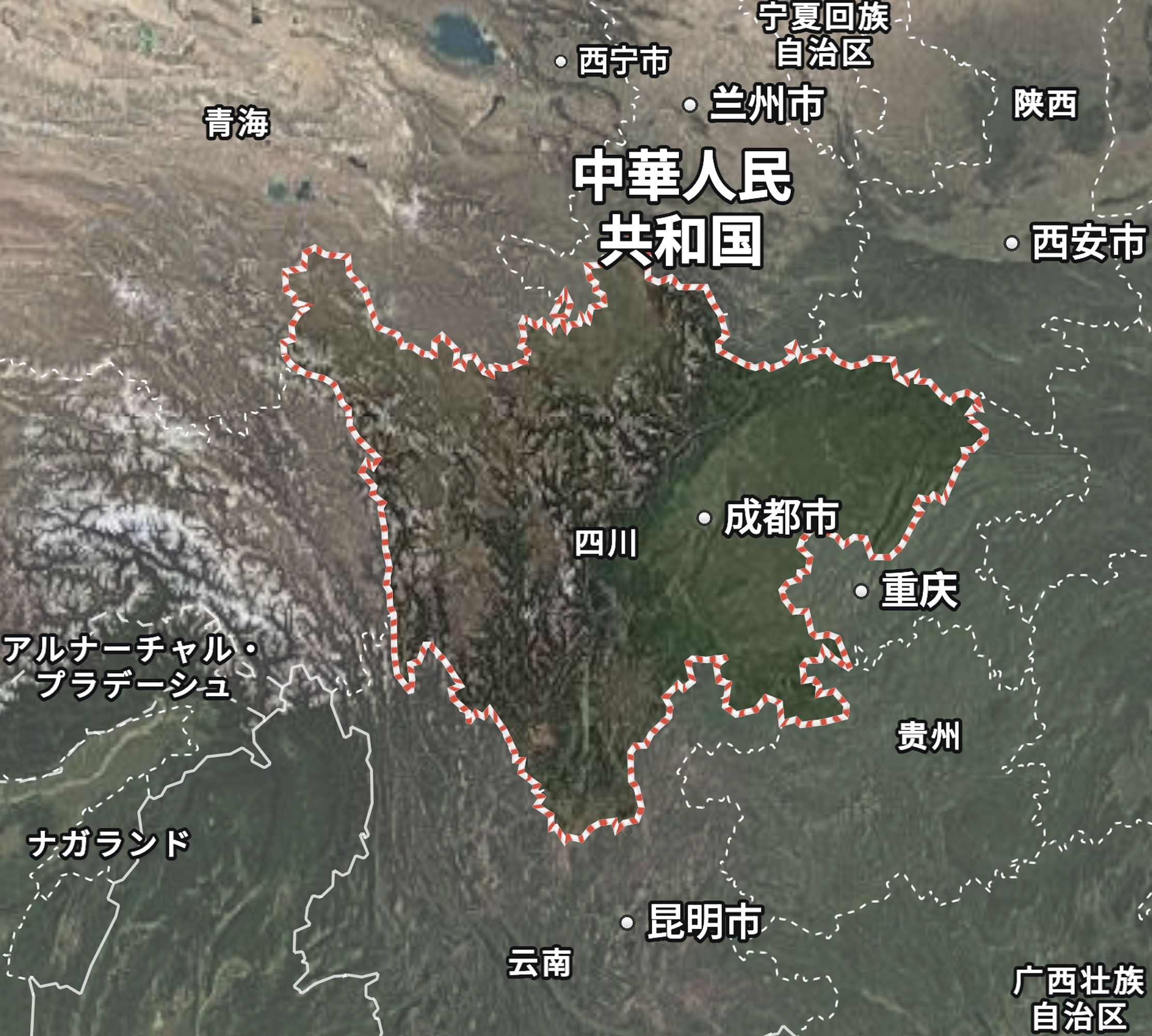
Map of Sichuan Province, China. Yunnan Province is located to the south.
Let me briefly describe Chengdu, Sichuan Province. Please look at the map. Four major rivers flow through Sichuan, all tributaries of the Yangtze. Chengdu lies in the Sichuan Basin, surrounded by high mountains. Its elevation ranges from 500 to 700 meters. Today, it’s a major metropolis with industries like IT, automobile manufacturing, and aircraft production. The Sichuan Basin is large enough to fit two Hokkaidos inside. Sichuan Province has a population of 100 million and is 1.3 times the size of Japan. To the west lies the Tibet Autonomous Region, and to the south is Yunnan Province.
Chengdu is perpetually cloudy, with the sun only appearing for two months in summer. It is believed that during the mythical era 4,000 years ago when the Sanxingdui ruins flourished, the area was under the rule of the Yi ethnic minority.
In early December last year, I flew into Shanghai, spent half a day there, took the high-speed rail business class to Nanjing, and then flew on to Chengdu. Chengdu’s airport was new and enormous. A Japanese-speaking guide met me, and I thought, “Hmm, different ethnicity than in Shanghai.” Their darker complexions and sharp features resembled the Thais I often interact with. The journey from the new airport to Chengdu’s downtown took over an hour. The Japanese guide remarked, “The sky is cloudy, but it’s not smog. In Chengdu, you only see blue skies in summer. They say even dogs bark at the sun here.”
The Sichuan Basin has been an isolated landlocked region since ancient times. As writer Shiba Ryotaro noted in his 1983 work The Road to Shu and Yunnan in China, “For the Han Chinese of the plains, reaching Shu (the Sichuan Basin) meant not traveling but climbing.”
I asked the guide, who looked Thai,
“Have there been any new discoveries at the Sanxingdui Ruins?”
“Yes, there have been. In 2021 and 2022, six new sacrificial pits were excavated. At the time, it was the height of the coronavirus turmoil, and China’s 1.4 billion people were effectively under lockdown. We were only allowed out for one hour a day, just to shop. Those three years without work or freedom to go out were tough. There were many suicides. My only ‘work’ was drinking every day.”
“You’re tough, guide. You overcame that hardship.”
“I’ve been used to tough living since Mao Zedong’s time. Plus, there were live broadcasts from the Sanxingdui excavation site almost every day. That was my joy.”
“Live broadcasts? Nationwide?”
“Yes. Back then, 1.4 billion Chinese people had no other entertainment besides watching TV. The whole country was hooked on the live excavation broadcasts from Sanxingdui.”
I hadn’t heard that six new sacrificial pits had been excavated. I immediately searched online and found a Vietnamese newspaper article. It was from February 2025.
“Six new pits were discovered in 2019. Over 17,000 artifacts were excavated from the pits, 4,800 of which were found in nearly pristine condition.”
According to the guide, a new Sanxingdui Museum, backed by the state, opened in autumn 2024. “By the way, what kind of site is the Jinsha Site we’re visiting today?” I asked. Just before leaving Japan, I’d noticed another ancient site within Chengdu city limits and had arranged a visit.
“It’s the latest version of the Sanxingdui site.”
This surprised me.
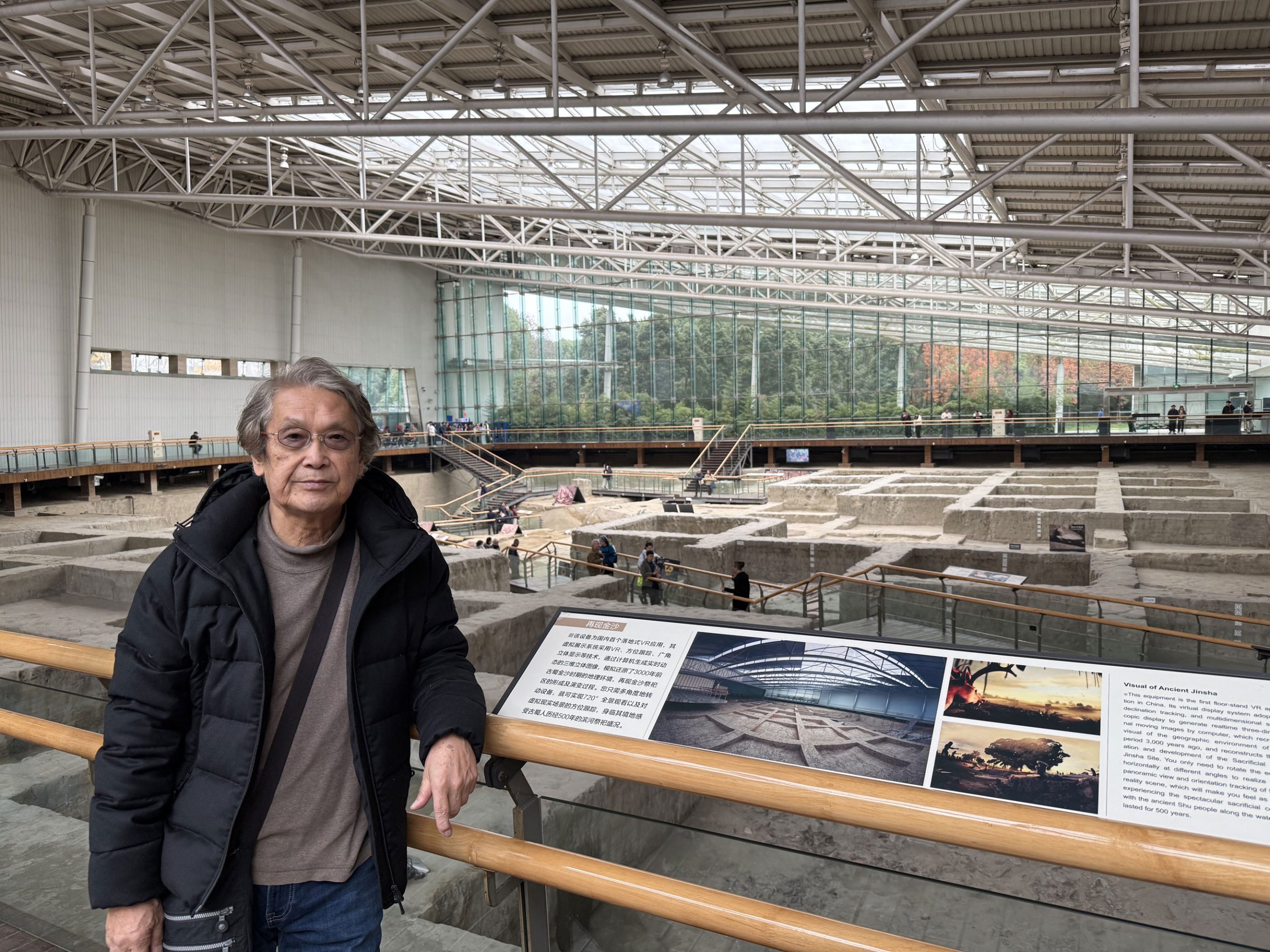
The author touring the Jinsha Site.
Part 2:
The Jinsha Site was located west of Chengdu city. It covered a vast area of 5 square kilometers. Excavations here yielded 200 gold artifacts, 1,200 bronze artifacts, 2,000 jade artifacts, and 1 ton of ivory. The artifacts resemble those from Sanxingdui, yet they are different. Representative artifacts include the Golden Mask (photo) and the Sun Bird Gold Foil (photo), but the bronze casting techniques appear less advanced. There are no large masks, and the shaman statues are poorly crafted (photo). Archaeologists suggest the Jinsha site belongs to the people who overthrew the mask kingdom of Sanxingdui, which seems plausible. What caught my attention was the large quantity of ivory excavated. When I asked the guide, they explained, “Chengdu traded with India, Myanmar, and Vietnam using elephants. A lot of ivory has also been found at the Sanxingdui site.”
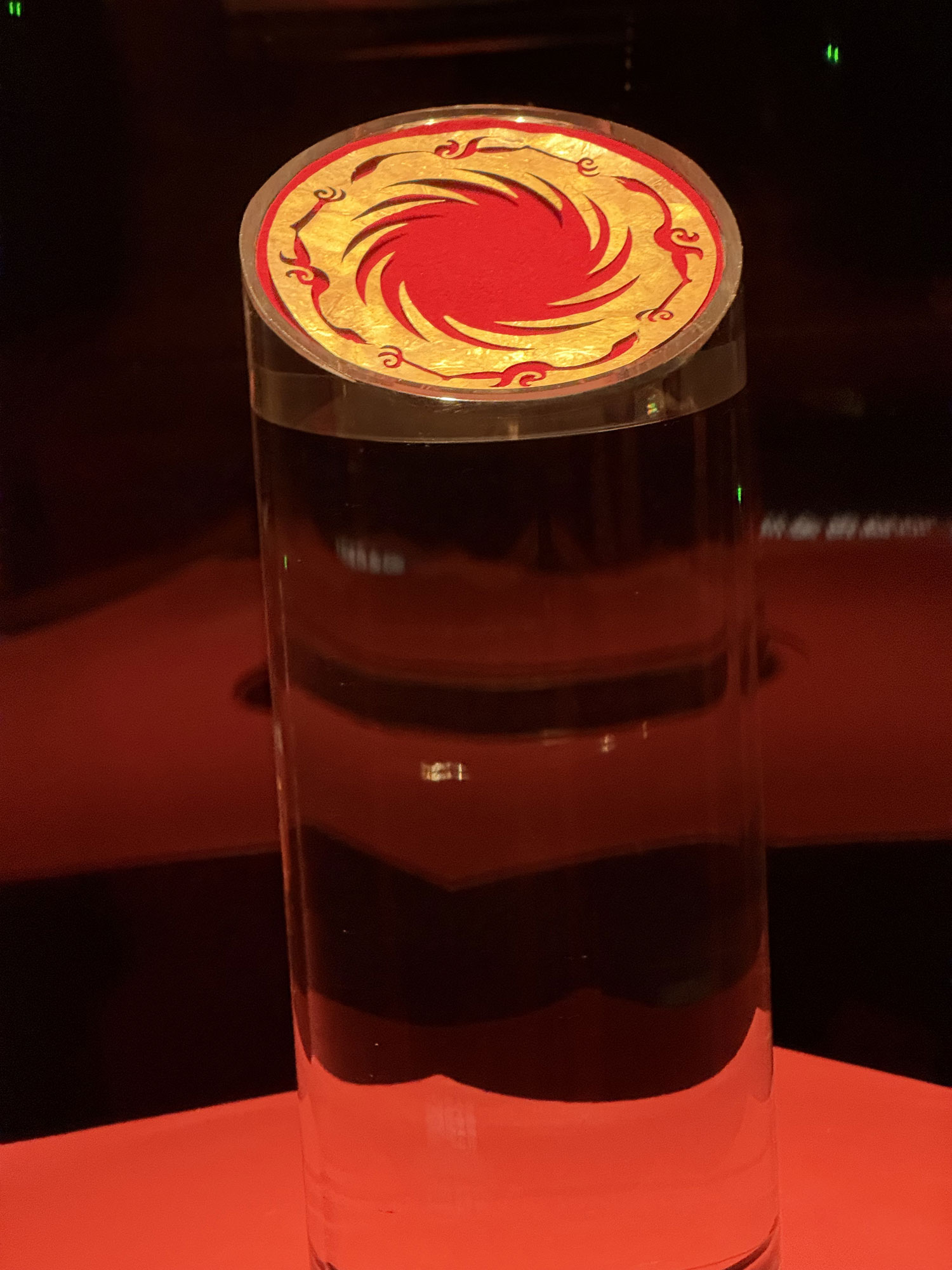
The Sun Bird depicted in gold leaf (Jinsha Site)
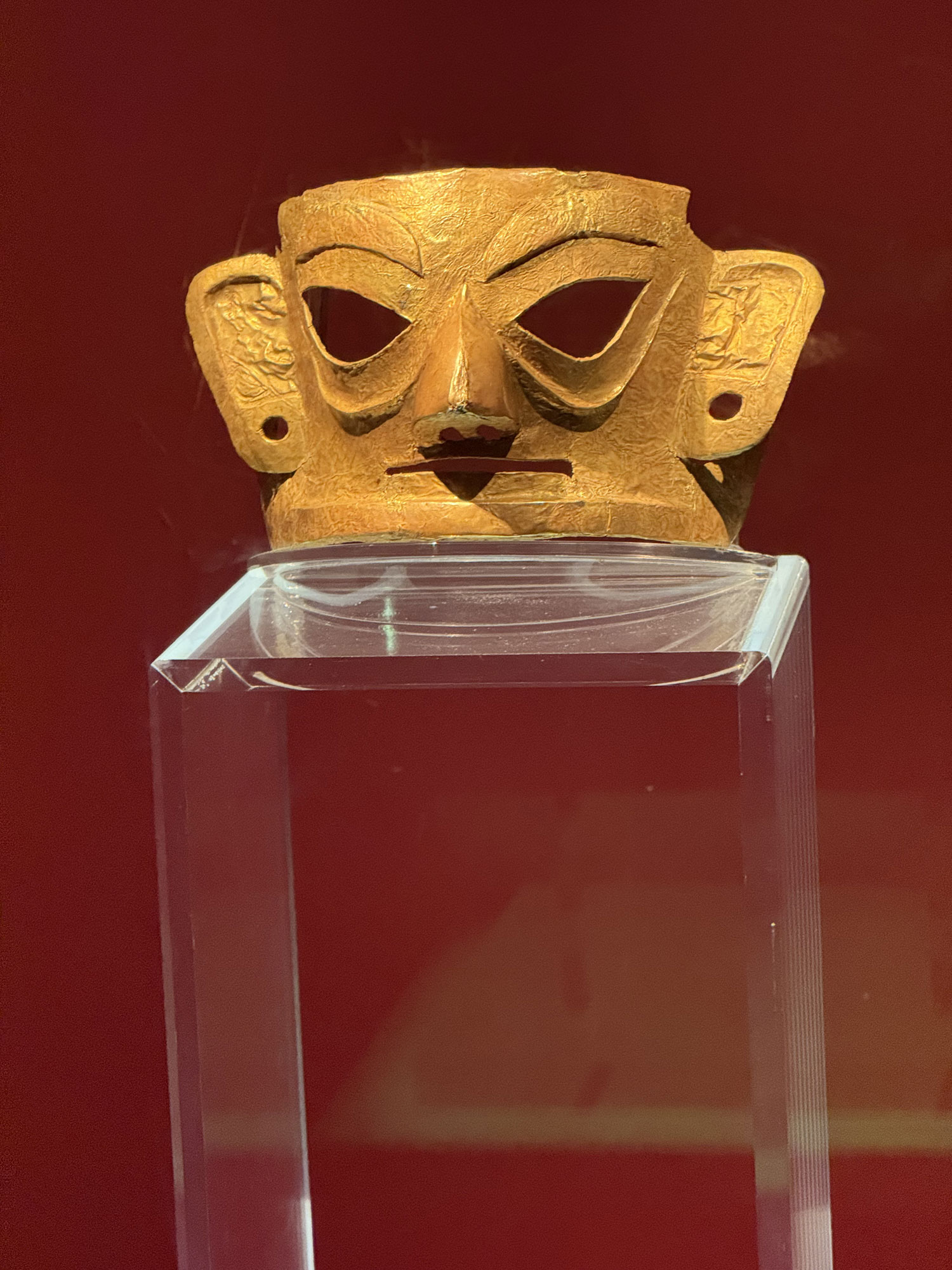
Golden masks unearthed at the Jinsha Site
The book The Mysterious Ancient Kingdom (published 1993) by the NHK research team doesn’t mention ivory much, but it states that Sichuan Province was the gateway to the Southwest Silk Road. Examining Silk Road maps confirms a caravan route indeed existed from Sichuan through Yunnan, connecting India to Persia, Myanmar, and Vietnam. The distance from Kunming, the capital of Yunnan Province, to Hanoi, the capital of Vietnam, is surprisingly short.
Sichuan and Yunnan provinces were called the Land of “Southwestern Barbarians” by the Han Chinese in the Yellow River region since the mythical era 4,000 years ago. The land of “Southwestern Barbarians” were home to numerous ethnic minorities like the Yi and Tai peoples. It is believed the Yi people ruled the ancient Shu Kingdom (Sichuan Basin), and the deep connection between this Yi people and the Japanese ethnicity will be discussed later.
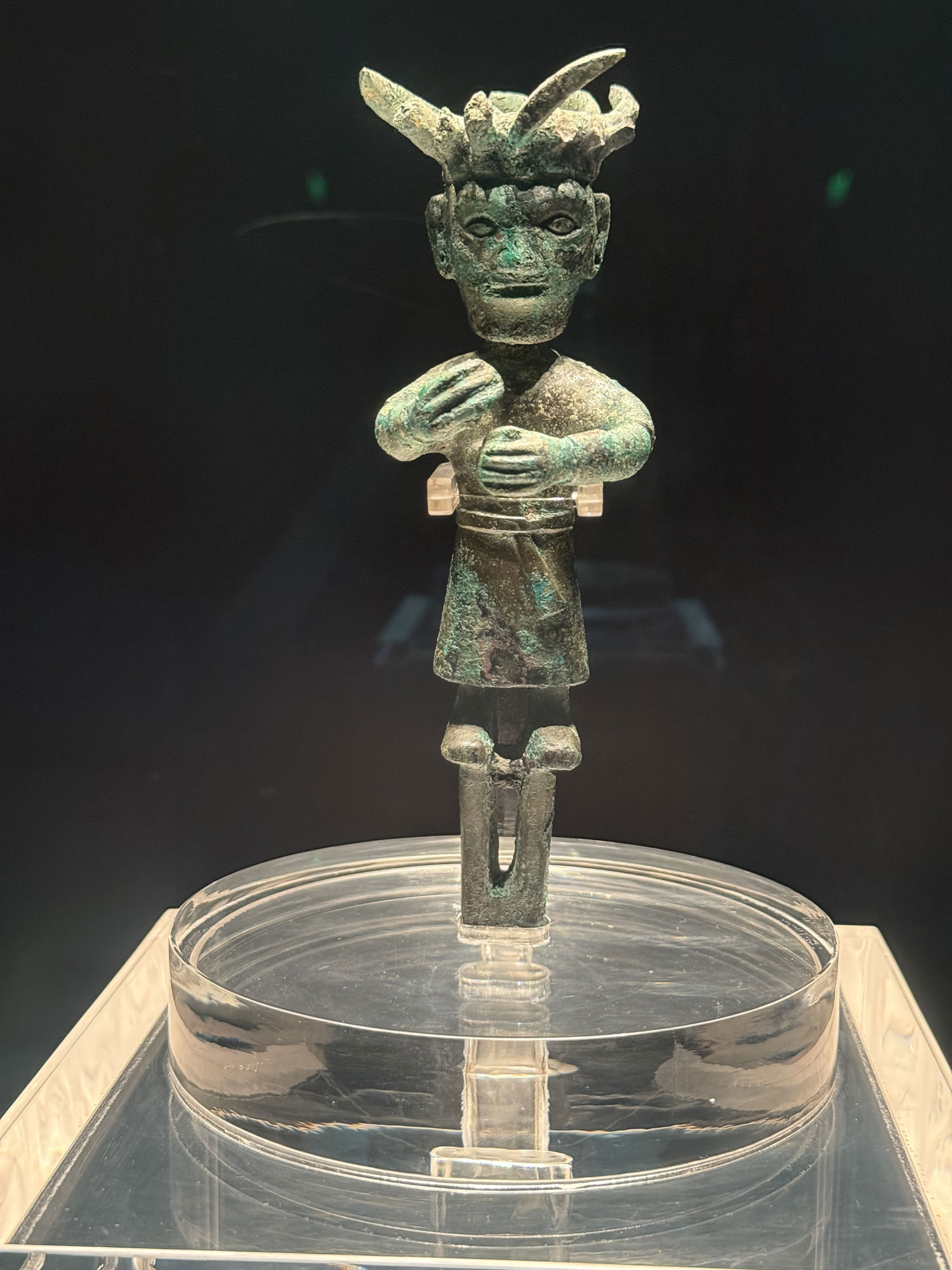
Bronze statue of a priest. It is small, standing 15 centimeters tall. (Jinsha Site)
Clouds are ever-present in Chengdu’s sky. This is said to be why Yunnan Province was named “the land south of the clouds.” Large numbers of Han Chinese began arriving in the Shu Sichuan Basin during the era of Zhuge Kongming, famed in Romance of the Three Kingdoms. Chengdu holds the tomb of Liu Bei Xuande, King of Shu during the Three Kingdoms period (184-280 AD), located at a site called “Wuhou Temple.” Wuhou refers to Zhuge Kongming. According to our guide, “Among Chinese people, Zhuge Kongming (Zhuge Liang) is overwhelmingly more popular.” Zhuge Liang was described as a man devoid of personal ambition, an inventor and strategist who desired neither power nor wealth. This, it seems, embodies the ideal ruler sought by the Chinese people.
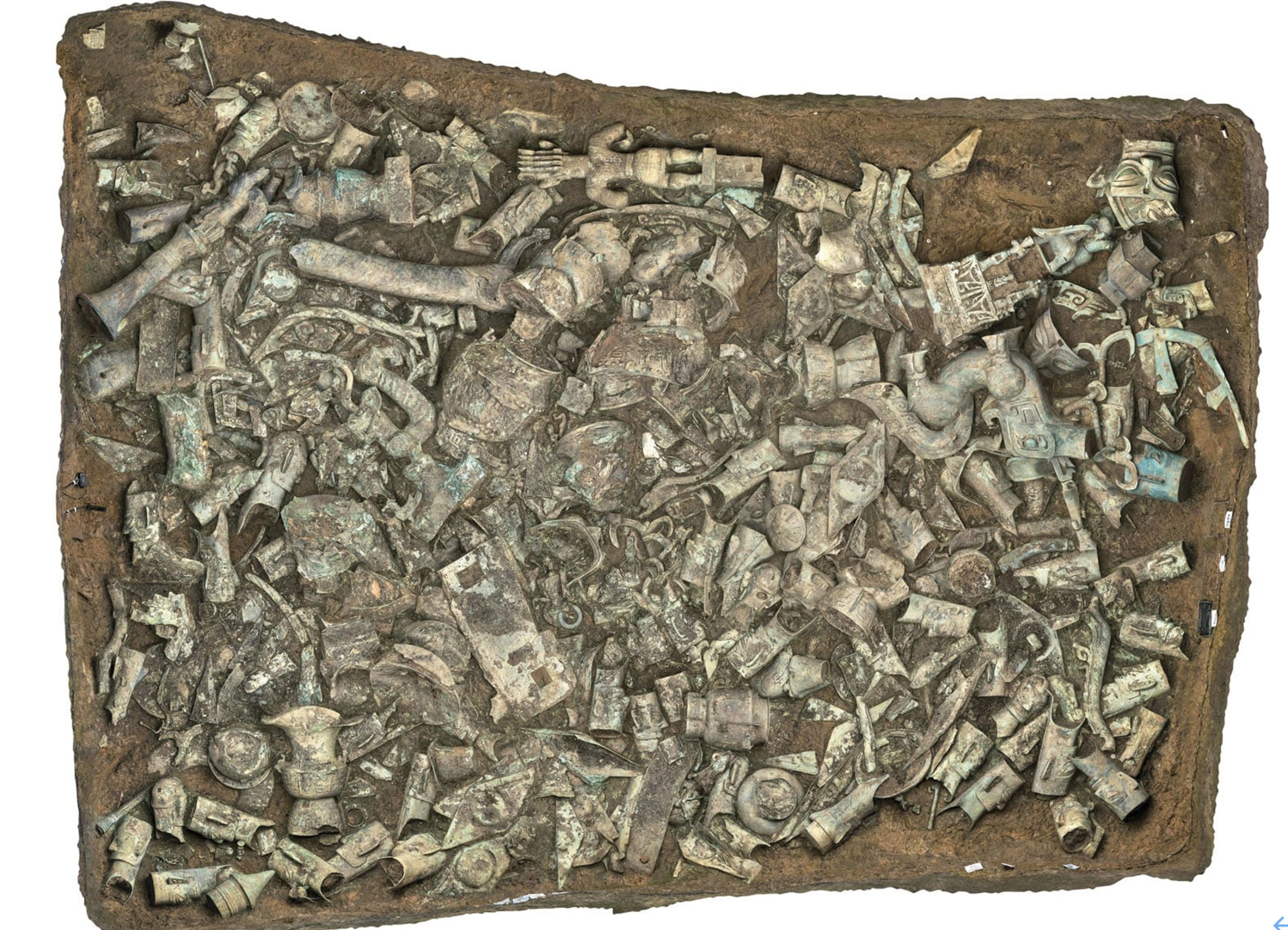
Sanxingdui Site, Pit 8. The bronze standing figure on the opening page was excavated from here.
The day after visiting the Jinsha Site, we departed at 9 AM for the Sanxingdui Museum. Chengdu’s temperature wasn’t much different from Tokyo’s. That day, we took a private car to the museum, and thinking inside of the car and museum would be warm, I dressed lightly. However, neither the driver nor the guide seemed inclined to turn up the temperature in the car.
When I asked the guide, “Why aren’t you turning on the heat? Saving gas?” he replied, “Exactly.” So, embracing the spirit of “When in Rome,” I resolved to endure the cold. This trip repeatedly impressed upon me the Chinese people’s down-to-earth and resilient nature.
We arrived at the Sanxingdui Museum at 10 a.m., but it was already packed. High school groups were especially numerous. The new museum is enormous, but the crowds meant even taking photos of exhibits required waiting in line.
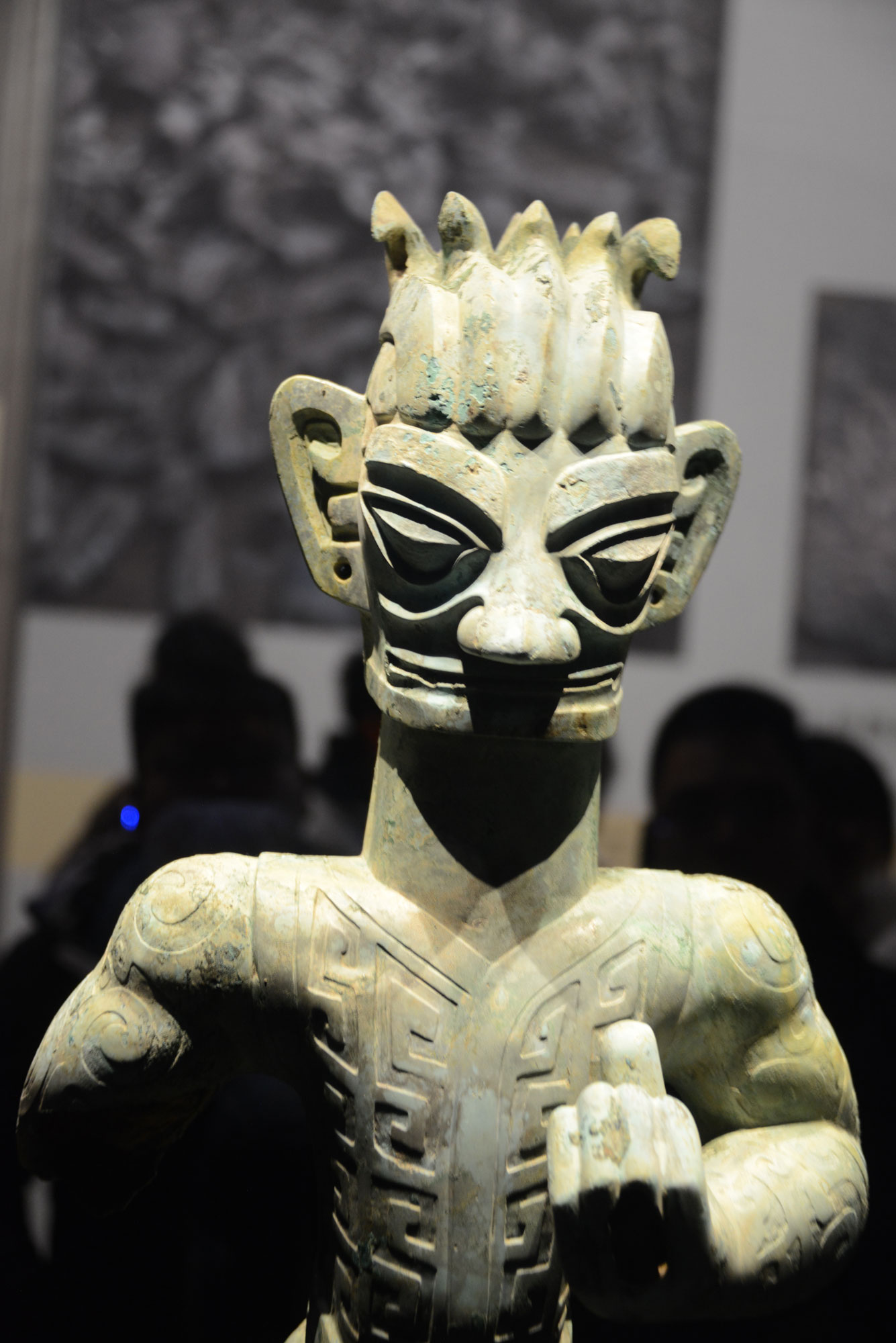
The guide pointed out the bronze standing figure on the first page, saying, “This is new. It wasn’t on display three months ago.” This statue looks like an ‘alien’ or a “Mobile Suit Gundam,” but it’s apparently a shaman. A 2-meter-tall standing figure was excavated from Pit 1 in 1986 and is also considered a shaman. The new standing figure was unearthed from Pit 8 (photo). This bronze standing figure might have been a priest carrying a palanquin (photo). Some archaeologists think it’s a warrior because the hair is tied up.
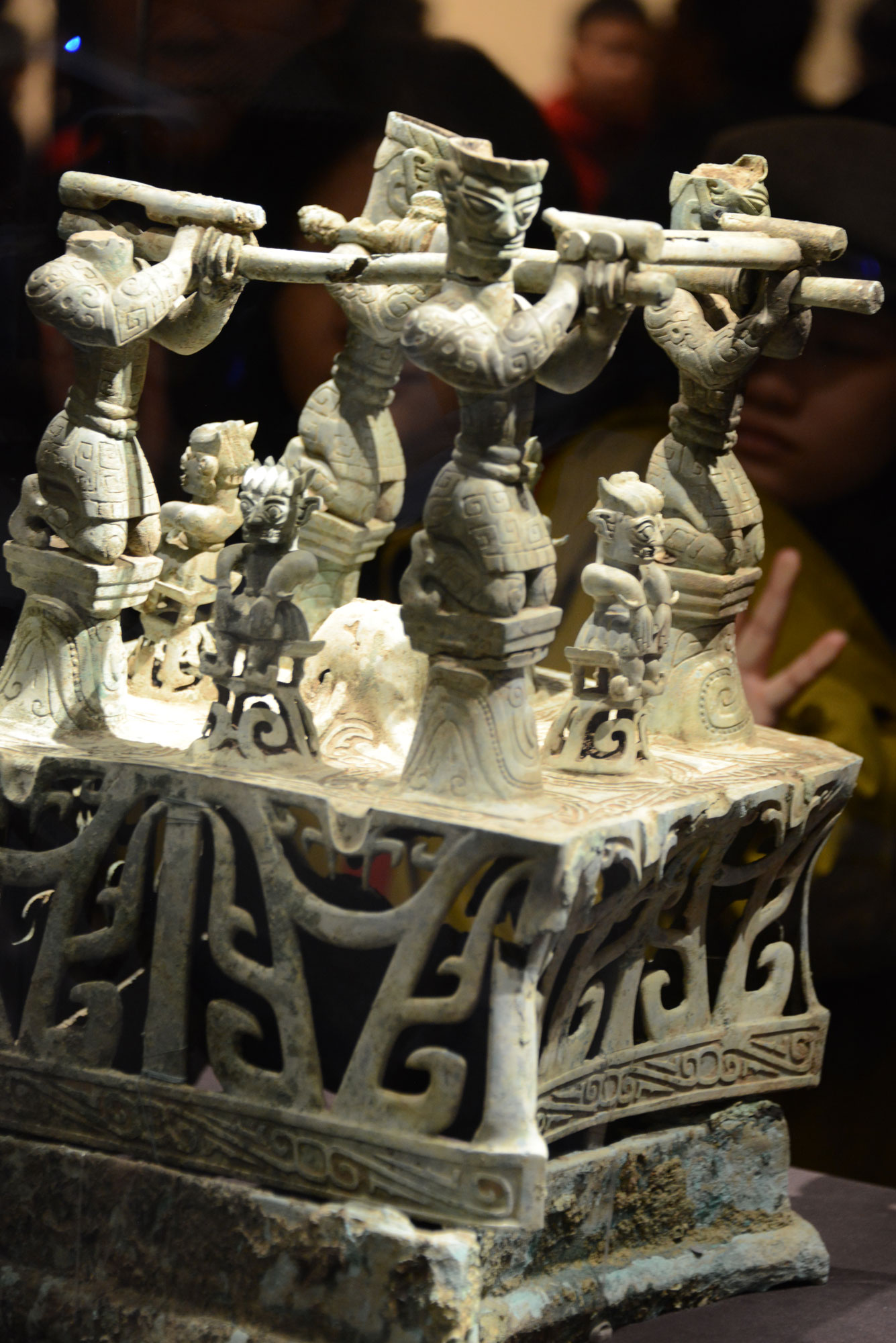
Statues of priests carrying a palanquin (Sanxingdui Ruins)
A bronze human figure with a more conventional face was also excavated from Pit 3 (photo). It’s a rare statue beautifully capturing a dancing movement.
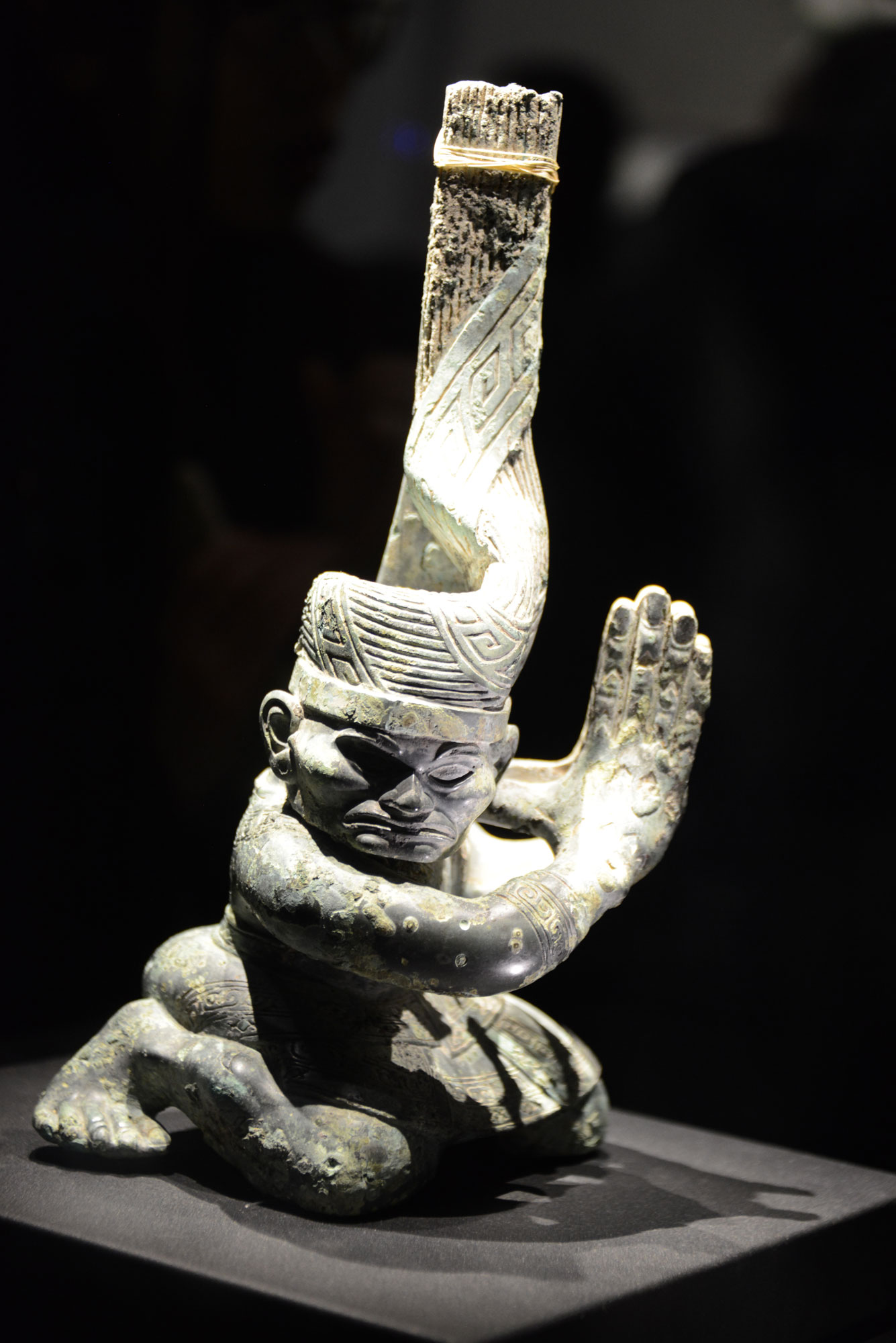
Bronze figure displaying dance movements. Excavated from Pit 3 at the Sanxingdui archaeological site.
Over 100 human head statues have appeared in excavations so far, and they’re thought to represent the ruling class of the ancient Shu Kingdom of Masks. I tried staring at many of the head statues, but they wouldn’t engage. They were deep in meditation. Among the head statues, there appear to be female figures (photo) and sorcerers (photo). The large bronze mask (photo) also seems lost in meditation, yet it spans an impressive 1.3 meters across.
Let’s now explain the main bronze artifacts from the Sanxingdui site. First is the star attraction of Sanxingdui: the Large Mask with Vertical Eyes (photo). Discovered in 1986, this bronze mask with protruding eyes also features large ears. Some interpret these as representing two guardian deities, “Thousand-Mile Eyes” and “Favorable Wind Ears.” However, I support the view of archaeologist Xu Chaolong (as presented in his 1998 book, “Sanxingdui: The Mystery of Ancient Chinese Civilization”). The vertical-eyed mask measures 138 centimeters wide and 64 centimeters tall. The protruding eyes themselves measure 16 cm in length. Additionally, two smaller vertical-eyed masks were excavated (photo). These measure 32 cm in width and 79 cm in height. The smaller masks are said to be the sons of the large vertical-eyed mask. A square hole is present on the forehead of the large mask, where it is speculated dragon decorations similar to those on the smaller masks once existed.
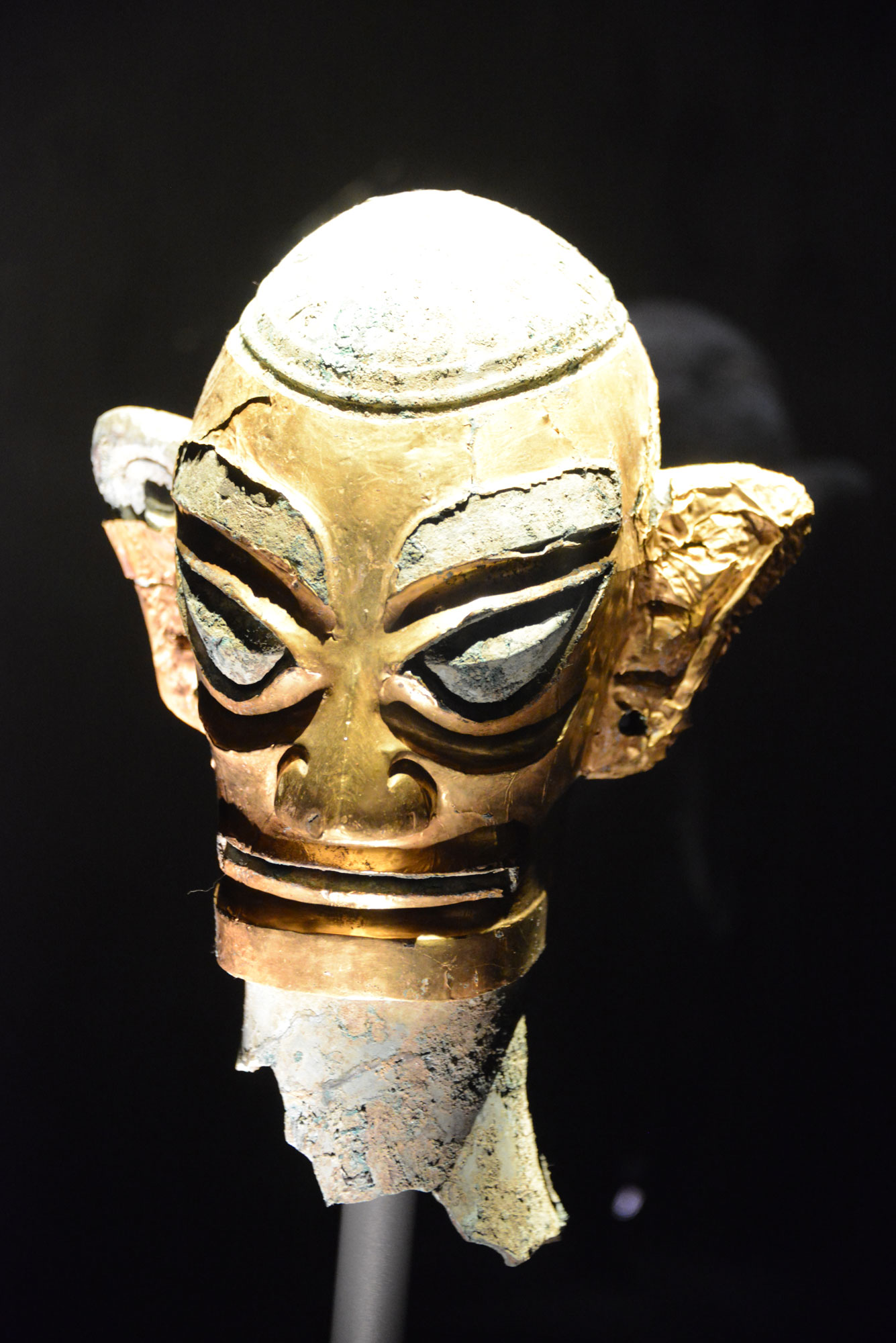
A bronze head resembling a magician (Sanxingdui Ruins)
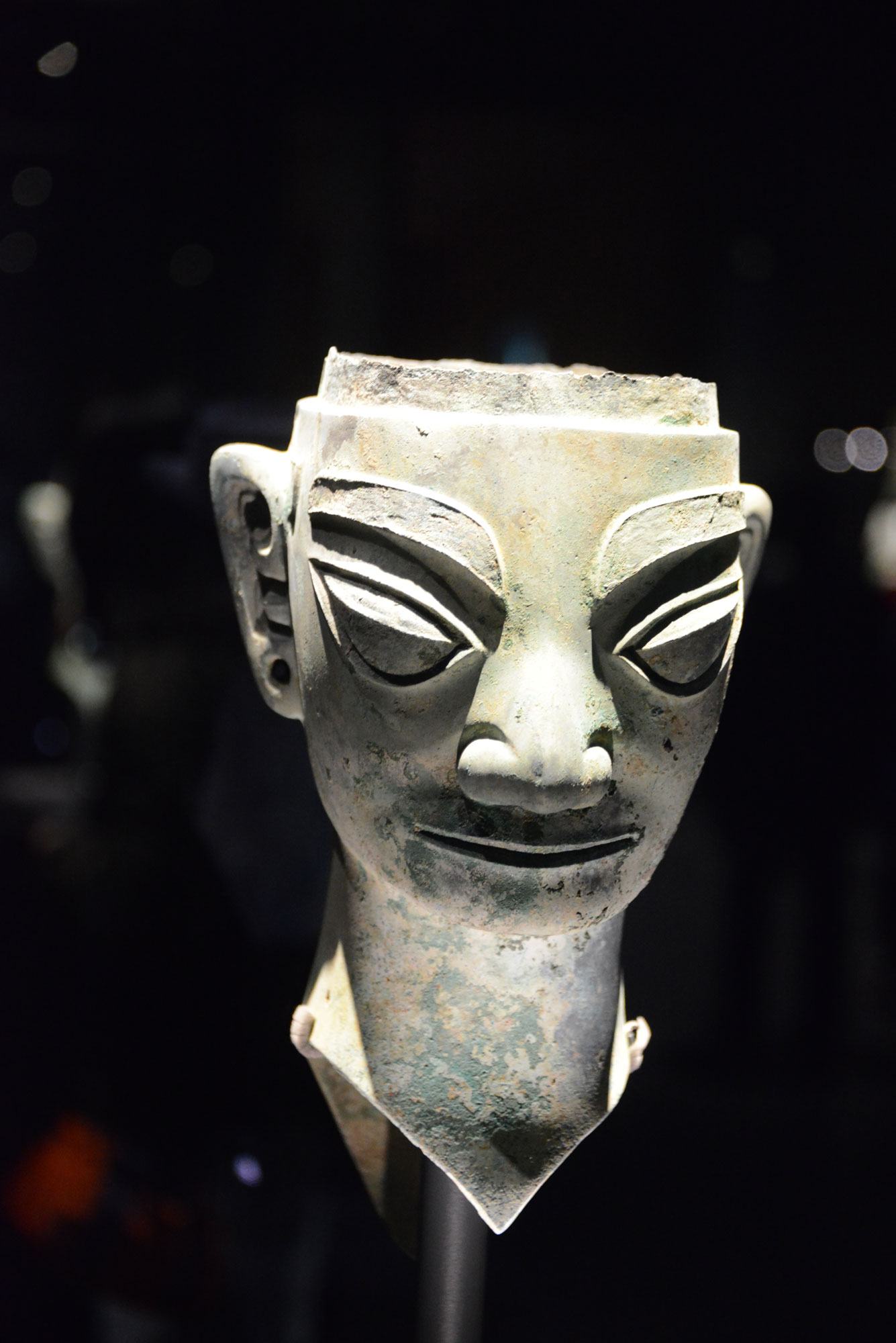
A bronze head of a woman. Is she meditating?
According to ‘Sanxingdui: The Mystery of Ancient Chinese Civilization’, the vertical-eyed large mask appears in myths and legends. First is the ‘Book of Huayang’. This work records legends of the Shu Kingdom, stating that the first king of the ancient Shu Kingdom was named “Cang Cong” (蠶叢), and that his “eyes” were vertical. “Cang Cong” means “place where silkworms gather.” This implies Cang Cong raised silkworms and produced silk textiles. Even today, silk textiles are renowned as a specialty product of Sichuan Province. Therefore, the vertical-eyed large mask is highly likely to represent the ancient Shu ruler Cang Cong. Most archaeologists agree with this interpretation, but the story continues.
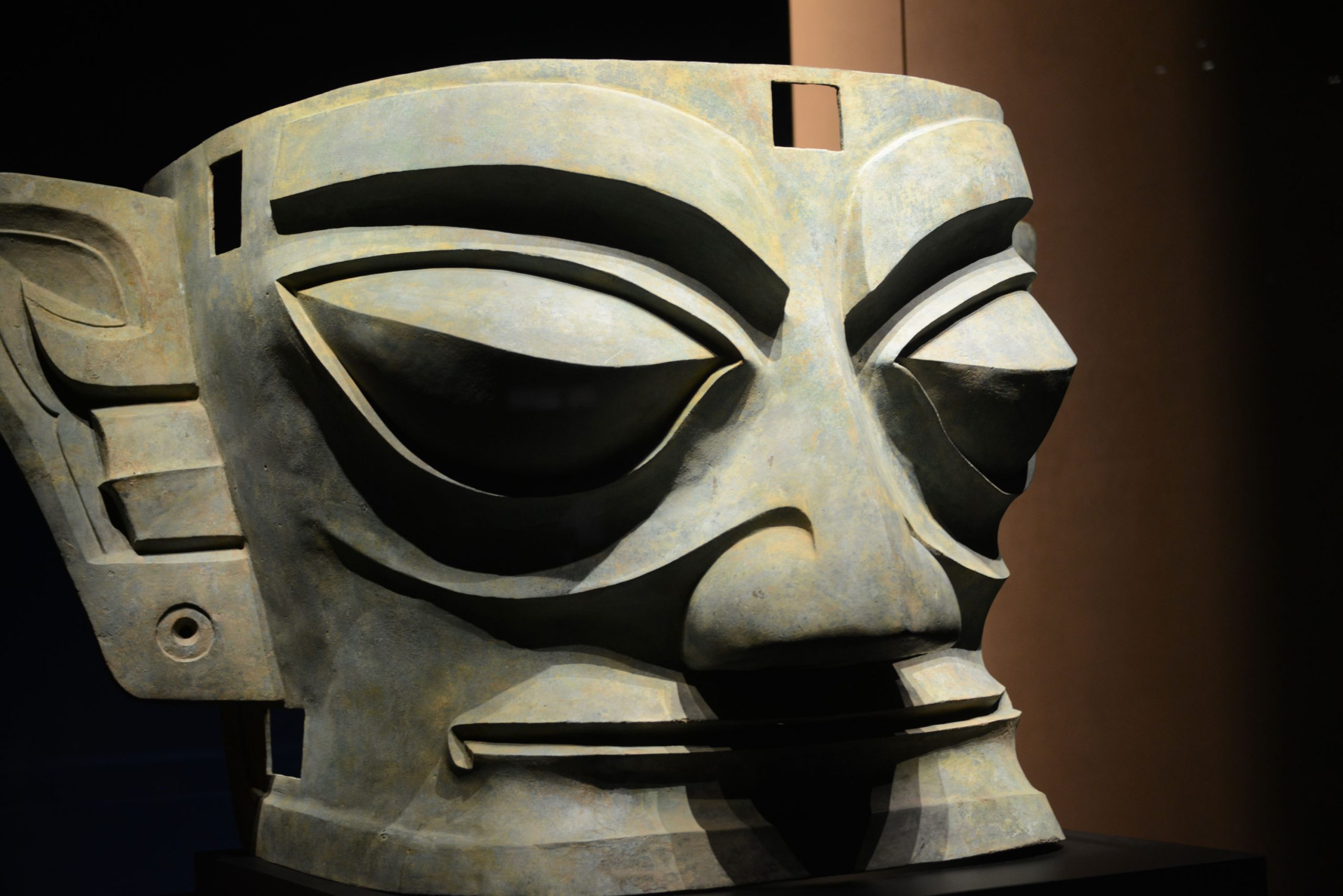
A large bronze mask. Is this one meditating too?
There is a mythological text called the Classic of Mountains and Seas, which features numerous supernatural beings. Among them is a dragon with a human face and serpent body possessing vertical eyes (straight eyes = vertical eyes). Its name is the Candle Dragon. “When this dragon closed its eyes, the world grew dark; when it opened them, light returned. It neither eats nor sleeps nor rests, summoning wind and rain, and illuminating perpetual darkness.“ In other words, the vertical-eyed ”Candle Dragon“ is the sun. This leads to the possibility that the vertical-eyed Great King, “Cang Cong”, was the ”Candle Dragon.“ The small vertical-eyed mask features a dragon body protruding from the upper part of the face, which also indicates that his sons were ‘dragons’ and ”suns.”
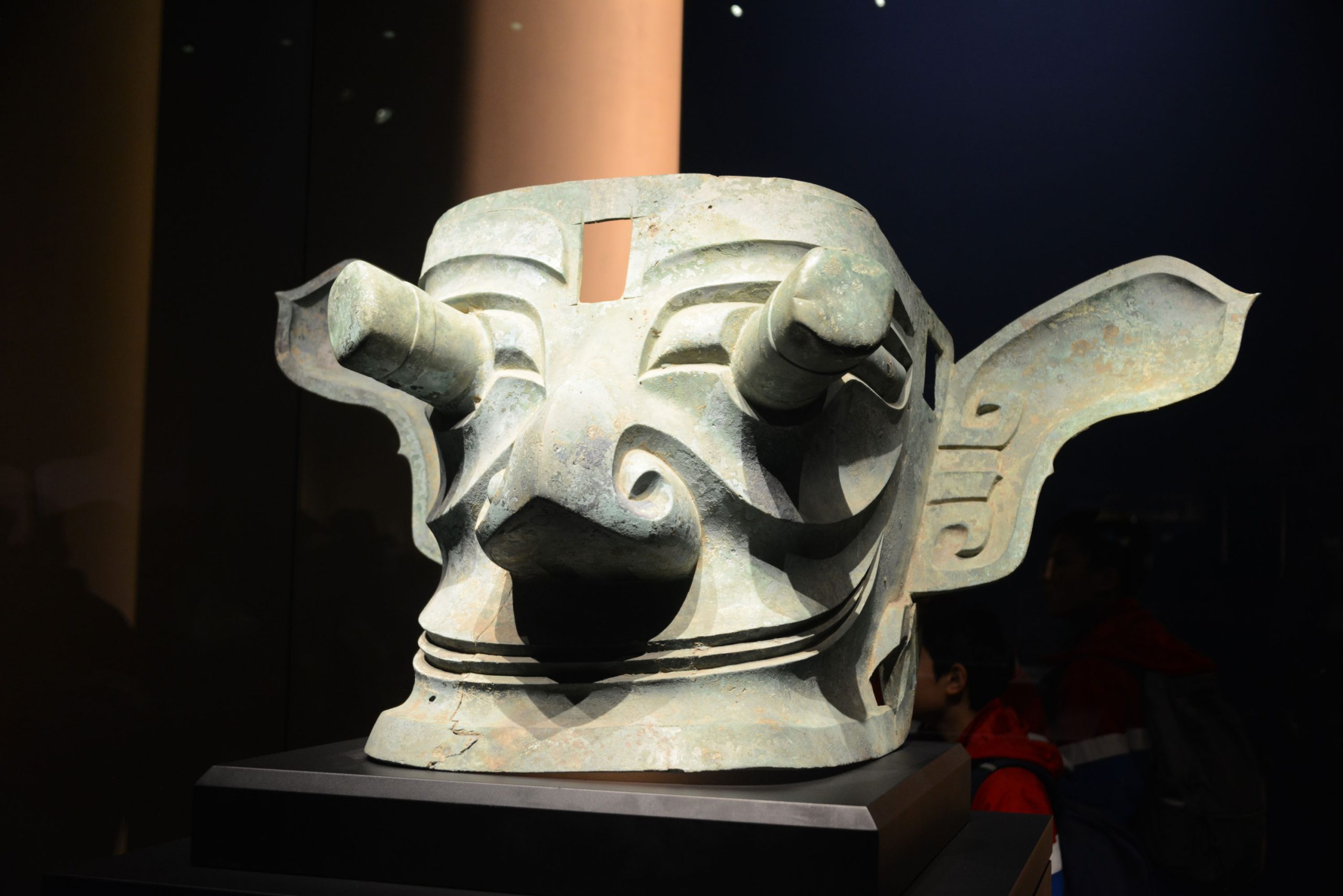
Bronze vertical-eyed mask. A representative artifact of the Sanxingdui ruins, this peculiar mask is said to depict an ancient legendary king. Width: 138 centimeters.
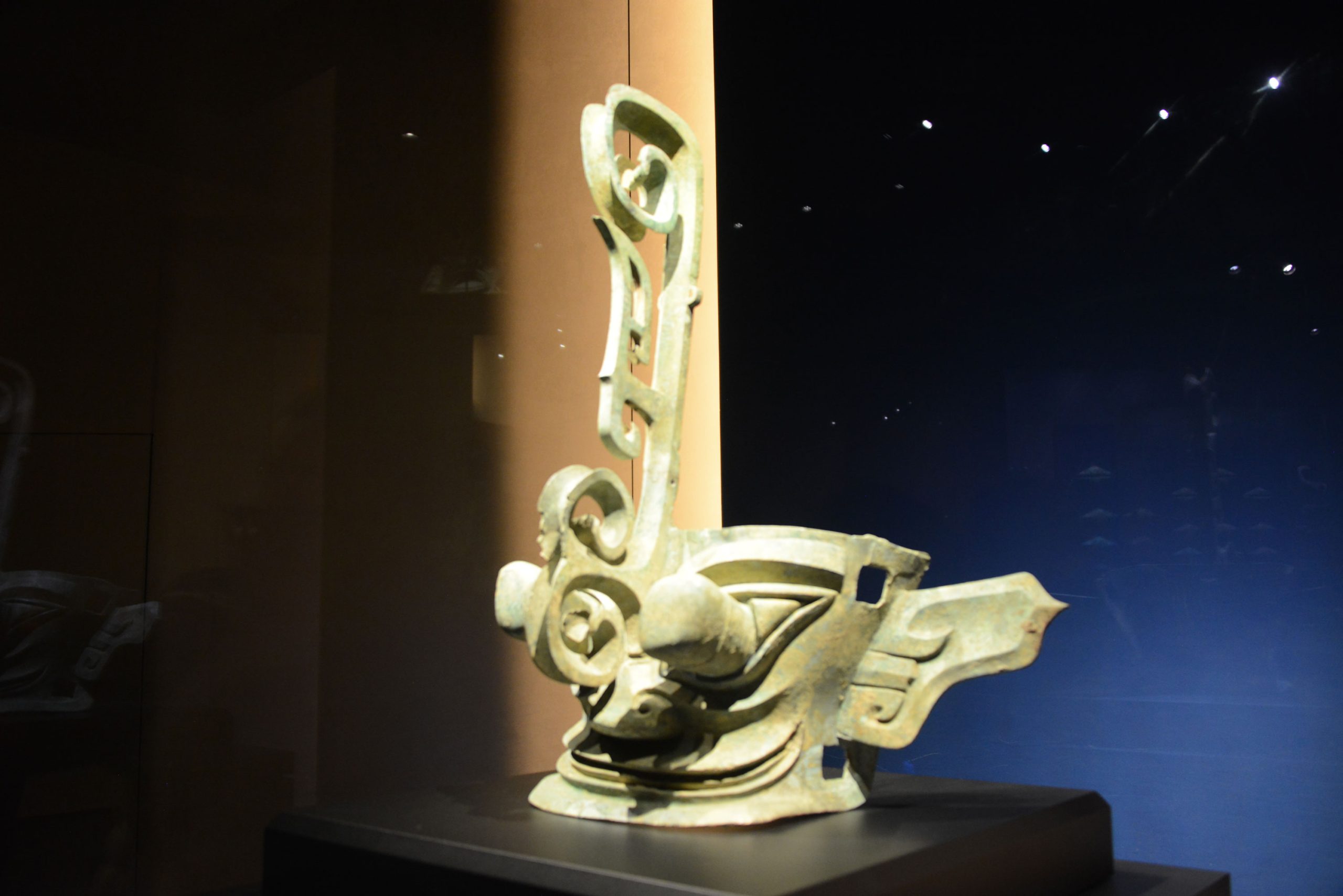
Small vertical-eyed mask. Height: approximately 79 centimeters.

The Candle Dragon depicted in the Classic of Mountains and Seas. A dragon with a human face and serpent body, said to have vertical eyes. (PD)
Since ancient times, Sichuan Province has been renowned as a land of rice cultivation and silk production, famously called the “Land of Abundance.” Numerous artifacts indicating sun worship have been excavated here.
The second major star of the Sanxingdui Ruins is the 4-meter-tall “Sacred Tree” (photo). This is believed to be the “Fusang Tree.” In Chinese mythology, sacred birds are said to carry the sun. Ten sacred birds perch on the Fusang tree, taking turns to fly off each morning and raise the sun. The location of the Sacred Tree/Fusang tree is an island at the eastern edge of the land. Therefore, since ancient times, China has referred to Japan as the “Land of Fusang.” This is the first time such a large-scale bronze “Sacred Tree” has been found in China. The myth of the “Sacred Tree” may have been established in Sichuan Province 5,000 years ago.
For ancient Chinese, Fusang’s Japan was an island where Fusang trees flourished, a land of immortals possessing the elixir of eternal youth. From China’s perspective, it was a paradise. Indeed, Jomon-period Japan was prosperous. Though a small island, Japan ranks among the world’s top nations in terms of marine resources. While prone to earthquakes, it is a peaceful, habitable island blessed with abundant rainfall and rich marine life.
The Japanese people have had deep, ancient ties with the “Southwestern Barbarians” (Xīnán Yí) living in Sichuan and Yunnan provinces. The Yi people, of Tibetan origin, are a representative group of the “Southwestern Barbarians.” The rice-farming culture of the “Southwestern Barbarians” arrived in Japan on a large scale. The writer Shiba Ryōtarō stated: “Since ancient times, we can freely choose the ethnic groups who built settlements in the valleys of Yunnan Province and practiced rice farming as the ancestors of Japanese rice-farming culture. The folk customs are astonishingly similar.“ (The Road of Shu and Yunnan in China, p. 243).
One example of this similarity is the custom of ”utagaki.” Utagaki is an ancient Japanese custom where young men and women gather in specific places like mountains during spring or autumn, exchange songs to court each other, and find marriage partners. “Utakaki” is still practiced in the lands of the “Southwestern Barbarians” (Visiting China’s 55 Minority Ethnic Groups, 1998).
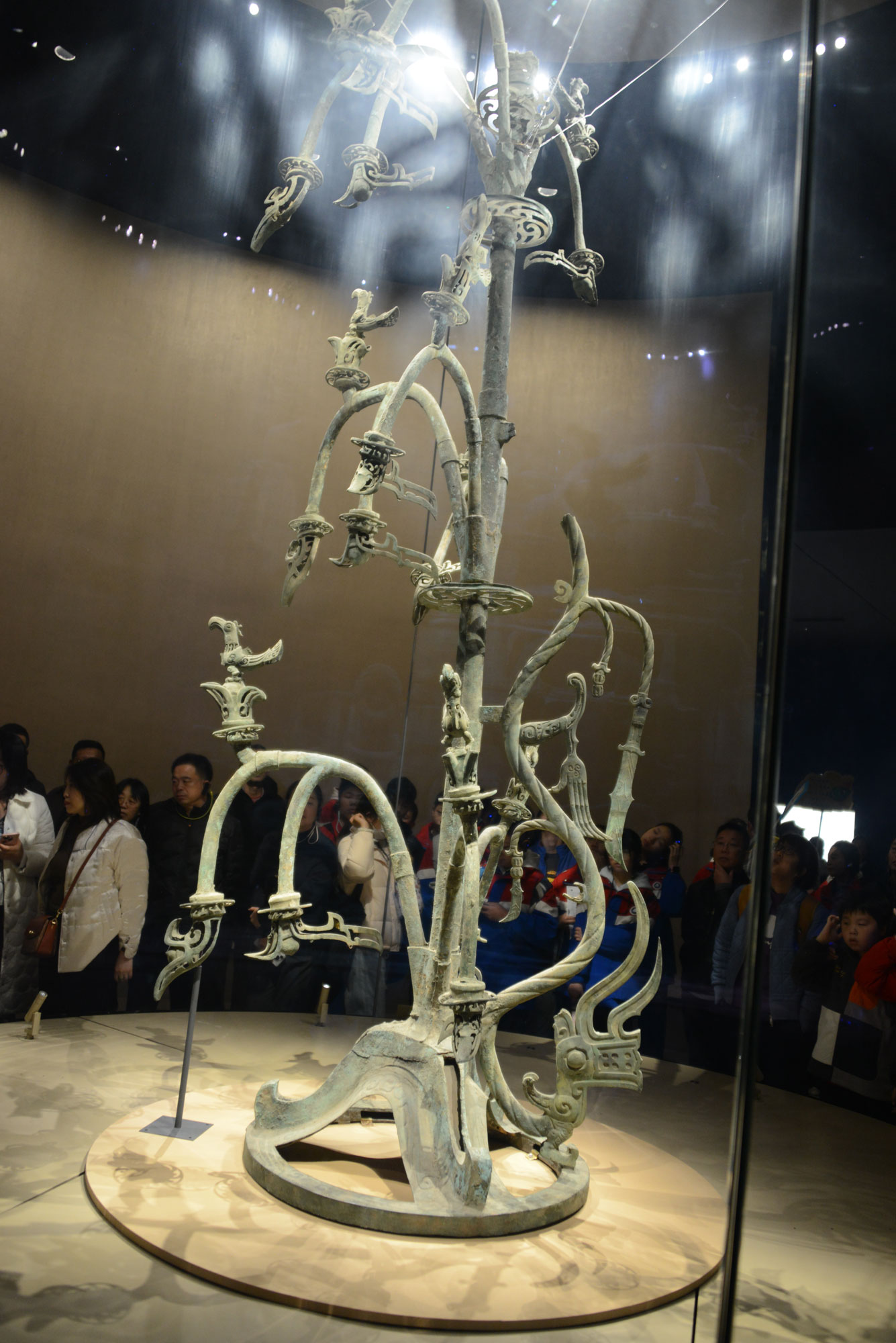
The “Sacred Tree” unearthed from the Sanxingdui Ruins stands 4 meters tall. It is based on the motif of the Fusang tree, said to grow at the edge of the eastern land, suggesting a connection to Japan, known as the Land of Fusō.
“Tsumadoikon” (wife-seeking marriage) also survives in Yunnan Province. This is a form of marriage where the husband visits the wife’s home (sleeping quarters), a system of separate-bedroom marriage that was mainstream in Japan until the early Heian period. It is a “commuting marriage” where the husband visits the wife’s home. Even after marriage, the wife typically did not move to the husband’s home, and children were raised in the wife’s household. Furthermore, the practice of young men sneaking into a girl’s home at night (‘Yobai’ – visiting a woman’s home and frequently calling out to propose marriage) is a culture still present among the “Southwestern Yi” minorities. “Yobai” survived in Japan until the late Meiji period but never existed in Han Chinese or Korean ethnic societies.
Beyond this, practices like simultaneously cultivating both dry fields and paddy rice, headhunting during warfare, the custom of rowing Perong (wooden boats decorated with dragon heads), and tattooing were also shared between Yunnan Province and Japan. Perong boats, used to navigate the rapids of the upper Yangtze River, spread not only to Nagasaki and Okinawa but throughout China, though their origin lies in Yunnan Province.
The genes of the Yi people, part of the “Southwestern Barbarians,” also share a deep connection with Japanese genes. The human Y chromosome is passed from father to son. Haplogroup D of this chromosome is observed at high frequencies in the Japanese archipelago, Okinawa, the Tibetan Plateau, southern China, and Yunnan Province. This means we have been related by marriage to the people living in this region for 50,000 years.
I once had psychic Joe McMoneagle perform remote viewing to determine where Himiko of Yamataikoku (The Queen of Japan in the 3rd Century) came from. Despite strictly blocking all information during the session, Joe concluded, “Himiko’s ancestors came from Yunnan Province.” Her ancestors migrated from Kunming in Yunnan Province to Hanoi in Vietnam, formed a fleet, engaged in activities like piracy, and arrived at Amami Oshima. They later landed in Hakata, Kyushu.
Himiko’s mother was a captivating woman who caught the eye of a powerful clan leader at the Hakata market. Eventually, they settled in the territory controlled by that clan leader. Himiko’s father was an outsider who sailed to the island of Fusang from the desertifying northern regions of China. Himiko was born and raised in Nagato, Yamaguchi Prefecture.
The mystery of the Sanxingdui ruins
Now we must return to the mystery of the Sanxingdui ruins. What kind of masked kingdom was it?
Several things are clear. First, it was a kingdom that valued a spiritual world governed by priests. This becomes immediately apparent when compared to the kingdom of the Jinsha ruins, which destroyed Sanxingdui. The rulers of Jinsha appear to have had a materialistic culture, as only crude priest statues have been excavated.
The fact that the Sanxingdui ruins possessed a rich and intelligent spiritual world indicates it was a prosperous society with ample resources. Many archaeologists believe the Sanxingdui mask kingdom was a religious kingdom, but that is mistaken. Religion has strong narcotic-like elements and does not foster a rich spiritual world. The spiritual world is a philosophical realm that earnestly pursues truth; it is fundamentally different from religion, where belief alone suffices.
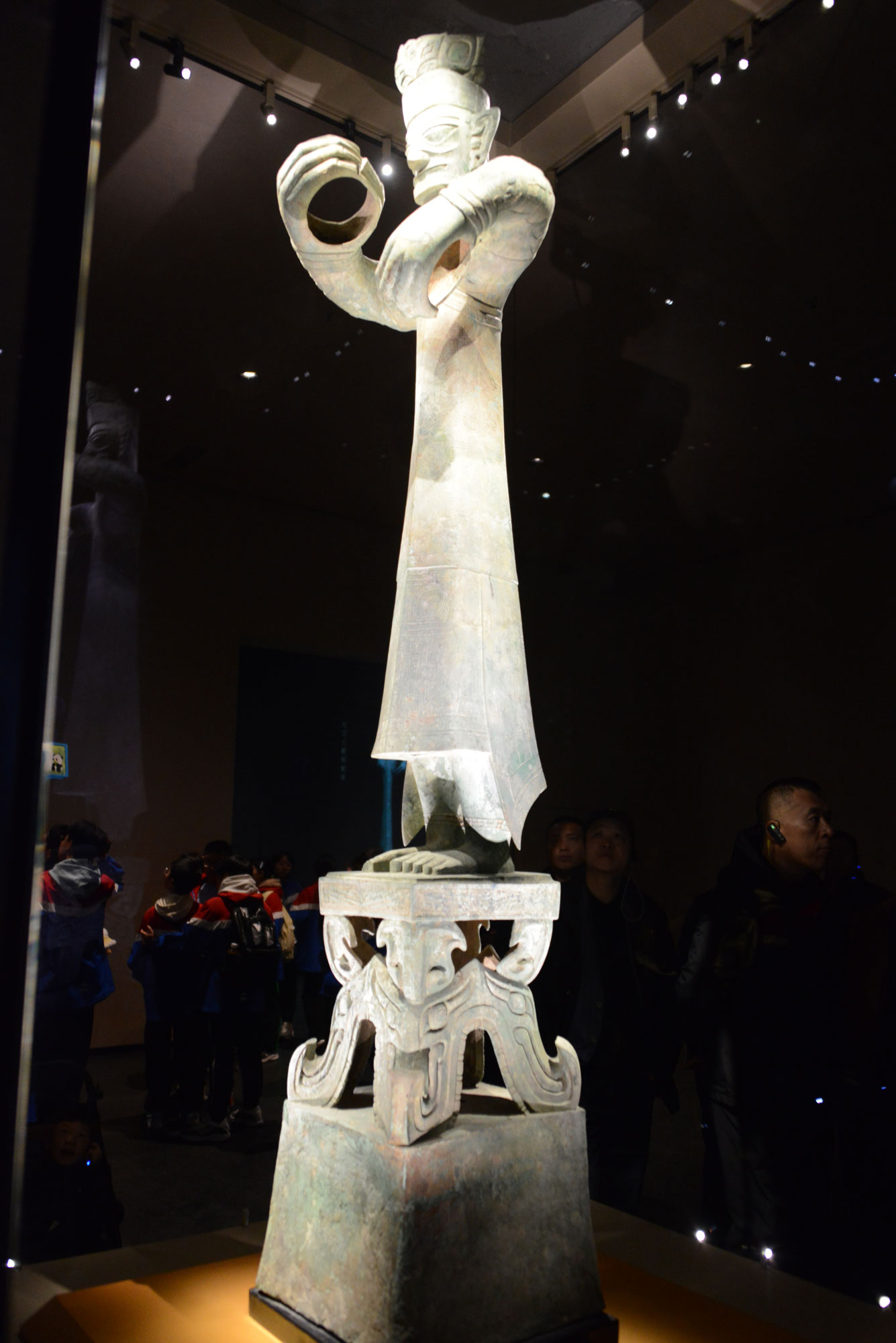
A bronze priest statue unearthed from the Sanxingdui ruins. It stands over two meters tall.
The spiritual world of the Sanxingdui ruins likely shared commonalities with those of ancient Egyptian civilization, ancient Amazonian civilization, and ancient American civilization. For insights into the spiritual worlds of ancient civilizations, I recommend reading the works of British author Graham Hancock. His book ‘America Before’ (2020 edition) is particularly recommended. This book has become a global bestseller.
The bronze human head statues and masks excavated at the Sanxingdui ruins are all depicted in a meditative state. What is it that humans seek to know through meditation? What they wish to know has likely remained unchanged since the time of the Buddha. It is the question: “Why are humans born, and where do they go after death?” No one seriously meditates on “What should I have for lunch?”
Both ancient Egyptians and ancient Native Americans meditated on “What is life? What is death?” The conclusion was that after death, the body decays, but the soul ascends to heaven, crosses the Milky Way, and reaches Orion. At its destination, the soul is judged based on its life on earth. Souls that committed sins are devoured by monsters, while the souls of the righteous safely “reside among the stars of Orion.”
In the Amazon of South America, shamans still drink the herb ayahuasca to enter a trance (altered state of consciousness), meditate, and reach conclusions similar to those of the ancient Egyptians. No writing has yet been discovered at the ruins of the Shu Kingdom of Masks. Therefore, it is unknown whether their meditative conclusions matched those of ancient Egypt or ancient Amazonian cultures. However, the world seen by shamans in trance is universal across the globe.
The Yi people, believed to be the protagonists of the Sanxingdui ruins, naturally still have shamans today. Yi shamans enter trance states to exorcise evil spirits and pray for bountiful harvests. Among the songs passed down by the Pimo (shamans) of the Yi people living in Sichuan Province are some that describe the path the soul takes after death to return to the land of its ancestors. Tracing this path leads back to the upper reaches of the Yangtze River. This has led to the theory that the Yi people are descendants of the group that built the Sanxingdui ruins.
Another mystery of the Sanxingdui ruins is why such a mask kingdom emerged in the isolated Sichuan Basin. The answer likely lies in the origins of rice cultivation.
Twenty thousand years ago, an ancient civilization with a highly developed spiritual world, now completely forgotten, existed on Earth. Since ancient Greek times, intellectuals worldwide have passionately pursued the search for this lost civilization. While its exact location remains unknown, I believe it existed on the “Turtle Island.” Turtle Island refers to the North American continent. Meanwhile, Graham Hancock is exploring the Sahara Desert in Egypt. Twenty thousand years ago, the Sahara Desert was also a lush, green land. With numerous ancient ruins present, it is one of the promising candidate locations.
Several things are clear about this mysterious ancient civilization that flourished twenty thousand years ago. One is that it was a spiritual civilization ruled by psychics. They were skilled at handling megaliths. They practiced sun worship. Of course, they were also proficient in agriculture and astronomy. Furthermore, this civilization vanished as a result of a celestial collision 12,800 years ago.
Wheat cultivation began 12,000 years ago at Göbekli Tepe in eastern Turkey. This site holds the world’s oldest megalithic ruins. Large-scale rice cultivation also started around 12,000 years ago, believed to have originated in the middle reaches of the Yangtze River (Chang Jiang). This implies survivors of the “lost civilization” reached not only the Tigris-Euphrates, Nile, Indus, Amazon, and Yellow Rivers, but also the Yangtze. Some likely traveled up the Min River, the Yangtze’s largest tributary, reaching the Sichuan Basin and even extending into Yunnan Province. This is because the wild ancestor of rice is found in the mountainous regions of Yunnan and Southeast Asia.
The survivors of the “lost civilization” established their own masked kingdom in the Sichuan Basin. However, being a landlocked island and isolated, no one knew of it beyond myths and legends.
Rice cultivation culture also arrived in Japan from the lower reaches of the Yangtze River. The ethnic group dominating the middle and lower reaches of the Yangtze was also the “Southwestern Barbarians,” whose language and customs differed significantly from those of the Han Chinese in the Yellow River basin. China only became unified 2,246 years ago, when Qin Shi Huang unified China. The culture of the people from the middle and lower reaches of the Yangtze River, who brought rice cultivation to Japan, was also definitely transmitted to Japan. Practices like blackening teeth, tooth extraction (removing teeth according to age), and tattooing were the same, and mixed bathing for men and women was also common (The Discovery of Yangtze Civilization, 1998).
China possesses a rice-farming culture and is a nation of sun worship. Sun worship is a belief system that deifies the cosmos, fundamentally distinct from the worship of a personal deity found in Judaism, Christianity, and Islam. A personal deity is a conquering god seeking world domination, a trait well-reflected in Jewish messianic thought. It is said that when the Messiah arrives, all humanity will become Jewish, and Solomon’s Temple will be restored.
In contrast, sun worship seeks harmony. It is a society where people form communities to support one another, living in harmony with nature rather than conquering it. The difference between this sun worship and the worship of a personal deity is vast. The ties between neighboring China and Japan run deep since ancient times, and it seems they must continue to coexist.
As an aside, my impression upon seeing the bronze standing statue resembling a shaman on the first page was, “Could this be a high-ranking blue priest from Atlantis?”
Have you heard of the young Argentine, Mathias de Stefano? He claims to “still possess memories of growing up in Atlantis.” He speaks the Atlantean language and remembers songs. According to Stefano, Earthlings and extraterrestrials coexisted in Atlantis. He says the high priests were extraterrestrials with blue faces. Having seen Stefano’s videos, I apparently associated the bronze statues at the Sanxingdui ruins with these blue priests.
I asked Graham Hancock, “Would you like to interview him together?” but he declined. I also asked Joe and Nancy McMoneagle if they knew Matthias de Stefano and could introduce him to me, but neither had heard of him at all. For readers of MU, I recommend watching “Atlantis and the Creation of Humanity” (https://www.youtube.com/watch?v=Yvdr9LasPBA). Of course, it’s a wild story, but it’s interesting.
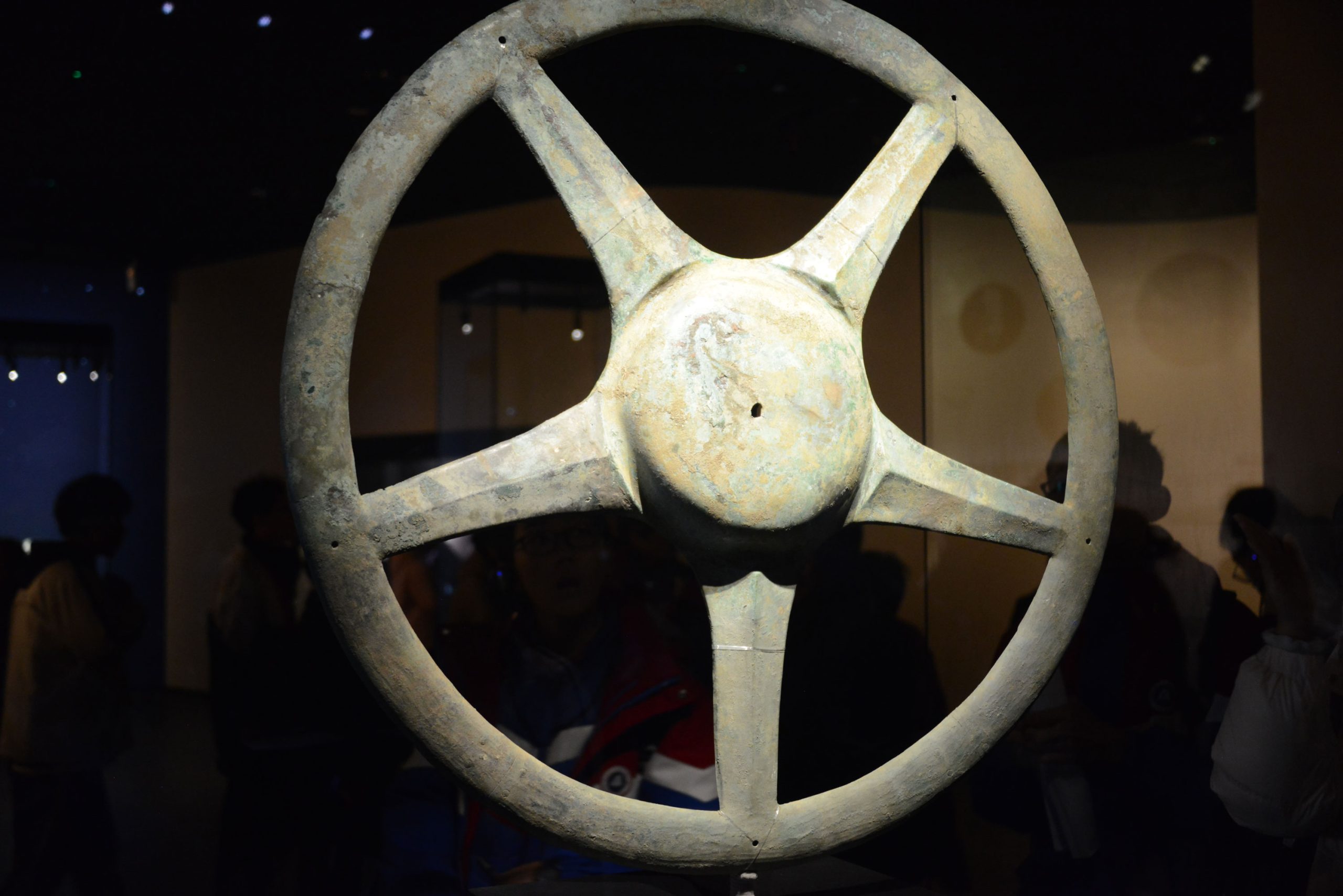
A circular bronze object unearthed at the Sanxingdui archaeological site. It is believed to represent the sun.
I visited China for the first time in 25 years, was completely different from what I imagined. Even after Prime Minister Takaichi’s bombshell statement, it was surprisingly pro-Japanese. I watched the World Table Tennis Championships in Chengdu on December 3rd. During the Japan vs. Hong Kong match, it was a completely hostile environment, but even after people realized I was Japanese, those around me were extremely friendly.

At the Japan vs. Hong Kong match during the 2025 World Cup Table Tennis tournament held in Chengdu. Despite recent political issues, the general public remains pro-Japan.
Mao Zedong’s Communist regime spent three years thoroughly brainwashing the Chinese masses, down to the grassroots level, with the slogan “Don’t hate the Japanese!” (Source: “The Paths of Shu and Yunnan in China” and “From Chang’an to Beijing” by Ryotaro Shiba). I initially thought this brainwashing was the reason for the pro-Japanese sentiment, but observing local society made me realize that wasn’t the case. To maintain peace across the vast Chinese mainland, rulers must possess a “big heart.” No matter the circumstances, instilling “hatred” in the masses becomes the root cause of rebellion and chaos.
Another surprise was flying China Air, which felt remarkably reassuring. The aircraft were old and unrefined, yet meticulously maintained. The flaw of capitalism is prioritizing high profits above all else. In that regard, socialist countries have the advantage of being able to put the “public good” first.
The third thing that surprised me was how Chinese people have nerves of steel.
Perhaps due to the large population, it’s a fiercely competitive society. Driving is self-centered and acrobatic. Even after graduating from university, many young people can’t find jobs. Still, I felt that the tough Chinese people can survive.
Finally, let me make a prediction. I didn’t encounter a single Japanese person on this trip. However, within the next decade, a tourism boom to China will sweep Japan. After all, China is a pro-Japan country, offers low prices, boasts beautiful scenery, possesses numerous historical sites, and has affordable airfares. When that time comes, I hope you’ll delve deeper into the mysteries of the Shu Kingdom of Masks. There are still many secrets waiting to be uncovered.