









Yes, it’s another post in which I blather about how much fun I’ve had and how much I’ve learned about amateur music creation, one of my favourite hobbies, from playing with AI music tools. Before yelling at me, please see my regular AI caveat at the bottom of this post.
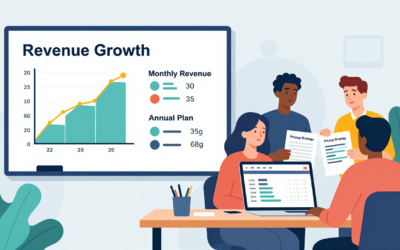
image by AI; my prompt, but a remix of a photo from someone else’s AI prompt
For better and for worse, AI is starting to infiltrate more and more of what we do, often without notifying us. I’ve been reading about how there’s now (a little) money to be made re-editing AI-produced college admission essays (thanks to Siya for the link) so that they read as if they were written by a human, at least enough to pass (AI-based) AI writing detection screens.
And AI-assisted spambots are now parsing the contents of my blog posts to disguise their spam as ‘genuine’ comments by putting subject-specific compliments about my articles in with their links to gambling, porn, crypto and other crap spam sites. Fortunately, it looks like the spam detectors are also using AI to detect when AI is used to promote spam. The escalation is endless.
And while I have enormous sympathy for professional artists, and especially musicians, trying to make a living by producing quality artistry amidst a blizzard of AI slop, I also believe that the greedy oligopolies that control most of the arts “industries” have already largely destroyed these industries by promoting easy-to-sell, dumbed down, derivative “products” and starving the artists in the process. AI has merely intensified the blizzard of crap passing itself off as art these days.
I do not pretend to be a professional artist, and as an amateur artist who likes to play with tools, both for fun and to learn something about the art, I continue to thoroughly enjoy some of these substantially-free (for now) tools. For years I’ve been using music editing tools like Audacity to ‘improve’ (IMO) commercial music that I’ve bought, by looping the best sections, deleting the lame sections, and sometimes even concatenating several similar songs together like an ersatz DJ. One of those efforts (which includes full disclosure of the original songs and artists, including identities of earlier re-mixers) has been viewed thousands of times on SoundCloud.
Recently, while scouring the various music recommendation engines (Apple Music, Spotify, Soundcloud etc), mostly in vain, for good new music in several genres, I discovered that two different ‘engines’ had both recommended different songs by a singer apparently from the little-known country of Guiné-Bissau. I enjoy music from the nearby musical mecca of Cabo Verde, where they speak a different Portuguese Creole language, but they’re close enough that I suppose the recommendation engines logically assumed I’d like them both. (I also like music from nearby Sénégal in the lovely Wolof language, and Kizomba music from Angola farther down the coast.)
But when I searched for the singer(s) called Naya Zyá, including calling on AI to help discover more about ‘them’, since there is no mention of them until about a year ago, I found only mysteries. The contact email is a woman named Marisa Lopes, with a UK phone number, and the ‘writer’ of all the music is listed as ‘virtual artist’ Karina Banca. The music features several distinct female and male voices, but there are no other credits. Reading between the lines, I think what is most likely is that the entire Naya Zyá enterprise is one woman who writes lyrics and uses AI to create the music. But damn, it’s good music. And it’s everywhere, on every music, video, and streaming app going. First time, to my knowledge, I’ve been fooled.
In my hunger for new music, when the recommendation engines crap out, I sometimes turn to Suno AI to see what I can find among the 7M new songs ‘created’ every day on that site. It’s mostly terrible, but I’m starting to learn how to find the wheat among the chaff. And yes, I know the corporation and management behind Suno are awful.
Yesterday I took my first look at Suno’s ‘hooks’ — short engaging pieces of music that music ‘creators’ think might be useful as a basis for others to build on, so they volunteer them up. Free, and open source, like most everything else AI. I found one of the ‘hooks’, called Hope, by a ‘creator’ named Oceanfigo, interesting. He’d just made it this year, and it’s about one minute long. It’s been listened to over 200,000 times.
And then I discovered that 15 song ‘remixes’ have been made based on this ‘hook’, so I listened to them.
One of them, also called Hope, by a ‘creator’ named Kristopher Grone, was, I thought, really good.
Another remix, called Cello Hope, featured a cello replacing the electric guitar.
Yet another remix, called Keeping Hope Alive, added a vocal track.
What we’re talking about here is AI prompts ‘building on’ the results of other people’s AI prompts. Kind of like evolution, we’re encouraged to keep playing with what works and discard what doesn’t. And hopefully to learn why it works or doesn’t in the process.
So of course, I wanted to play. The big question was (1) whether to remix Oceanfigo’s original hook, or remix one of the remixes, and (2) what genre I wanted my remix to be in.
I decided to stick to the original hook, to name the remix Beyond Hope (for reasons my regular readers will understand), and in my prompt, to try something cross-cultural, I asked for an “exuberant” K-Pop song with female singers, based on the same basic rhythm and chord sequence. Why not?
I wasn’t expecting much, so I didn’t write lyrics, hoping the AI would pay attention to the “exuberant” and not produce a dirge, given my title.
Suno always gives you two versions to choose from, and I was surprisingly happy with both. In fact, since they have the same key signature and tempo, I will probably concatenate them into one longer song:
Beyond Hope pt 1 (Suno) (Soundcloud)
Beyond Hope pt 2 (Suno) (Soundcloud)
Sounds, I think, like a cross between K-Pop and Country, with a little bit of Blues underneath.
With music, as with anything else, beauty is in the eye/ear/etc of the beholder, so I’m not looking for a critical assessment. But if you’d like to play, I’d be interested in how you would remix the hook, or remix any of the other remixes. If you have a membership (basic membership is free) you can do this yourself, but if not, just tell me what you’d like to hear and I’ll key in your prompt and send you a link to the result.
All for fun. We’re all amateurs here. No real artists were harmed in the making of this music. I Hope.
Here’s a repeat of my caveat on AI that accompanies all my posts on the subject:
1. I have a love-hate relationship with AI. When it’s used properly and carefully as a tool, as an aid to learning and creativity, I believe it can be very useful, and enormous fun. But most of its large-scale applications (like replacing jobs and facilitating wars and surveillance) are ill-conceived, immoral, incompetently designed and conceived, vastly overreaching the capabilities of AI, ecologically disastrous, socially disruptive, and extremely dangerous.
2. The staggering amount that has been invested in AI has absolutely no viable business case to justify it. It represents possibly the most astounding squandering of money based purely on imagined and improbable future developments and blind faith, in history. Those who have studied this have concluded that this massive bubble will soon burst, and those who’ve invested in it will lose their shirts. At that time, the window to use AI as a learning and creativity tool will quickly close forever. Our playing with these essentially-free tools now is not going to aggravate its abusive uses, nor will it have any impact on the timing or extent of the coming AI crash. So my view is: use it while you can; it will soon be gone.