







image from pxfuel, cc0
When I grow up, I want to learn to write like this:
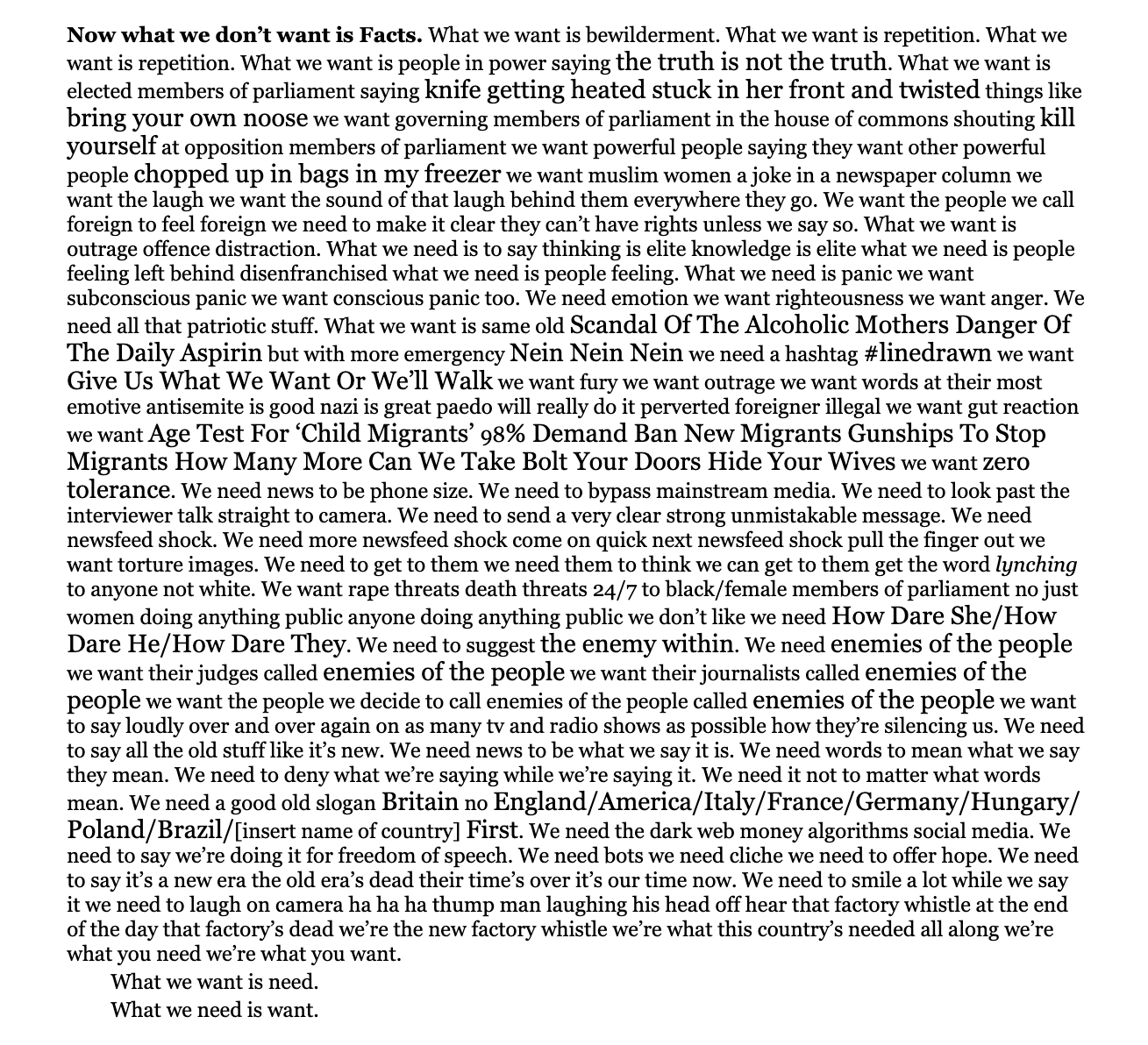
the first chapter of Ali Smith’s novel Spring
I‘ve been exchanging notes with my friend Siyavash Abdolrahimi about what makes writing good writing, after lamenting the execrable quality of most contemporary English-language writing (and notably of most journalism). I’ve written before about the seven qualities of a good (creative) story. And Anne Lamott’s Bird By Bird walks you through the basics and then proceeds to some lesser-known ‘rules’ of good writing.
And I’ve also asserted that IMO good expository writing (including good journalism) has these qualities:
- orderly (not jumping all over the place)
- clear (you don’t have to read it three times to get the meaning)
- coherent (the logical argument can be followed without difficulty, even if you might question the premises or conclusion)
- comprehensive (it takes the time needed to fully explain the subject matter so the reader can fully understand the issues and their nuances)
- honest
- no deliberate obfuscation to make a ‘debate point’
- a clear delineation between evidence-supported facts and opinion
- no deliberate omission of ‘inconvenient’ facts that contradict what is being said, and
- engaging — it encourages you to keep reading, not by ‘holding back’ the important points but by making you want to learn more and understand better.
And yet another skill set is required in conversation, especially in interviewing, where the essential competencies are doing your research in advance, asking the right questions (given in advance), and shutting up and listening to the answers unless the interviewee starts to ramble.
Lots of things to learn, then, to be competent at using our bewildering and imprecise abstract languages. Italo Calvino’s final (and unfinished) work Six Memos for the Next Millennium was an attempt to delineate the six essential requirements of great literature. James Joyce took 17 years to write his final, much misunderstood and maligned masterpiece Finnegan’s Wake, in which almost every line contained wordplay (It’s for fun, guys — don’t try the ‘wickedly hard’ crossword puzzles if you don’t want to be challenged).
All of which is an unnecessarily long-winded prelude to my confession — that despite over 50 years of working diligently to become a better writer, a better explainer, a better conversationalist, a better story-teller, a better poet and songwriter, I am still not very good at any of these things. I’m still an amateur, and the more I learn, the more ignorant I feel.
I will proffer only only one piece of advice on the subject, and that’s the most important piece of advice I ever learned — Spend at least ten hours attentively reading, listening to, and watching great writers, journalists, essayists, poets, song-writers, conversationalists, and interviewers, for every hour you spend practicing your craft. Sadly, it will take you ten times again as much mostly wasted effort to wade through the dreck and discover who those great artists are. And after all that, you and I will never get enough practice to become anywhere near as accomplished as they are.
But as all writers know in their bones, it’s not about achieving excellence. We can’t not write, any more than we can stop breathing. It’s not what we do. It’s who we are.