







“Preserve your memories: They’re all that’s left you.” — Simon and Garfunkel, Bookends
“The thing about time is that time isn’t really real.” — James Taylor, Secret O’ Life
“How come I miss what I never knew?” — James Taylor, Baby Boom Baby
“We seem to find meaning in what’s never happened. Our self-portraits use a lot of negative space.” — Joshua Rothman
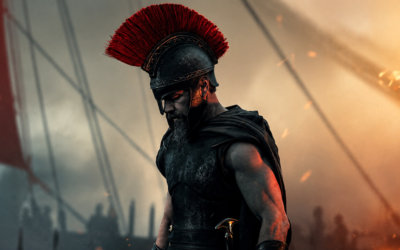
image by AI; my own prompt — ‘me’ imagining worst-case scenarios
A few weeks ago, I was sitting in a café when an older woman (even older than me!) with a walker, seated at the next table, who was apparently a regular customer, turned to me and engaged in what is euphemistically called ‘small talk’. We talked for a few moments and then she noticed someone passing by the café’s window, rather flamboyantly dressed, apparently headed for the nearby cannabis dispensary.
The woman scowled and, indicating the dispensary, said: “I don’t like that place, or the people it attracts. Shouldn’t have been allowed.”
Then she paused, and clearly looked at me to await my reaction. I expect she wanted me to confirm her opinion. Being a polite, well-mannered Canadian (most of the time), and being conflict averse, I used my usual strategy of saying nothing. But then she added: “Don’t you think?”
OK. So much for that strategy. I thought for a moment and then replied: “I think most people are struggling these days, and I guess we all have our own coping mechanisms for dealing with that. I don’t see it as different from drinking alcohol.”
Not surprisingly, that was the end of our conversation. She turned away slowly and went back to reading her book.
In the weeks since then, I’ve kept coming back to ponder what I should have said, or should not have said. A more caustic response? A clever retort? How about if I’d framed my response as a question, like ‘I wonder if they’re struggling to cope with the hardships of life in their own way, just like the rest of us?’ Damn. Why couldn’t I just let it go? It’s the past, done, over.
I tried to figure out how and why I ‘allow myself’ (in quotation marks because I don’t think we have any free will) to get worked up about things in the past. And I realized I get just as worked up about things I imagine (often with dread) happening in the future, and about things that aren’t happening at all, that I just imagine might be happening. I’ve recently had a spate of problems with tech: my blog was attacked by hackers, and both my phone’s and my printer’s internet connection suddenly stopped working (a recurring issue). Now I dread using any of these technologies in case the problems remain or recur. I am imagining things happening in the future, totally making them up.
And, during the current heat wave, my brain immediately went to worrying about dogs left trapped in poorly ventilated cars while their people are shopping or doing errands. Every car alarm I hear triggers this completely imagined possibility in my head, and makes it ‘real’.
I am convinced that the human animal is the only creature on the planet that is afflicted with a ‘self’ that is uselessly preoccupied with its own imaginings. Those imaginings are either reinventions of the past (neuroscientists say that every time we ‘remember’ something we create a new, different memory in the brain that ‘overwrites’ the old one), or thoughts about what might be happening in the present or might happen in the future.
Those imaginings might be nostalgic ‘memories’ of a past that never really was, or traumatic memories brought back, horribly, to life, steeped in regret, remorse, guilt and shame, again and again. Or they might be worst case scenarios of something awful happening right now or potentially, dreadfully, happening in the future. Or naive, unrealistic, sure-to-be-shattered hopeful dreams about an impossible future.
I started to ask myself: In a desperate attempt to ‘learn from’ past errors and suffering, ‘relive’ ‘better’ days from our past, ‘prevent’ future errors and suffering, and motivate ourselves to strive for and anticipate ‘better’ futures, are our uniquely human ‘selves’ with their relentless imaginings of what might have happened and what might be happening and what might happen, simply making us all mentally ill — for no reason, since our behaviour is entirely determined anyway?
What horribly-failed evolutionary experiment produced the useless appendage called the human ‘self’, hopelessly trapped in an imagined past, an imagined present, and an imagined future, forever veiled in a ‘loop of knowing’ from seeing what is just simply happening?
And what could be more pointless and absurd than relentlessly dwelling on thoughts such as “What I should have said…”, when I simply didn’t?
Of course, ‘we’ (our ‘selves’) have no choice but to think and believe and rehash and fret about what might have happened and what might be happening and what might happen, because that’s what ‘we’ have been conditioned all our lives to do, and that’s what the brain’s neural structures develop over our lifetimes to do. We have to ‘make sense’ of things. Knowing that doing so makes us uselessly ill does not stop us from doing it.
As Robert Sapolsky has explained, although we may be completely convinced that we have no free will, that doesn’t stop us from behaving as if we do. Crazy-making.
A friend asked me the other day: If we retained no memories of the past, would that mean the past didn’t exist?
I didn’t know what to tell him.