




I have a love-hate relationship with AI. Please see my explanation of that at the end of this article.
I‘ve been writing music for years, most of it pretty awful. Although I fancy myself a poet, I find the writing of rhyming poetry to be tedious, and since I’m basically lazy, I haven’t written much of it. But I have rather liked the results when I have. My taste in music is eclectic and rather demanding. I tolerate laziness in myself (y’know, that ‘no free will’ thing again), but not from the musicians I listen to. So I was naturally attracted to AI as a tool for creating music, both in assisting me to convert ideas into rhyming poetry, and in setting it to music, since I’m basically clueless at doing that, for all my study of my favourite music and what makes it so. Almost all the music I’ve written until recently has been instrumental. I just can’t get the words and the music to go together.
I was of course skeptical about AI’s ability to create music that met my standards, and to be more than cringeworthy at combining words and music. I was, and continue to be, pleasantly surprised.
Before I go any further, let me stress that I see AI as a tool to use in music, much as it is used in other applications, with various degrees of proficiency. That’s been my most important learning, which is why it’s #1 on this TIL list:
- Writing AI-assisted music is a collaboration. You and it are training each other. There are things it can do better than you, and other things it is hopelessly incompetent at. You have to learn which is which.
- The strength of the lyrics of your song — every damn word — is really important. Extraordinary lyrics with memorable turns of phrase and natural rhymes will survive even mediocre melodies. And even the best melodies and harmonies and arrangements will be defeated by bland or cringey lyrics. If they can’t be fixed, make the song an instrumental.
- AI can let you tap into the genius of randomness. Some of the random juxtapositions and ‘imagery’ and rhymes it comes up with are going to be unbearably lame. Delete them or correct them quickly and ruthlessly; it’s doing the best it can. But sometimes these juxtapositions will be freakin’ genius. Some of the greatest creativity stems from a happy accident, and AI creates a boatload of accidents to draw from.
- You can give AI a ton of material to compose from, and it will usually competently distill it down into some coherent lines and passages that you may be able to use almost verbatim in your lyrics. Shovel all that shit into its gullet, and it will spit out some amazing summations. Let it do the work when it’s up for a task.
- Don’t forget that when AI bots are mining for material to feed back for your song, they are especially mining (unless you have specifically told them not to) everything you have ever written (on your blog, or in other AI queries) on the subject of your song. They want to please you, and what better way to do so than to feed you back words it ‘knows’ you like to hear? It’s likely that no one will love your AI-assisted song as much as you do. And that’s fine!
- AI somehow knows how to add ‘interest’ to lyrics and their rhythm through the use of poetic techniques like ‘interior rhymes’ (additional rhymes within a line of rhyming poetry), ‘breathing’ appropriately to allow a complete idea continued on the following line to be expressed coherently, etc). Study and learn from that.
- Don’t bother to ask AI to ‘critique’ the final version of poems after you’ve made your corrections. It will always tell you they’re wonderful. You have to be your own worst critic.
- AI usually knows how to get its ‘singers’ to ‘breathe’ and accent appropriately. Your lyrics don’t have to be totally tum-tum to get very natural-sounding results.
- AI music bots also pay attention to the voicings (male vs female voices, styles etc) that you have used in ‘your’ other compositions. You can even create ‘personas’ so that your favourite ‘singers’ show up for the songs you choose them to sing.
- At present, trying to micromanage AI music production is frustrating and sometimes futile. It’s just a tool, and it’s often better to give it less instruction than a bunch of specifications that it doesn’t understand (and it can’t/won’t tell you it doesn’t understand). If the output doesn’t meet your wishes, toss it and tell the AI bot to try again. The number of songs you can produce in minutes for pennies is amazing, so don’t be afraid to learn from (you and it) making lots of mistakes.
If you’re interested in hearing more of ‘my’ music, you can find it all on my Suno page (slow loading but includes lyrics), or my Soundcloud page (faster loading, no lyrics). ‘My’ six best (IMO) songs, with all music by AI based on my prompts:
1. After Us — a song about my feelings about civilization’s collapse, and what might come after (lyrics mine, AI assisted)
2. If It Wasn’t For Words — a song about how human life might have emerged on Earth if we’d never evolved language (lyrics mine, AI assisted)
3. Everything Is Fine — a tongue-in-cheek ‘protest’ song about our denial that everything is falling apart (lyrics mine, AI assisted)
4. Only This — a song about radical non-duality and a ‘glimpse’ of the absence of a separate self (lyrics entirely mine)
5. Rise and Shine — a K-Pop girl group style song on women achieving equality (unedited AI lyrics based on my prompt)
6. She Knows — Celtic-style song based on the maiden-mother-crone triple goddess myth (unedited AI lyrics based on my prompt)
Just to reiterate what I’ve said on my previous AI-inspired posts:
1. I have a love-hate relationship with AI. When it’s used properly and carefully as a tool, as an aid to learning and creativity, I believe it can be very useful, and enormous fun. But most of its large-scale applications (like replacing jobs and facilitating wars and surveillance) are ill-conceived, immoral, incompetently designed and conceived, vastly overreaching the capabilities of AI, ecologically disastrous, socially disruptive, and extremely dangerous.
2. The staggering amount that has been invested in AI has absolutely no viable business case to justify it. It represents possibly the most astounding squandering of money based purely on imagined and improbable future developments and blind faith, in history. Those who have studied this have concluded that this massive bubble will soon burst, and those who’ve invested in it will lose their shirts. At that time, the window to use AI as a learning and creativity tool will quickly close forever. Our playing with these essentially-free tools now is not going to aggravate its abusive uses, nor will it have any impact on the timing or extent of the coming AI crash. So my view is: use it, smartly and cautiously, while you can; it will soon be gone.
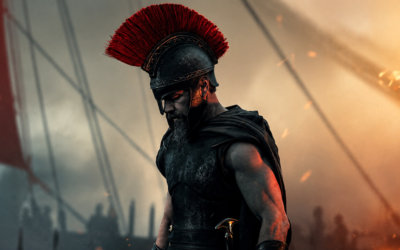
3. And yes, the image of ‘me’ conducting an imaginary orchestra is AI.