Post Views: 8
Over a century ago, German pathologist Georg Schmorl documented a strange phenomenon: cells from fetuses that had moved into the mother during pregnancy. He had discovered microchimerism — where the cells from one individual move into another and set up shop.
In the past few decades, scientists’ understanding of microchimerism has grown, thanks to technological advances. And the implications are wild.
Cells transferred during pregnancy could mean you have cells from your grandmother living inside you. A twin can be “absorbed” within the womb, leaving a genetic trace of the lost sibling. And after a bone marrow transplant,
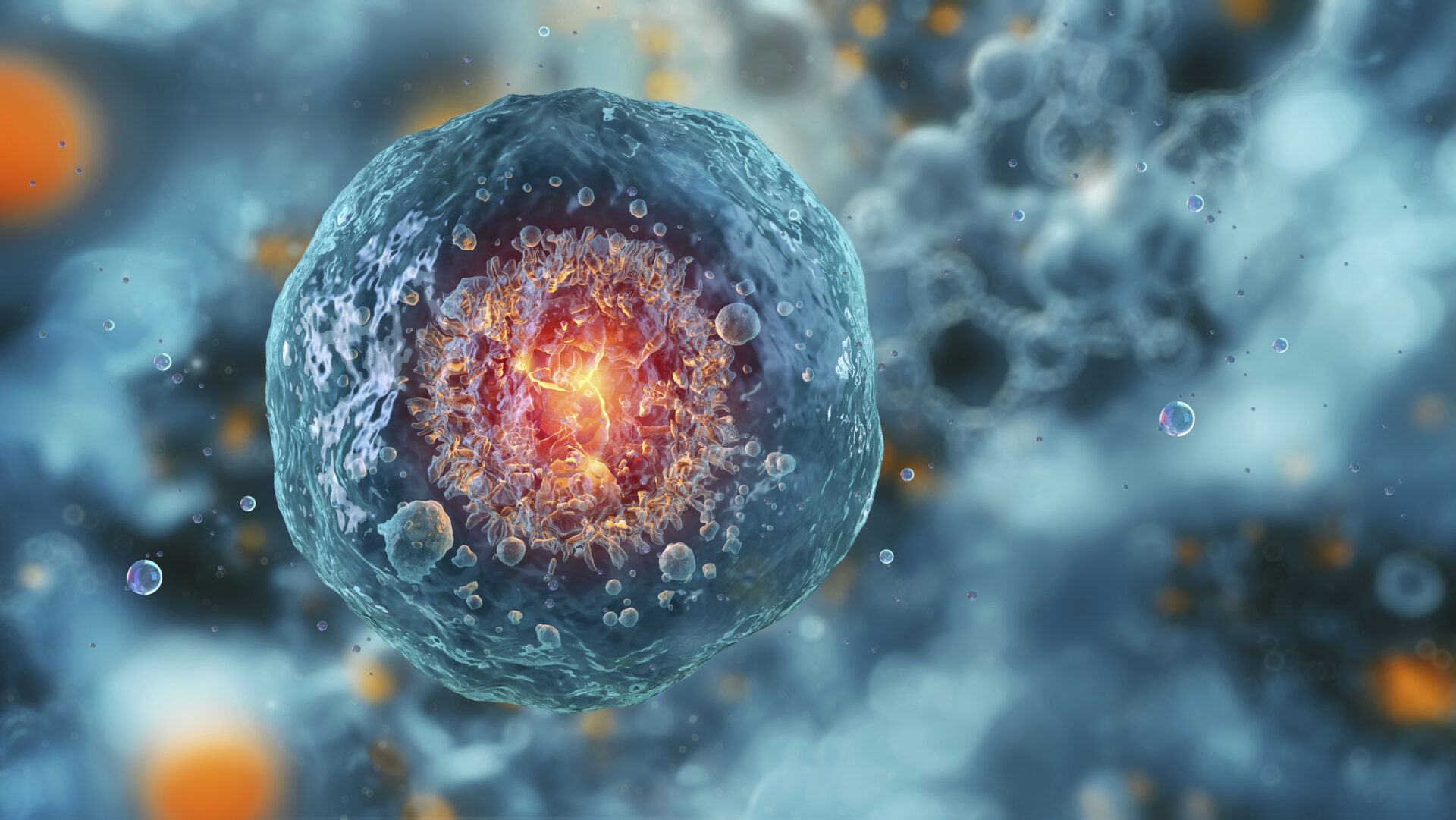
An illustration of a human embryo (Image credit: RUSLANAS BARANAUSKAS/SCIENCE PHOTO LIBRARY via Getty Images)
I looked for this number because I didn’t really know about evanescent twins, so I wanted to know how many pregnancies started with several embryos and suddenly one disappeared. And I couldn’t find any good number because, of course, it’s quite difficult to put any imaging there at the beginning of the condition. Some articles say that up to 30% of pregnancies will start with several embryos, which means a lot of us are affected by evanescent twins. But let’s say it might be rare that we have so many microchimeric cells in one organ that it completely changed a DNA test.
But there’s another example in my book that took place in Alaska in 2004. After a rape, the forensic investigators collected the semen from the scene, and they discovered that the DNA in this semen matched with a man who was already in the database. But this guy was behind bars. He was in jail, the day of the rape, so he couldn’t be the rapist.
Finally, investigators discovered that this guy, the prisoner, received a bone marrow transplant a few years ago from his brother, and the cells from the bone marrow of his brother didn’t stay quietly in the bone marrow and blood. They go outside the marrow, and some end up in the semen. And the true rapist was the brother, the one who donated the bone marrow, and not the receiver. Without the alibi of the prison, the brother who received the transplant would have been charged, and the true rapist would have been left free.
I guess there are some cases where microchimeric cells can really change the result of a DNA test. But for now, it’s not really studied. I’ve been contacted by some forensic investigators to learn more about microchimerism, so maybe things will change.
HO: You point out that microchimerism is used for both pro- and anti-abortion arguments, and it’s used by “manosphere” influencers to promote ideologies. Why do you think microchimerism research is so open to interpretation and used in this way?
LB: Next time you’re at a dinner, just try to explain microchimerism. You’re a science journalist, right? Well, usually when you tell the story you’re working on, people are saying, “Oh, yeah, OK.” And they just turn to another conversation. If you try mentioning microchimerism in your next dinner, then you’ll see. Everyone will try to make some hypothesis, some connection; some will be moved that it’s possible to keep some cells from an unborn child or a lost child. Some will be disgusted by the idea that they keep cells from their mother, like having their mother on their shoulder all the time. It’s really the first time as a science journalist I experienced such resonance with a story I was working on among people around me, people who are really not into science.
As soon as the door opened, it revealed the fears and the desires of people. So yes, some conservatives use microchimerism to fight against abortion because they say the cells from those aborted will haunt the women for the rest of their life. [But] I’ve met scientists explaining that if you receive a shot of cells of fetal origin, it can also help you to regenerate your organs. It can be used also by some other people to rejuvenate, to try to stay young.
It’s because it’s such a new field and you have such open questions, there’s room for many interpretations, many hypotheses. I mean, that’s fine; that’s how science works. You should always have hypotheses and try to answer your hypothesis with new experiments. But it’s true that sometimes I didn’t know how to handle all those ideas at the beginning. Then I realized it was like a window open on the intimate — their fears and their desires — and it reveals what they really think about their connection to the world they are in. From a sociological point of view, it would be really interesting to study that.
HO: In the book, biologist and evolutionary theorist Amy Boddy warns that microchimerism researchers love to hypothesize. When the implications of the field are so far-reaching, how do we get past this? Which hypothesis do you find most intriguing?
LB: Many scientists told me that until 2021 or something like that, there was this hypothesis that those cells could come from another generation than the mother. We knew that the mother would give cells to the fetus and the fetus could give cells to the mother, but then people ask, because the mother can still carry cells from her mother, maybe she could pass those cells to the fetus. Until the 2020s, scientists were thinking, “Well that’s a crazy hypothesis; that can’t happen.” There could be only a few cells that won’t go through the placenta and integrate with the new fetus — until one scientist proved that a newborn can carry cells from the grandma.
In this field, you always have crazy hypotheses, and I guess until we haven’t proved that this hypothesis is wrong, you can still leave the hypothesis on the table. One of the craziest hypotheses, the first time I encountered it, I thought, “OK, they’ve gone really too far.”
This hypothesis is that we could inherit cells from our sexual partner. I thought it was not possible because I thought the semen was full of spermatozoa, that they are only like half cells having only half chromosomes, so they cannot survive. But actually in semen, you have a lot more cells than spermatozoids — you have immune cells, for example.
There are many cells in the semen, and we can think that if you have some, there could be some path for those cells to escape and go into your blood. It’s not completely crazy. For now, there’s no formal proof of this new source of microchimerism, but I recently heard that some scientists are working on the topic on mice.
We should be careful about those interpretations. But I think scientists are not the ones who should care about this interpretation; otherwise, they would prevent themselves from doing their research. They should open all the doors with all kinds of hypotheses. If we do it in a scientific way, meaning if we try to answer a hypothesis with good experiments, then I think everything is fine. You will never prevent people around you from using this information to distort the facts and tell another story. That’s how life goes.
HO: What do you think the most promising use for microchimerism research will be over the next 10 to 20 years? How do you see it unfolding?
LB: I guess it will be in the regeneration field. We have discovered that those cells can participate to regenerate tissue. Some scientists around the world are doing clinical studies to see whether we could use these cells as a therapy either after an infarctus [heart attack], but also a vascular accident [stroke] or when you have a wound on your skin. The hope is that by either attracting microchimeric cells that are within our bodies, or injected, these microchimeric cells maybe can help this kind of tissue to repair. I think that might be one of the promising uses of these cells in the future.
Maybe also in the transplantation field; maybe we can think about using the knowledge of how microchimeric cells can induce tolerance to avoid [immunosuppressive] drugs. When you receive the transplant, you need to take drugs [that suppress the immune system] for the rest of your life, and those drugs are like really strong drugs. If we can use microchimeric cells before the transplant to allow better tolerance, then we could either not use any drugs or maybe use less drugs. That would be really interesting, too.
This interview has been condensed and edited lightly for clarity.
greystonebooks
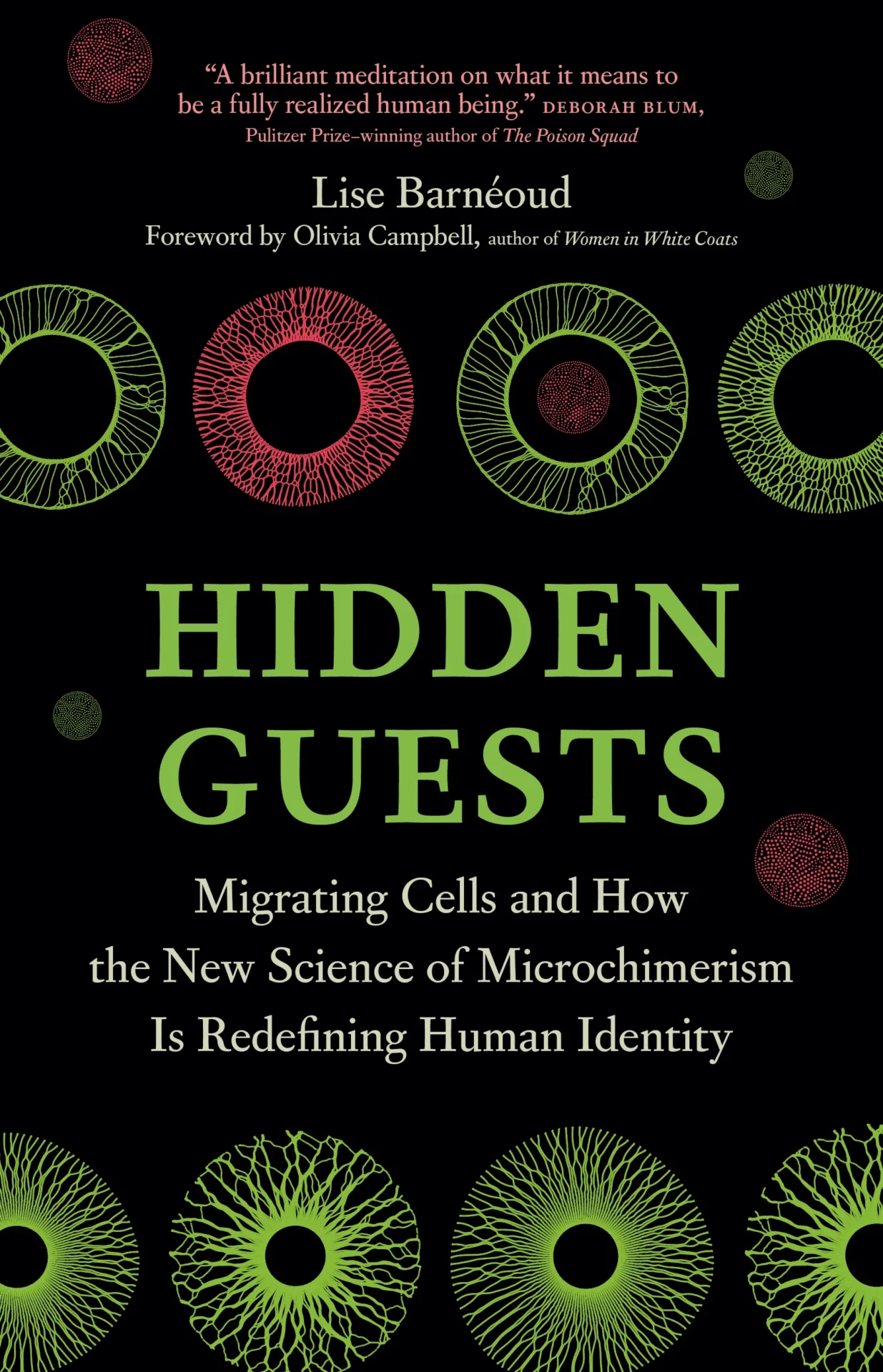
Hidden Guests: Migrating Cells and How the New Science of Microchimerism Is Redefining Human Identity
What if some of your cells were not your own? What if they once belonged to someone else?
Part mind-bending medical mystery — part cutting-edge science — Hidden Guests uncovers the astonishing phenomenon of microchimerism: the presence of foreign cells inside our own bodies. The incredible story of how those cells got there — and what they do once they arrive — might change everything we know about the immune system, lineage, and identity.