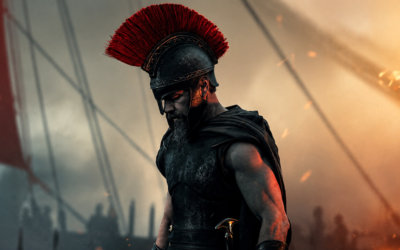









image by AI; my own prompt
Often young children, puzzled or distressed by the behaviour of their peers and the other people they know, invent imaginary friends — characters who share their joys, who understand and reassure them, who have interesting things to say, and who it seems are just more fun to be around, much of the time, than ‘real’ people.
It’s a way of making sense of the world, carrying on a conversation with oneself from a position of shared context, curiosity and understanding. A way of imagining the world as a healthier, happier, more compassionate place. A way of filling an empty space inside.
Writers of fiction are engaged in a very similar exercise. They invent characters, and make them say and do funny and obvious and quirky things. Sometimes those characters represent aspects of the writer that the writer wants to express and explore. Sometimes they are characters the writer wishes they were more like (or perhaps less like). Sometimes they are characters the writer wishes existed in real life.
These characters are not so different from the imaginary friends that young children invent, that their parents and their ‘real’ friends later ridicule as childish. So young children will often then ‘put away’ their imaginary friends, and will talk with them only when they are alone. Or not at all.
We writers have no such shame about our characters, and may even employ them in a whole series of stories, and even include ourselves as the stories’ narrators.
The characters in my stories have lives that extend far beyond the page. I sometimes hear them talking to me when I’m thinking about some particular problem, or just daydreaming. They are my delightful, quirky, imaginary friends, my undemanding, wise, lifelong companions, and I don’t know what I’d do without them.
We are conditioned to think that we can ‘know’ another person, and hence we are often shocked when the behaviour that person exhibits seems completely ‘out of character’. But what we think we ‘know’ about other people is no more real than what we ‘know’ about our imaginary friends or the characters in novels, plays and songs. We make it all up, entirely from our imagination.
No one really knows who you are either, or how you think or how you feel. We don’t even really know ourselves. All we can do is try to make sense of our bodies’ behaviours, look for patterns, and construct them into the ’story of me’. And that story is just as imaginary as the stories we tell ourselves, and others, about who they are. And just as imaginary as the young child’s stories about their make-believe companions.
And because we don’t want to appear foolish to others, we nod and agree that these stories we tell and hear are true. We pretend to know ourselves and other people, pretend that we know who we are and who they are, when we’re just making it all up, and looking for confirmation that what we’ve made up is true, especially the ‘story of me’ we’ve made up.
Part of what we love about inventing imaginary friends, and story-writing, is the feeling of control we have over our invented characters. And part of it stems, I think, from the despair we feel about our ‘real’ selves and other ‘real’ people not being quite up to what we imagine they might or should be capable of, when our imaginary characters can be and can do anything. They are ‘perfectly’ who we imagine them to be.
Our education system, our workplaces, our political and religious ideologies, and our peers, all pressure us and tell us we can and must be and do better, that we can be and do anything if we strive hard and long and intelligently enough (and stop ‘daydreaming’). And Hollywood and literature sell us heroes who can do anything, and people who are our ideals of who we want to be, and of who we want to love. They keep us unhappy, desperately searching, hopelessly striving, and obedient.
And it’s all just stories, stuff made up in our, and others’, imaginations.
What if we could ‘park’ our unhappy ’stories of me’ and recognize them as the absurd and impossible fictions they are, and refuse to ‘own up’ to them?
What if we could set aside our stories of who and what others we think we know are, or could be, and just be with them, if that brings us joy, and not be with them, if it does not, without judgement? What if we could just be the wild creatures we remain, underneath all our stories, underneath the fictional ‘story of me’? (The cats and dogs we love might remind us how.)
And what if we could shamelessly and happily imagine new characters, dream or write them into being, characters that bring us pleasure and joy, even though they are not ‘real’, because they fill a little empty space inside us, and help us see through the bewildering and exhausting fiction of our own and others’ stories? Why should small children and writers have all the fun?
Our imaginations can cripple us, terrorize us, bleed us dry with regrets about what might have happened, and with dread about what might happen in the future. Many unhappy people are telling us now that we (and this ‘we’ is never defined, but it presumably includes you and me) have to “create a new story” to replace the simple sad truth of what is happening in the world, and then we have to work furiously to make this new story ‘real’.
But this is just another prescription for our continued enslavement and immiseration by stories of what “should be” and “could be”, a prison of impossibilities.
Instead, perhaps, our imaginations might liberate us from these terrible stories, by letting us see them for what they are — total fictions, shit made up in our heads, not to be taken seriously.
Perhaps we could rediscover what small children and fiction writers know — that our imaginations can let us create a world of remarkable, delightful characters of our own invention, through whom we can co-create new and wonderful stories, stories that are fun, invigorating, inspiring, joyful, comforting, relieving, entertaining — and, like all stories, completely, perfectly, untrue.