









We warmly welcome Camille Sauvé, author of Sorcerers of the Stone: Architects of the Three Ages, as our featured author this month. Camille’s book examines sacred sites in Peru and their counterparts around the world—strange abstract structures with perfectly carved terraces, massive steps, basins, and underground grottos and cave systems. Her investigation demonstrates how these mysterious ancient monoliths found worldwide share specific architectural characteristics and reveal evidence of a very ancient culture that once existed across the globe. Camille draws on the work of Peruvian researcher Alfredo Gamarra, who first described in detail the three distinct building styles and construction methods of sacred Peruvian sites and how they represent three ancient world ages. She also examines myths and legends surrounding these structures, weaving together a tapestry of what early humanity might have looked like and how Peru may hold the key to remembering our forgotten prehistory.
In her article, Camille introduces the reader to the revered Hanan Pacha (Heaven Above) constructions—the oldest style of construction in Peru—along with their unique properties and the sophisticated science behind their construction.
Interact with Camille on our AoM forum here.
Ancient civilization enthusiasts looking for evidence of lost worlds often focus on the colossal megalithic works found in all parts of the world. These megaliths can be seen throughout Europe, the Middle East, Asia, and Africa, with some of the most amazing examples coming from Peru at places like Sacsayhuamán and Ollantaytambo, and from Bolivia at Tiwanaku and Puma Punku.
Here, many speculate that we have evidence of an advanced civilization, probably pre-flood (approximately 12,000 years ago), mainly because of the gigantic scale and precision of the stonework, which even with today’s technology we would struggle to recreate.
However, as fascinating as the giant megaliths are, what people often miss is that below these colossal structures is evidence of an even earlier civilization found throughout Peru and also in other parts of the world, one that I call the Hanan Pacha (first phrased first coined by Alfredo Gamarra, a Peruvian researcher from Cusco) or ‘First World’, and, to me it is even more interesting and bizarre than the megalithic one.
Though many podcasters and writers have commented on the strange Hanan Pacha monoliths, for most people, these edifices still don’t seem to create the buzz or fascination of the megalithic work. However, I would like to invite the reader to really examine and consider these constructions as equally important, maybe more so because of their antiquity, as the megalithic ruins. They are fascinating, beautiful, and really, quite frankly, so otherworldly, that it seems possible that someone else, possibly not human, created them all together.
Figure 1. The mesmerizing site of Inkilltambo in Cusco features bizarre forms, niches, and seats.
What are Hanan Pacha Constructions?
Hanan Pacha constructions, primarily found at key archeological sites across Peru, are usually built from metamorphosed limestone, though some are even constructed from harder rocks such as andesite or diorite. They often feature perfectly carved rectilinear and rounded seats in various sizes — some looking as though they were designed for giants, while others for normal-sized people, and even others for little people.

Figure 2. A huaca with seats of many sizes found at Chinchero
Frequently, they show undulating and zig-zagged canals (at Q’enko, for example) to allow water to flow around the surfaces. Some are situated so that water would fall over the heads of the person sitting on the seat crafted on the side of the rock face. Others go into basins, which strangely look as though they were burnt into the rock.
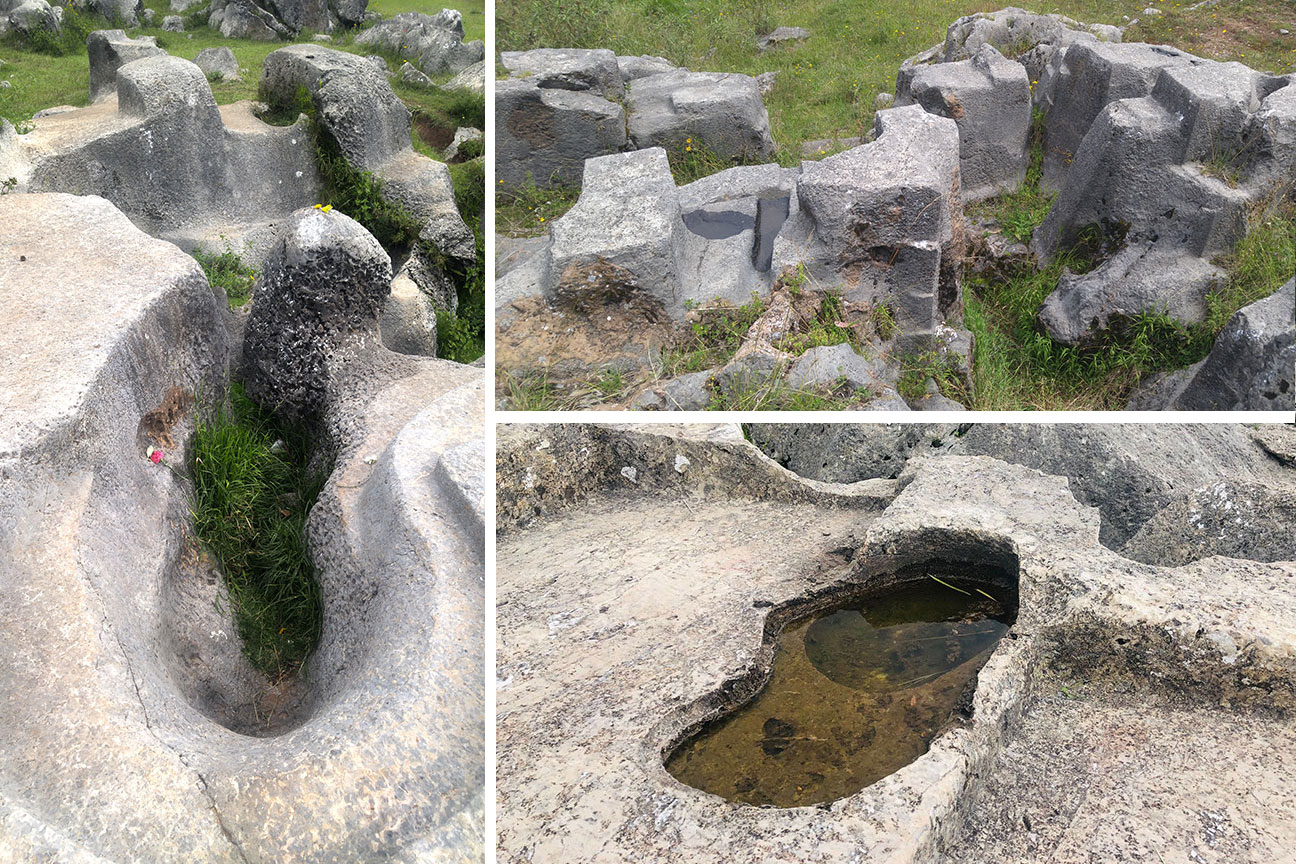
Figure 3. Some of the enigmatic shapes found on Hanan Pacha monoliths.
Then there are the rectilinear, triangular, and curved forms of no known specific function (although I play around with some ideas as to their possible uses in my book). One of their most pronounced features is their recessed rectangular niches, often featuring areas with vitrification (a process where the rock surface turns to glass by the application of high heat), mostly found right at ground level. Most of these niches also have black and green mold oozing through the rock face.
Another strange anomaly is that there appear to be fingerprints, pressings and scoop marks featured all over the stone, forming all kinds of interesting shapes, ledges and ridges. Some suggest these striations and odd forms were caused by acid rain; however, I have a hard time believing this is acid rain damage, as the rocks that have these forms and ridges are right next to others with no damage. Can acid rain be that selective?
Please look at these photos and tell me what you see?
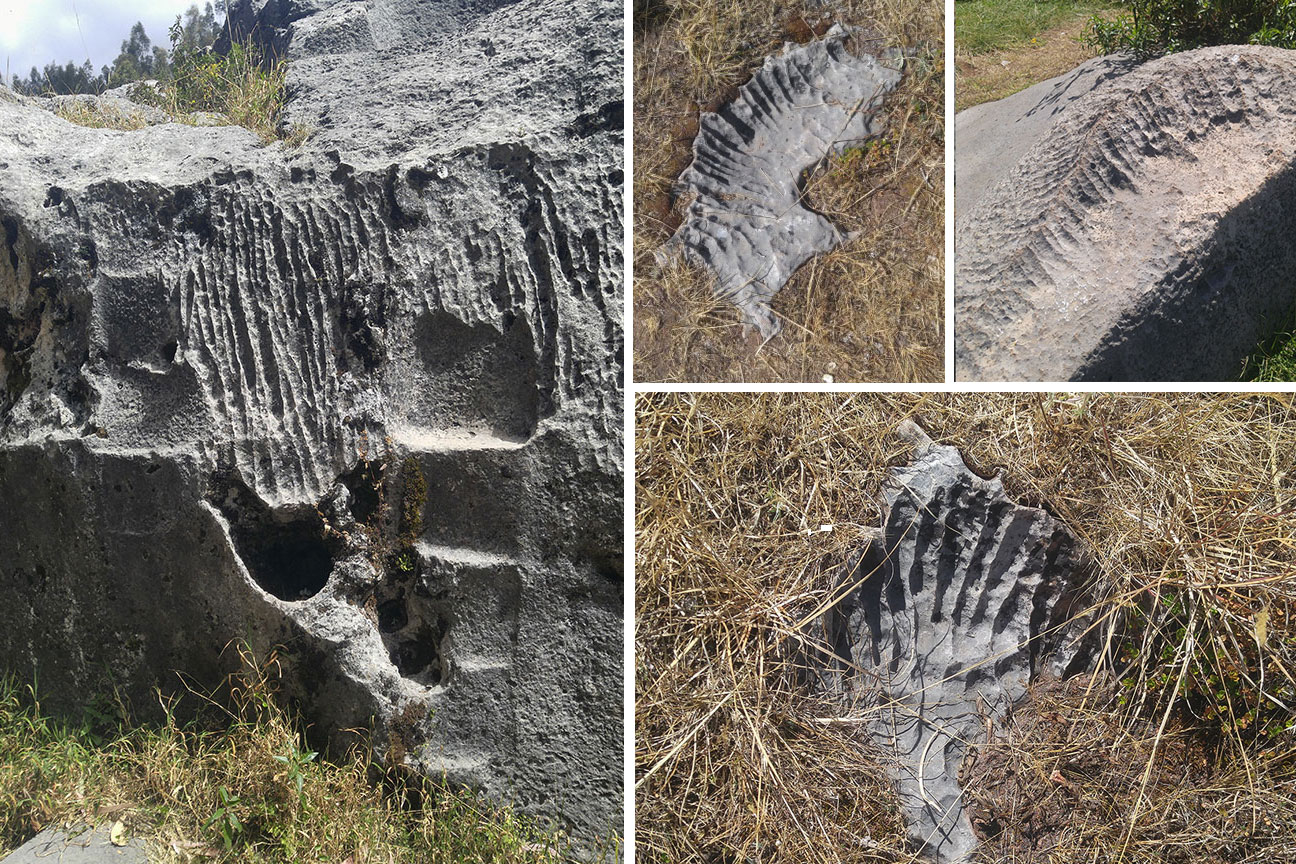
Figure 4. Fingerprints in the stone and other pressed forms in the matrix.
What is going on here? To me, Hanan Pacha constructions look more like art pieces made in clay by autistic geniuses rather than by modern builders. And, for all who view them up close and objectively, it is hard to understand why anyone would do this in the first place. What purpose did all those niches, canals, basins, and recessed forms serve?
Then, and probably the most puzzling question of all, is how they could do this? What culture or civilization had the power to mold rock like this?
Who made the Hanan Pacha Constructions?
Though many people will tell you that the Hanan Pacha constructions, as well as the megalithic ones (called Uran Pacha by Alfredo Gamarra), were built during the time of the Incan Empire, there is no direct evidence to support this contention. Yes, it has been documented that the Inca did worship and do rituals at these locations (per the eyewitness reports of the Chroniclers), but there is no concrete evidence that they actually built them. Also, what is clear to anyone with eyes to see is that the styles are just too dramatically different from one another to be collectively called “Incan Style”.
One of the more bizarre explanations for the different styles of architecture found at Sacsayhuamán, for instance, was given to me by a local guide who had completed the 5-year Ministry of Culture ‘tour guide program’ and was himself an official guide. He said that all the varied styles found around Cusco and the Sacred Valley were constructed during the Incan empire (approximately 1438 to 1532), and that the different styles were attributed to the Inca bringing in other people that they had conquered and forcing them to build public works projects around the Cusco area. He said that the Hanan Pacha monoliths were made by people from the northern part of the empire, and that the megalithic style originated with people in the Tiwanaku (Lake Titicaca) area.
This was the first time I had heard about what they are teaching tour guide students here in Peru regarding the three distinctive styles found in the hills, and I was quite astonished to hear this.
To me, the most glaring problem with this explanation is that there is so much evidence of overbuilding — where one culture builds around, and on top, of the other style — indicating that the later cultures saw these earlier sites as sacred or special in some way, so they built around and on top of them to pay homage to them.
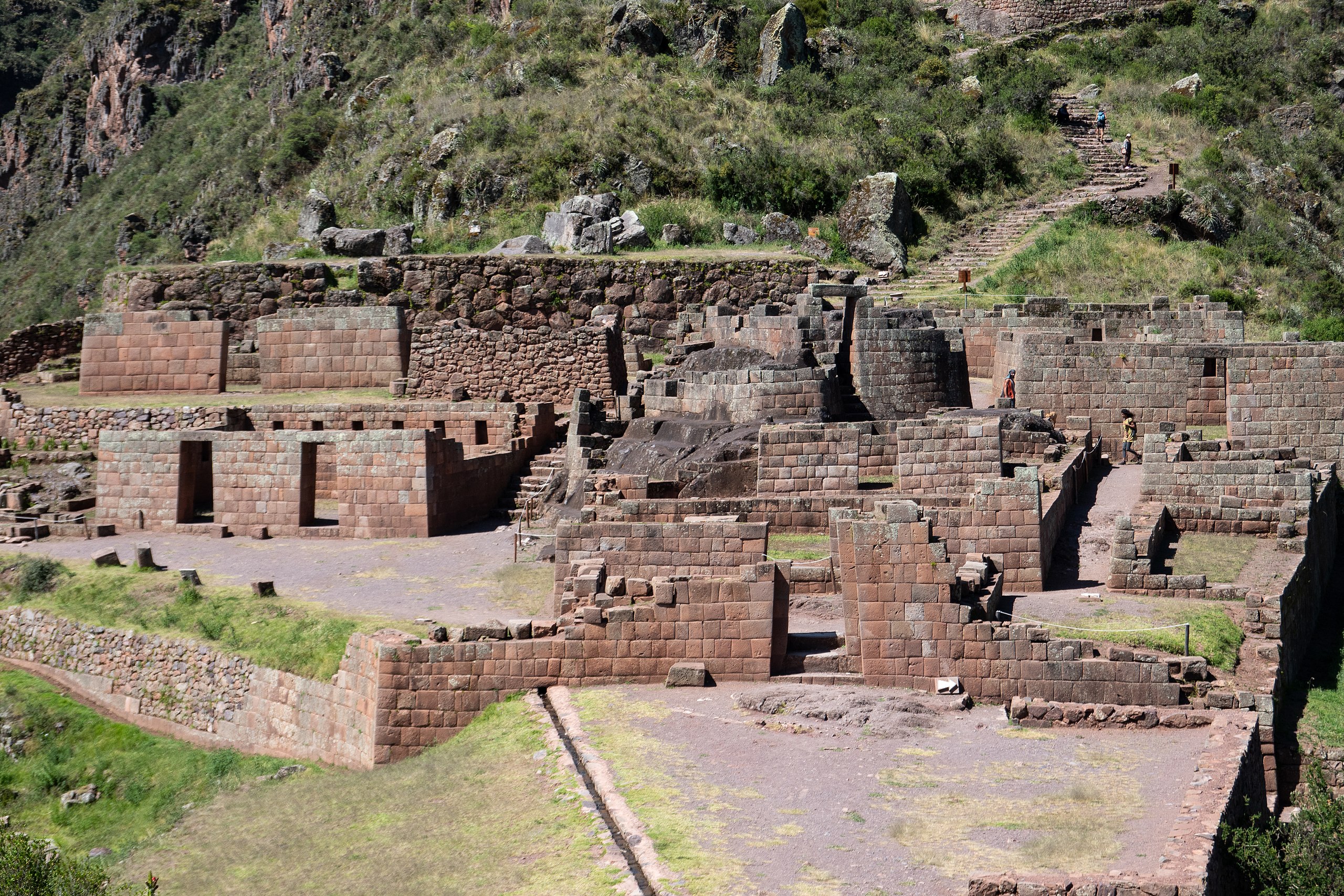
Figure 5. A great example of overbuilding —where one culture builds on top and around the earlier vestiges of another culture. Pisac.
Photo: PsamatheM (CCBYSA4.0)
We can also ask: what was the rationale for the Incas in bringing in other cultures to build their temples, especially when they had such different styles? Usually, a conquering civilization like the Inca would celebrate and highlight their own unique building style, especially for sacred sites (called huacas or wakas in Peru), in their own backyard of Cusco, not the people that they conquered. If we are to believe this narrative, then the conquered peoples displayed vastly superior building skills compared to the Inca. And, to anyone thinking critically about this, it would make the Inca and their culture look vastly inferior, so this explanation is very doubtful to me.
Then, we also have the tools we are told the Inca used to cut the stone—the copper and bronze tools and pounding rocks—but these can’t explain the fine detail work in the hardened andesite and metamorphosed limestone work that we see in the megalithic and monolithic monuments.
A rule of thumb for stone carving is that you need a harder tool than the rock you are trying to carve, so copper and bronze tools couldn’t have done the job on the hard rock. Pounding stones can take chips away, but it is extremely time-consuming and extremely labour-intensive work, and copper and bronze tools can’t do the type of fine edge work we see in megalithic and the Hanan Pacha stonework. So, it seems that the Incas couldn’t have done these constructions with the tools they had in their toolbox.
If not the Inca, then who?
In my book “Sorcerers of Stone: Architects of the Three Ages”, which came out in March of last year, I did speculate that perhaps the Hanan Pacha constructions could have been made by an earlier type of humanoid—a protohuman who thought and looked very differently from present-day humans.
My theory was based on the Akashic viewings of the renowned psychic, Rudolf Steiner, who saw these early humans, known as Lemurians, as masters of the elemental world — beings who could shape and lift huge rocks with ease. If you would like to know more about this idea, please read this article on my website.
Though many would consider this theory over the top, I entertained it, especially because nothing else made sense. Looking at the forms of the rock, which seemed to me to have been plasticine at one time, with evidence of fingerprints and shapes that were pressed into the stone, it really did seem like somebody, or something, had a master level ability to shape stone, and with ease.
One of the wonderful things about being an outsider looking in (meaning a non-academic with no career and reputation to worry about) is that I can propose some very unconventional theories without having to worry about my reputation being tarnished or losing my job. With such latitude, I can propose some unusual theories that may or may not be true, but ones that I feel should be entertained anyway.
One of the things I have been considering over the last year is that perhaps our early ancestors may not have created the Hanan Pacha monuments. Possibly they were built by those non-humanoid beings that have been excavated out of the Nazca and Pampa areas of Peru, creatures that are now collectively being called “The Nazca Mummies.’
Having closely examined the strange holes and fingerprints in the Hanan Pacha monuments, as well as the feet and hands from the actual CAT scans and photographs of the Nazca mummies, it does seem like they could possibly be a match.
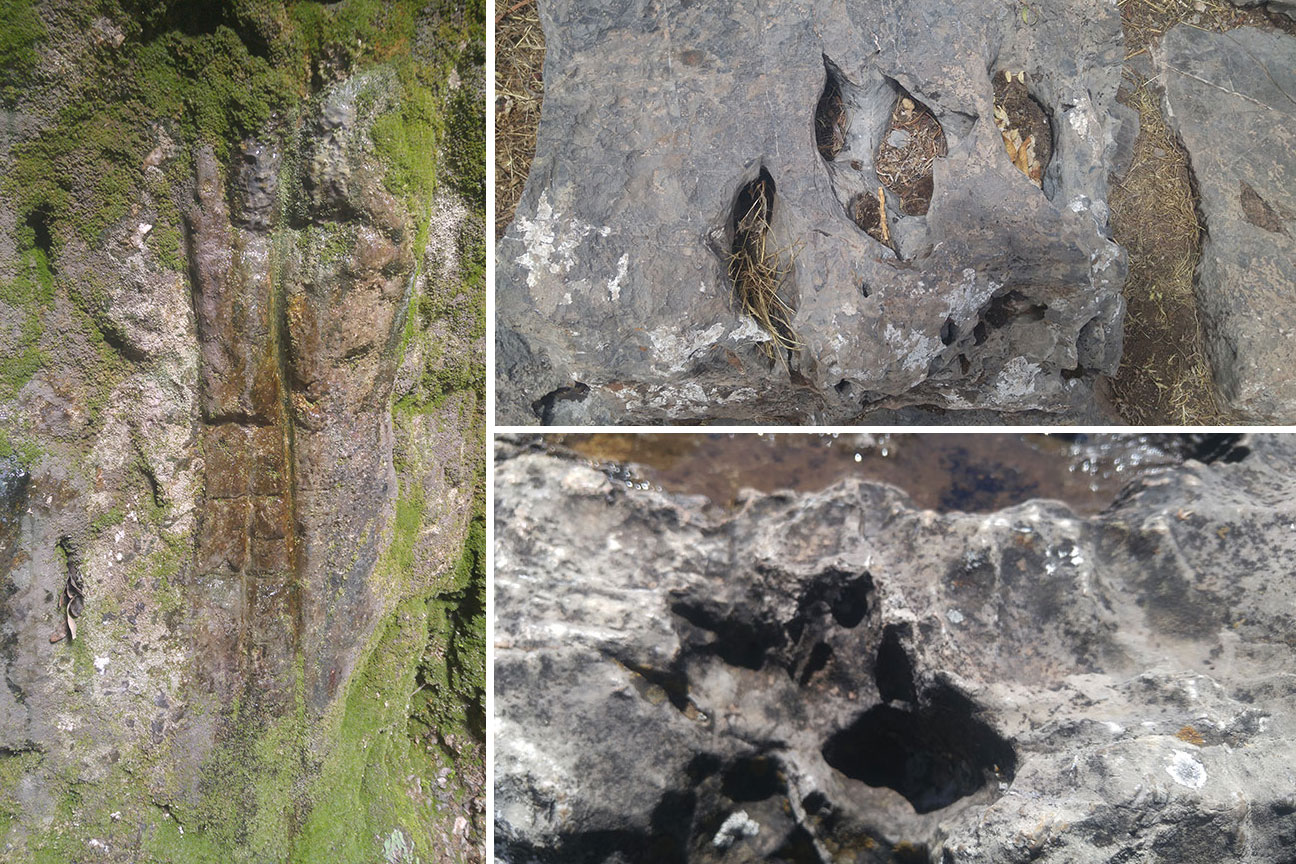
Figure 6. Are these more examples of possible fingerprints and footprints in the stone?
If you are not aware of these ‘mummies’ (technically, they are not mummies but desiccated bodies covered in diatomaceous earth), they are simply fascinating. They are diverse in size and shape, and one of their distinguishing features is that they all seem to have elongated heads and three fingers and toes.
(Because these images can trigger sensitive people, I have decided not to include them in this article, but if you would like to see actual CAT scans and photos of these beings, please visit: https://the-alien-project.com or https://tridactyls.org.)
Though the Ministry of Culture of Peru has tried to call all these mummies frauds, (for a while, they only showed the obviously fake mummies confiscated at the Lima airport as the only evidence of them being so), doctors and forensic scientists from many countries, many of them experts in their fields, have examined the real mummies in the flesh and state that they can find no evidence that they are hoaxes.
Today, I understand there are about 30 artifacts (full bodies, and some just hands or heads), with most residing at the San Luis Gonzaga National University in Ica, Peru. Though once they were displayed to the public, they are now only available for research by qualified professionals and researchers. I believe this has to do with security reasons, as there have been attempts to seize them in the past by mysterious persons.
Of course, Nazca is pretty far from the Cusco region, so you may be wondering how these beings may have created the Hanan Pacha monoliths around the Cusco area. Well, it is possible that these entities, or entities like them, were also here in Cusco, and maybe still are. For instance, there are many stories by locals of ‘duendes’ — or goblins that live underground. In fact, it is so common to hear about them that one can’t immediately dismiss these stories as simple folktales.
Also, we do have many elongated heads that came from the Cusco area (with many oddly missing their bodies) in museums. So, unfortunately, it is hard to say if they had three fingers or five. There is also one full-bodied specimen named “Huayqui, the alien”, which is displayed at the Andas Museum(or Ritos Andinos Museum) in the town of Andahuaylillas.

Figure 7. The so-called ‘Alien mummy, Huayqui’
I can also relate an odd story from a neighbor of mine. He told me that he was working on a Ministry of Culture dig high up above the Pisac hills when he discovered a small hominid being with an elongated head. He claimed it was taken down to the Garcilaso de la Vega Museum in Cusco city and was put on display there.
I went to visit the museum to see this creature with my own eyes, but a museum curator told me, “All the Nazca mummies were sent to Ica.” Curiously, the curator said, “all the Nazca Mummies.” So were there beings excavated from the Cusco area and mislabeled ‘Paracan’ or ‘Nazcan’? If this story my neighbor told me was true, they should have stayed in local museums!
Though I can’t say for sure whether all the strange pressings and forms found on Hanan Pacha rock are from these beings or from others similar to them, I hope my observations will inspire others to further study this.
Are Hanan Pacha constructions built to harness energies?
When we look at Hanan Pacha monuments, they don’t seem to make any sense from a modern perspective. If we ask ourselves, ‘Why do humans build?’ most would say that it is mainly to provide shelter, and, for more modern civilizations, to organize and house the functions of the state with buildings designed for government, religion, and industry.
Hanan Pacha monuments just don’t fit the bill for anything remotely resembling these types of constructions. When we look at them, we don’t see any protective function, although there are caves that frequently run beneath and through them, which we could presume may have sheltered and housed the builders. The parts we can see above ground are filled with odd steps—some functional, others not—basins, and canals, as mentioned earlier. But, for what purpose?
And, what about the large niches found at ground level on so many of the Hanan Pacha huacas? I know it is commonly heard that the famous “upside down rock” at Sacsayhuaman is evidence of some catastrophe that occurred in the past (assuming these were functional stairs at one time), but since we can see similar niches at other Hanan Pacha sites, it is entirely possible that they had some other function. Could they be used to concentrate, let’s say, telluric energies? And, could the shapes themselves hold some energetic qualities that we are not aware of?
Then we have the property of the rock itself. Limestone holds a lot of calcite and quartz content, minerals that we know can enhance electromagnetic properties as well as store information. Many of them are built right on top of natural springs and streams. The funny thing about limestone is that it loves to suck up water. This is one of the reasons you see moss growing right out of the rocks, and this moss is mainly in the areas where the recessed niches are.
According to the scientific paper, “The Effects of Geophysical Anomalies on Biology,” when the groundwater is absorbed into the fine crystalline matrix in limestone, it turns the positively charged ions into negatively charged ones.
We all know that negative ions are good for us, and it is one of the reasons people visit waterfalls and go to the beach. Could these chambers be ‘recharging stations’ for the people who built them, kind of like how modern EV drivers take their vehicles to charging stations today?
Final thoughts
I think if we are looking to find answers to explain these Hanan Pacha constructions with our rational minds, conditioned through our Cartesian education system, we may be missing insights into what the constructions are really about. Perhaps the minds that actually built them were very different to our own, and this is why we are so perplexed when we see them. Thinking more intuitively and abstractly might be the missing key to understanding them.
We might want to do a thought game to illustrate how different life forms on Earth actually perceive the world. For example, imagine how an octopus, a whale, or a bird really sees and senses their environment. It would be considerably different from the perception of modern human beings and decidedly more instinctively based.
It seems like the builders of Hanan Pacha monuments had a similarly instinctive mind, along with intelligence and dexterity. It seems like these qualities made them master agents of action and purpose, shaping their world to their aesthetic sensibilities, while harnessing the powers of nature to enhance their existence.
Perhaps it is time to expand our consciousness a bit, maybe through deep alpha-state meditation and/or by using some entheogens to crack the code as to what these things are. Go to these places and try to turn off that monkey mind. Put your head in a niche; sit on one of the many seats that call to you; listen to the water flowing; feel the sun on your skin; absorb the charge in the air; listen to your inner knowing.
What do you feel? Do you feel lighter? Do you feel recharged? Did you get downloads? Maybe you went to other worlds?
Maybe the key to truly understanding these Huacas, like the shamans of the Andes and meditators do, is to tune in with the heart and feel what they have to say.