







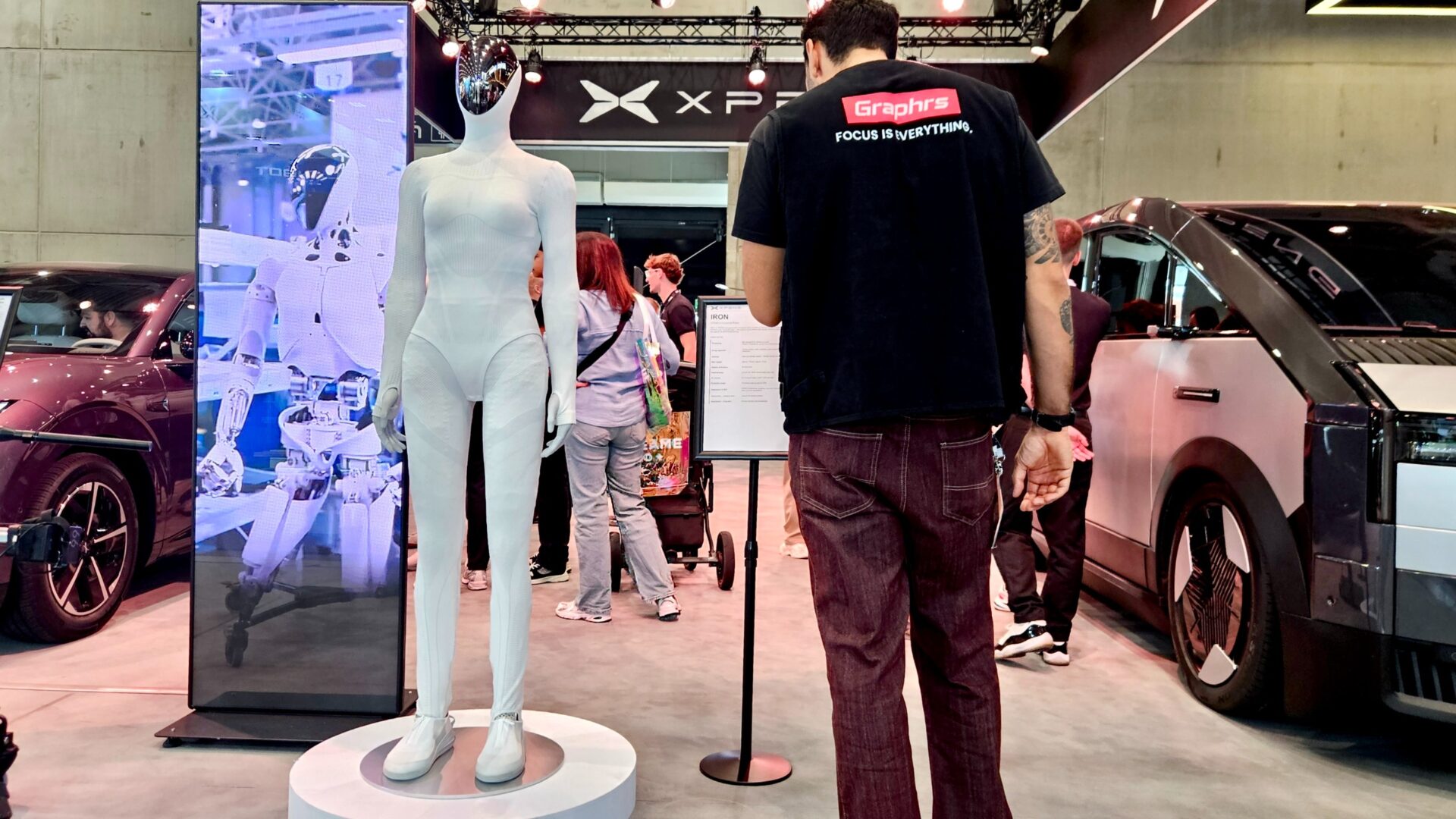
BERLIN — An eerily lifelike humanoid robot made by Chinese technology company Xpeng has now entered mass production, company representatives revealed. They say it’ll be the first such machine to walk itself off the production line.
The . Researchers, therefore, are increasingly focusing on building world models and other layers like improved vision-language-action (VLA) systems that enable them to better plan their actions a few steps ahead.
Xpeng representatives won’t share detailed information about the proprietary AI system powering IRON, but each robot features three frameworks that combine so it can function autonomously.
The frameworks include VLA, which combines visual perception, natural language, and physical motor control; a vision-language model (VLM) — combining vision encoders with text readers; and a vision-language-task/thought (VLT) model, which representatives say gives IRON reasoning capabilities that enable it to think through assigned tasks.
Each IRON robot is powered by three Turing AI chips that offer a collective 2,250 trillion operations per second (TOPS) of AI processing power. This means it can run a model equivalent to Meta’s Llama 3.2 (launched in 2024) locally without needing to access the internet. By contrast, most new laptops that can perform simple on-device AI tasks (like altering your webcam video feed in real time) tap into approximately 50 TOPS.
“We aim to build a new type of robot with full generalization capabilities that can truly become part of everyday life, create a better life for people, and ultimately become a companion in their lives,” said He Xiaopeng, the company’s chairman and CEO, in a statement shared with Live Science.
The company will first install these robots in its own showrooms and technology campuses while it continues to validate new ways to use them. Then in 2027, external shipments will target commercial customers for roles in areas such as customer service or guided tours in China primarily, and then in other countries.