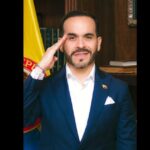


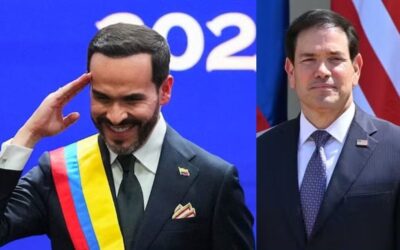




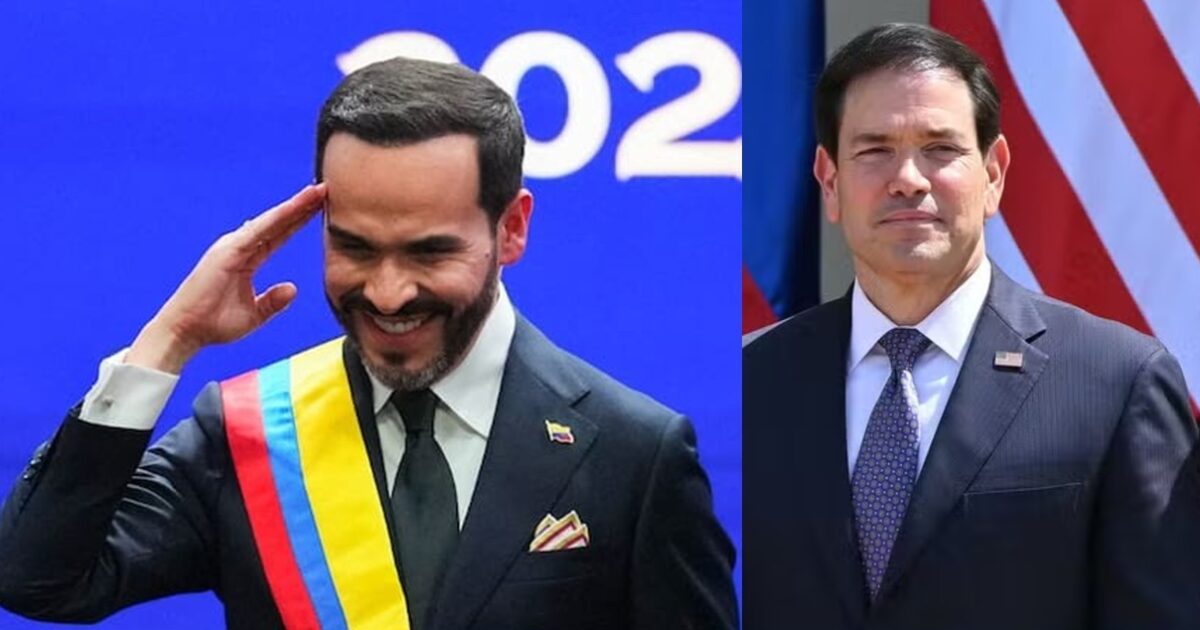
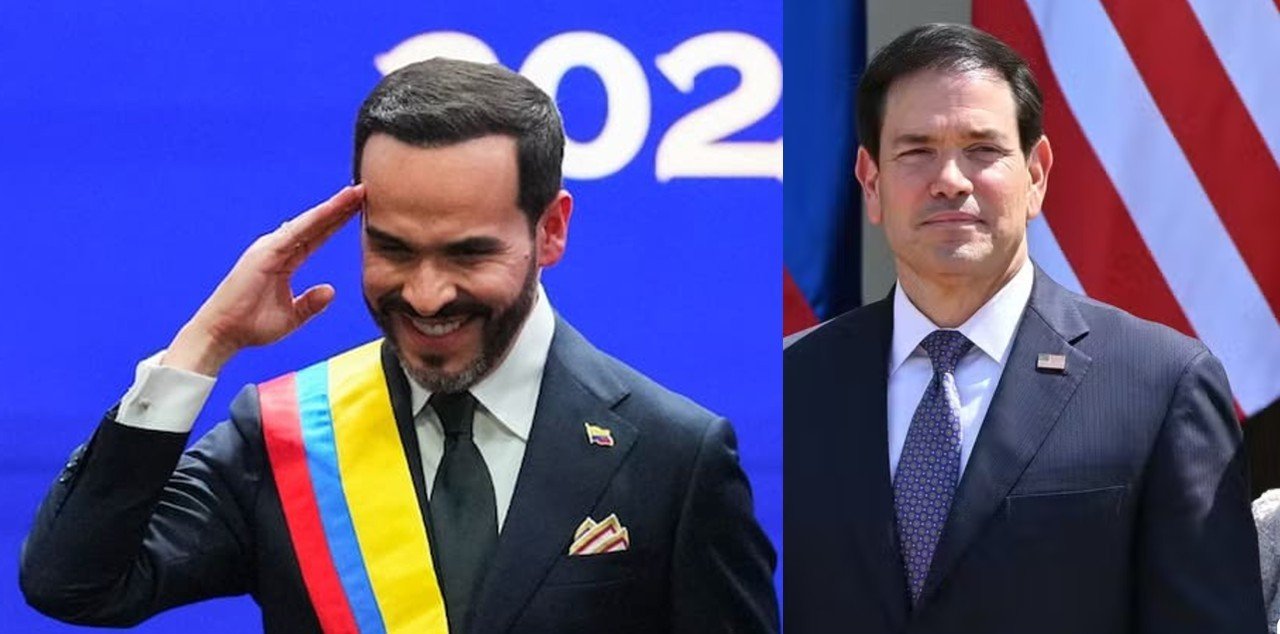
Colombia’s new conservative president, Abelardo de la Espriella, took office on August 7, succeeding leftist President Gustavo Petro, who had governed Colombia since August 2022.
De la Espriella’s government is part of a right-wing wave sweeping the Americas. With each conservative victory, U.S. regional alignment improves as governments expand cooperation on counternarcotics, illegal immigration, critical minerals, energy, and countering Chinese influence.
These new partnerships are consistent with the 2025 National Security Strategy, which seeks to strengthen the U.S. position across the Americas and prevent foreign powers, particularly China, from gaining influence in the region and threatening U.S. national security. President Trump has dramatically improved the U.S. position in the Western Hemisphere, although the media has largely refused to give him credit.
Relations between Washington and Bogotá were strained throughout most of Petro’s term. In January 2025, a dispute over deportation flights was resolved after Trump threatened tariffs and financial sanctions against Colombia. By October, Secretary of State Marco Rubio had formally declined to certify Colombia’s counternarcotics cooperation. The State Department cited Petro’s “disastrous and ineffective” drug policies and Trump’s determination that Colombia was “failing demonstrably” on drug control.
Petro had called for an end to the “war on drugs,” moved to restore relations with Nicolás Maduro’s Venezuela, and pursued negotiated settlements with armed groups.
Under de la Espriella, that has reversed. He has asked the Trump administration to bring its military campaign against drug trafficking to Colombian territory, and has promised to resume fumigating coca crops, targeting drug labs and apprehending drug kingpins.
He has also joined Trump’s “Shield of the Americas” security initiative and authorized joint U.S.-Colombian military operations against drug trafficking and armed groups. Shortly after his inauguration, the State Department said the Trump administration intends to provide $1 billion in security assistance to Colombia, pending congressional approval.
Cooperation extends to immigration enforcement. De la Espriella has ordered joint operations between immigration authorities and police to deport foreign nationals without legal status, prioritizing those with criminal records, and has said he will not tolerate illegal immigration. He has also reportedly agreed to cooperate with Washington on repatriating Colombians who are seeking asylum in the United States.
De la Espriella has moved to reverse Petro’s energy policies as well, pledging to revoke a ban on new oil and gas exploration licenses and to authorize fracking under what he calls strict technical and environmental standards, calling rebuilding the state oil company Ecopetrol “a definitive and absolute priority.”
That cooperation on counternarcotics, security, and immigration set the stage for a broader economic partnership. Within de la Espriella’s first five weeks in office, the two countries signed memoranda covering critical minerals and civilian nuclear power.
Secretary of State Marco Rubio and Colombian Foreign Minister Omar Bula signed two memoranda of understanding in Barranquilla on September 8 during Rubio’s meeting with de la Espriella. One establishes a framework for critical-mineral and rare-earth supply chains. The other covers civilian nuclear cooperation.
The minerals framework commits both governments to mobilizing public- and private-sector support to identify and finance mining and processing projects within six months. That support includes guarantees, loans, equity investments, offtake arrangements, insurance, and regulatory assistance. The agreement also calls for streamlined permitting, price-floor mechanisms, national-security reviews of critical-mineral asset sales, investment in mineral-recycling technology, and cooperation on geological mapping.
The nuclear memorandum establishes a bilateral framework based on obligations under the Non-Proliferation Treaty and safeguards administered by the International Atomic Energy Agency as Colombia considers developing nuclear power. Cooperation could include small modular reactors, research reactors, radioisotopes, nuclear medicine, agriculture, and waste management.
China processes nearly 90% of the world’s rare earths. The Colombia agreement follows similar U.S. frameworks with Guinea, Morocco, and the Philippines as part of a broader push to build supply chains outside China.
At the September 8 signing, de la Espriella described the relationship as a long-term strategic partnership. Rubio said the stop in Colombia marked the beginning of a three-nation tour, with Ecuador and Peru next. He said the three governments are aligned with U.S. interests, citing cooperation on transnational crime, terrorism, and economic engagement.
The minerals memorandum is a nonbinding instrument, subject to Colombian law. Any international agreement creating obligations for the Colombian state requires approval by Congress and the Constitutional Court.
De la Espriella’s victory is the seventh major conservative presidential win in Latin America since Trump’s January 2025 inauguration. Ecuadorian President Daniel Noboa was reelected on April 13, 2025. Rodrigo Paz was elected president of Bolivia in October 2025 and inaugurated on November 8. José Antonio Kast won Chile’s presidential election on December 14, 2025, followed by Nasry Asfura, who was declared the winner in Honduras on December 24. Laura Fernández was elected president of Costa Rica on February 1, 2026, followed by Keiko Fujimori in Peru on June 7 and de la Espriella in Colombia on June 21.
Argentina’s Javier Milei, who has called socialism a mental illness, took office on December 10, 2023. He has called the country’s alliance with Trump a matter of “state policy.”
Argentina signed a trade agreement with Washington on February 5, 2026 that opened Argentine markets to American exporters. The agreement eliminated tariffs on more than 200 categories of U.S. products, including medicines, machinery, chemicals, medical devices, and motor vehicles. Argentina also agreed to accept U.S. food and drug safety standards and vehicle-safety certifications instead of requiring separate approvals.
The agreement secured U.S. access to Argentine lithium and other critical minerals, with Argentina agreeing to prioritize the United States over what U.S. trade officials called “market-manipulating economies,” a direct reference to China. The agreement is expected to generate $14 billion in mining investment for projects supplying American manufacturers with copper and lithium outside Chinese-controlled supply chains.
In Ecuador, Daniel Noboa has been hailed as the most “aggressive” U.S. partner against transnational criminal groups in the hemisphere, with elite forces from both countries now working jointly against drug-trafficking organizations on a daily basis.
In Bolivia, Rodrigo Paz’s election ended nearly 20 years of rule by the leftist Movimiento al Socialismo party. His government has since invited the Drug Enforcement Administration back into the country, eliminated visa requirements for U.S. citizens, and secured multibillion-dollar loans tied to its reorientation toward Washington.
Within his first full day in office, Trump-endorsed Chilean President José Antonio Kast signed broad agreements with Washington on critical minerals and security cooperation.
In Peru, Secretary of State Marco Rubio congratulated Keiko Fujimori on her election victory and said Washington looked forward to deepening cooperation on security, investment, and trade.
The post Trump’s Win in Colombia and Across Latin America: Counternarcotics, Immigration, and Rare Earths appeared first on The Gateway Pundit.