





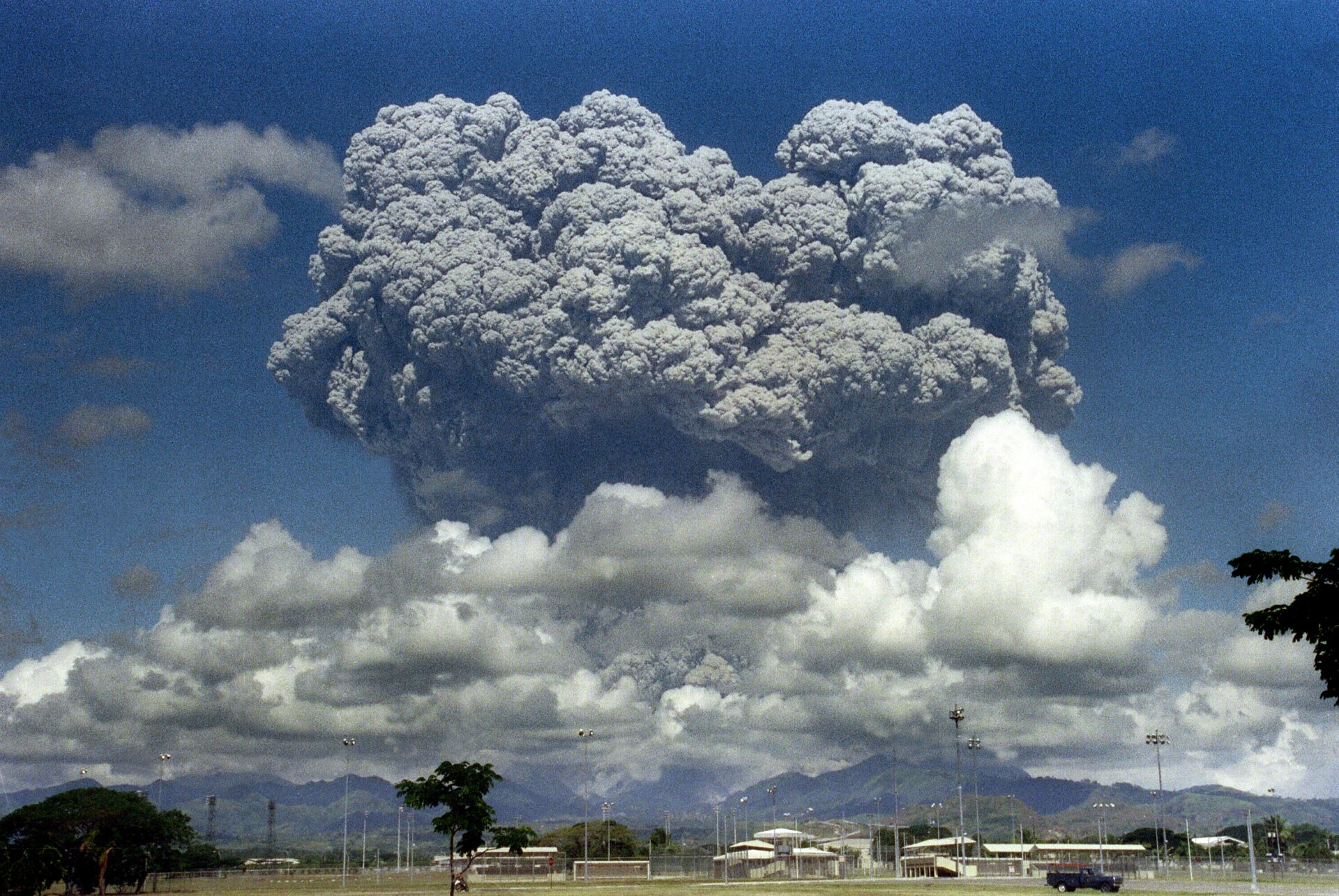
A massive volcano erupts in Southeast Asia. Ash fall delays flights and destroys crops, while pyroclastic flows wipe out entire towns. Over the following weeks, the sulfur dioxide pumped out turns into a haze of fine acid droplets, eventually wrapping around the entire planet, scattering sunlight back to space. The sun turns pale, shadows go soft, the sky glows violet after sunset and the ground below cools. The next summer never appears. Harvests fail from the American Midwest to the monsoon belt in Asia. Countries close their borders, and people who have never heard of the volcano begin to starve.
This nightmare scenario has yet to happen, but it’s not a matter of if but when a world-changing event like this will hit, and governments need to start preparing for global catastrophes that could disrupt the food system on an unprecedented scale.
There are three main steps we need to take soon: put events like nuclear war, a huge volcanic eruption and a continent-wide blackout into national risk assessments; agree to trade rules for such an emergency before it arrives; and fund pilot projects now for foods so we know what can be produced at scale without much sunlight or without fertilizer.
We’ve been faced with turbulent times the last few years with COVID, the Russian invasion of Ukraine and the Iran war. And the current outlook indicates there’s more trouble ahead — the closure of the Strait of Hormuz alone could , meanwhile, covers 44 hazards including a solar storm, a foreign volcanic eruption and a meteor strike. Again, the scale is too small. The volcano is a moderate European eruption and the meteor is 66 feet (20 meters) across, comparable to the Chelyabinsk impact in 2013. Many other countries do not even consider risk on these limited scales.
No country can solve this alone. In a review, my colleagues and I highlighted the key factors that would make countries and communities more resilient to various global catastrophes. These include food self-sufficiency, decentralization, geographic isolation and governance quality — meaning working institutions, low corruption and low inequality. Australia scores best, but even Australia would struggle without imported fuel, medicine and fertilizer. Nowhere is a refuge on its own.
Countries will need international collaboration to make it through a crisis of this scale. Export bans have been a common reflex in food crises of the past. After a global catastrophe, they would only isolate countries from each other and lead to further damage, as export bans can easily lead to the situation where enough food is still around, but nobody is trading it and so people starve.
- War has brought Iran’s water crisis to a breaking point: ‘Things will collapse unless there is meaningful structural change’
- Climate change will triple the number of days over 105 F in the US. The health impacts will be dire.
- A looming ‘insect apocalypse’ could endanger global food supplies. Can we stop it before it’s too late?
We need to work on rules to govern trade under those circumstances before a global emergency occurs.
You might say the probabilities are too small to justify the cost, and that money spent on hypothetical volcanoes is money not spent on floods, hospitals and defense. This criticism might land if you only look at a single catastrophe. However, there is a whole portfolio of events that could lead to global catastrophe. In combination, there is a good chance that one of them will hit, and if it does, we better be prepared. Also, many of the preparations needed are not even that expensive. Low-input farming, decentralized grids, a diverse food supply and more exhaustive risk assessment are within grasp of most countries.
This needs to happen now. Starting work on resilient foods or better international agreements when a global catastrophe has already occurred is too late. You cannot start an industry in the month the harvest fails. Clearly, prevention is better than resilience, but some of these events cannot be prevented at all. When one of them arrives, the difference between the societies that prepared and those that did not will be measured in lives.
Opinion on Live Science gives you insight on the most important issues in science that affect you and the world around you today, written by experts and leading scientists in their field.