






We warmly welcome Hugh Evans, author of The Origin of Time, as our featured author this month. In his book series, The Origins, Hugh examines the Star Maps of Gwynedd —over 1,000,000 acres of star maps on the ground in North Wales. Hugh argues that the Star Maps of Gwynedd, composed of 88 constellations, were created by an ancient pre-Younger Dryas people who observed the heavens to understand their movements, and that these people designed and named the constellations to identify their movements over several precessional cycles. The Origin of Time explains the origins of the 88 constellations and the concepts of time they represent. Hugh asserts that these ancient people defined the heavens in the ancient language Welsh (Cymraeg) — a language that Hugh argues has remained unchanged in North Wales. Using this language, Hugh believes we can achieve a fuller understanding of the heavens above, as well as the concepts of time, our numbers, and shapes that Hugh argues were invented by the same ancient people.
In his article, Hugh introduces readers to advanced, encoded astronomical and mathematical knowledge revealed through this ancient language, pointing to a deep and rigorous understanding of the heavens in the distant past.
Interact with Hugh on our AoM forum here.
My September 2024 article began…
Extraordinary ancient knowledge of the cosmos, Earth’s place in the solar system, and understanding of precession of the equinoxes, tens of thousands of years before the Greeks, Egyptians and Babylonians, seems a reasonable deduction based on what we know. If only we could listen to that lost advanced ancient civilisation and hear what they had to say? Now we can.
Celestial motions, such as the precession of the equinoxes, occur over periods far longer than a human lifetime. Simply to recognise such motions, let alone predict them, requires continuity: continuity of observation, of reference points, of measurement, and continuity of communication: language. I present the ancient civilisation that understood and accurately predicted the movement of the heavens from the grand scale of precession to the intimate intricacies of passing moments, and who named the stars.
As Above, so Below
We now apply modern telescopes and computers and understand the precession of the equinoxes to be a c. 25,000-year repeating cycle. Our ancient ancestors only had their eyes and their wits to understand precession and then to name it correctly. This requires rigorous observation and monitoring for several cycles, perhaps 50 or 75 thousand years. The understanding and knowledge accumulated over millennia would need to be passed down through thousands of generations of observers and be embedded in cultural systems. This comprehension demands a robust numerical system, a grand holistic design and a fixed spatial and temporal frame of reference. Collectively, it must have been developed BEFORE and be used WHILST the monitoring takes place, not afterwards. The numerical system inspired by the heavens above was then employed on Earth below, as is evident in ancient structures on all continents.
At the same time, they developed their verbal language to explain their growing awareness of the celestial and terrestrial world around them. Only a modular verbal language would suffice; writing did not exist. The ancient language is Cymraeg, Welsh. The origin will never be known; I suspect it was a global language reflecting the global distribution of ancient structures, but it has remained intact in Cymru, Wales.
Llan– a people, a clan, an area (from lle – place, llu – throng, host and+an – to contain)
gweud– to speak. Llan-gweud – language – the speech of a people, area.

Language as a Measurement System
If knowledge is to survive across tens of thousands of years, it must be encoded in a form resistant to drift. Writing alone is insufficient; symbols can change meaning; writing can be distorted by a minority. A modular verbal system is required in which smaller units combine to form larger words, and in which changes propagate constraints throughout the system. Such verbal modular systems are incredibly resilient because change requires the whole population to change, or no change happens. Cymraeg, Welsh, exhibits precisely such properties and resilience. Words are composed of smaller phonetic and semantic units whose meanings are conserved across contexts. Root words derived from verbs with intrinsic meaning are modified by prefixes and suffixes, allowing users, if necessary, to reconstruct meaning as they speak or listen. Because components are shared system-wide, arbitrary alteration is effectively prevented. A demonstration of this is that loanwords from other cultures are rare; they would not fit into the system. Language here functions analogously to a measurement system: relational, constrained, and internally consistent.
Over three books of 900+ full colour pages, I provide thousands of worked examples, all repeatable, with references and links to all my resources, that demonstrate this wonderful, genius, verbal modular language and its employment in all matters, celestial and terrestrial. My work has been peer-reviewed by scientists with doctorates, by professionals and by many Welsh-speaking people.
Se-llestre; se – star, llestre – ‘matrix, vessel’, a star matrix and a vessel to hold and move in time: a beautiful and profound explanation! Llestre is from lle – place (as shown above) and ystre – a course. We get street from ystre. There is no intrinsic meaning of ‘celestial’ in Latin (or any other language); we are asked to believe the word spontaneously existed with no rational originii. Terrestrial is from the softly mutated daear, meaning Earth, from da, meaning ‘what is good’. Earth is also from d aer+(y)dd.
This ancient pre-Younger-Dryas language system was used to name the stars, the constellations, the planets, time in all its forms and scales, our numbers, our shapes, our measurement systems, mathematics, music, science and the elements of nature. This is the quadrivium, the four great scientific disciplines of arithmetic, astronomy, geometry and music, the ‘foundations of civilisation’ championed by the ancient Greeks and Romans: there is no intrinsic meaning in Latin or Greek.
Quadrivium(n.)iii
“Arithmetic, music, geometry, astronomy” (the four branches of mathematics, according to the Pythagoreans), from Latin quadrivium, which meant “place where four roads meet, crossroads,” from quadri- “four” (from PIE root *kwetwer- “four”) + via “way, road, channel, course”.
Four, 4, quad, and all their linguistic siblings originate from ped-war. Ped is a foot, hence pedestrian, le pied en Français, it is made of two smaller words, pe+ed, pe – what causes, +ed – aptitude, velocity: a foot is something that causes stance and movement, what a wonderful explanation! ‘-war’ is truncated from chwer, chwiw, chwyl, chwyr meaning ‘a whirl, a turn’. The four quwar-ters of a turn are the four fixed, bright, equally spaced ‘Royal’ stars on the ecliptic: Regulus, Aldebaran, Fomalhaut and Antares, through which our sun, the moon, and all the planets whirl.
Rhif [pronounced riv] means:  It is proved to be the origin because it is from a smaller word, rhi – what is specific, chief. Rhiol, royal, comes from rhi.
The Origin Series: Zodiac, Time & Numbers
My journey researching The Origin Series began when I rediscovered the origin of the Zodiac in Gwynedd, North Wales. An ancient star map set into the landscape that actually created the modern zodiac constellations above that we know today. This was explained in my previous article on Grahamhancock.comiv. The beginning of this journey of discovery was presented in my first book, The Origin of the Zodiac, which explained the where, what and how. The when, who, and, most importantly, why the Star Maps of Gwynedd were created remained unanswered. So, I began writing the companion and astronomical conclusion, The Origin of Time. As I attempted to explain the why, I came up against an increasing priority, the how. The how demanded a sufficiently robust numerical system for the whole to exist, a problem our ancient ancestors must have understood and overcome. The existing explanation of the origin of our numbers, that they originated from Brahmi numerals c.250BCE and migrated to Europe as ‘Arabic Numerals’v after the end of the Roman Empire, is woefully inadequate to withstand a simple test such as analysis of the measurement and geometry of Neolithic Stonehenge.
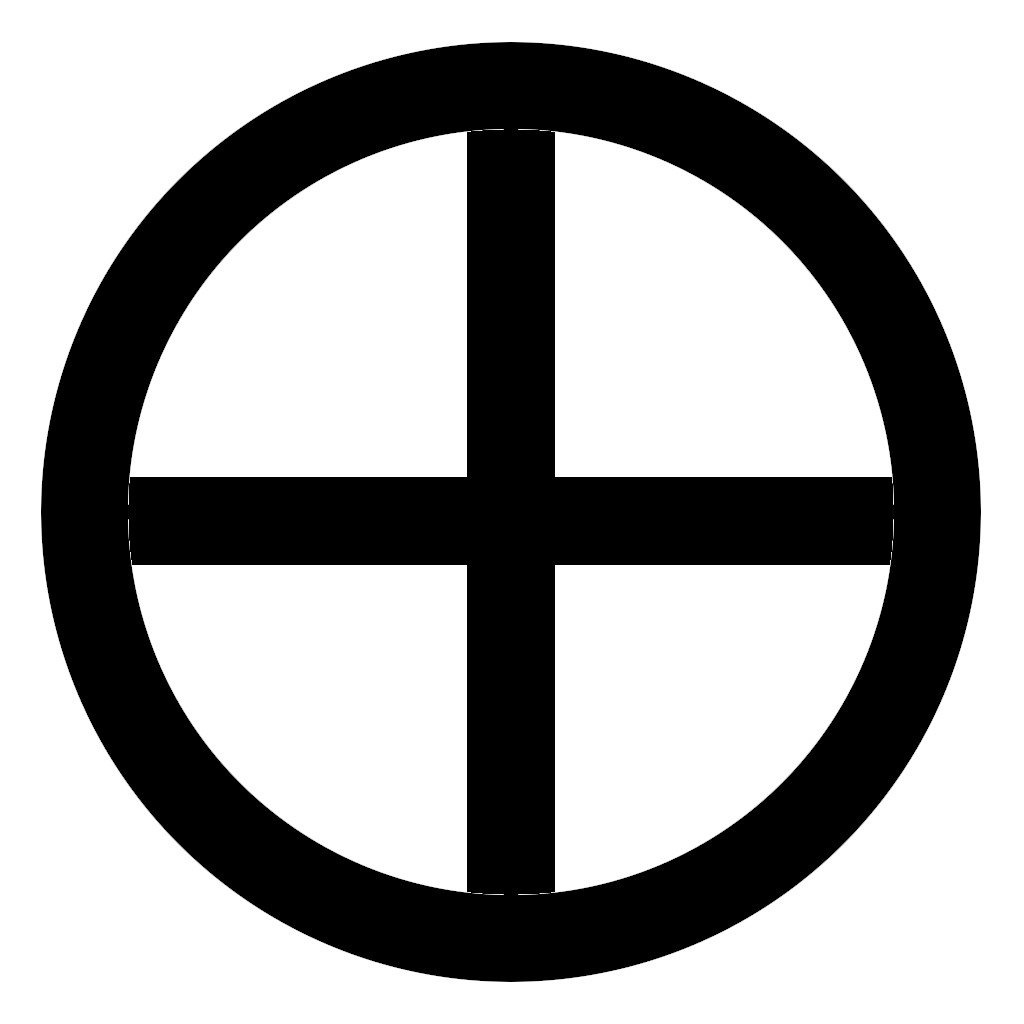
Figure 1: Earth sign. Observer at centre
My breakthrough was the number four, pedwar. Having determined the sign for Earth placed the observer at the centre of Earthly cardinal directions, with the external ring being the celestial equator, I realised that the number 4 demonstrated the same perspective. The cross represents the cardinal directions, each occupied by one of the four exceptionally bright, eternally still, equally spaced, Royal stars…
…
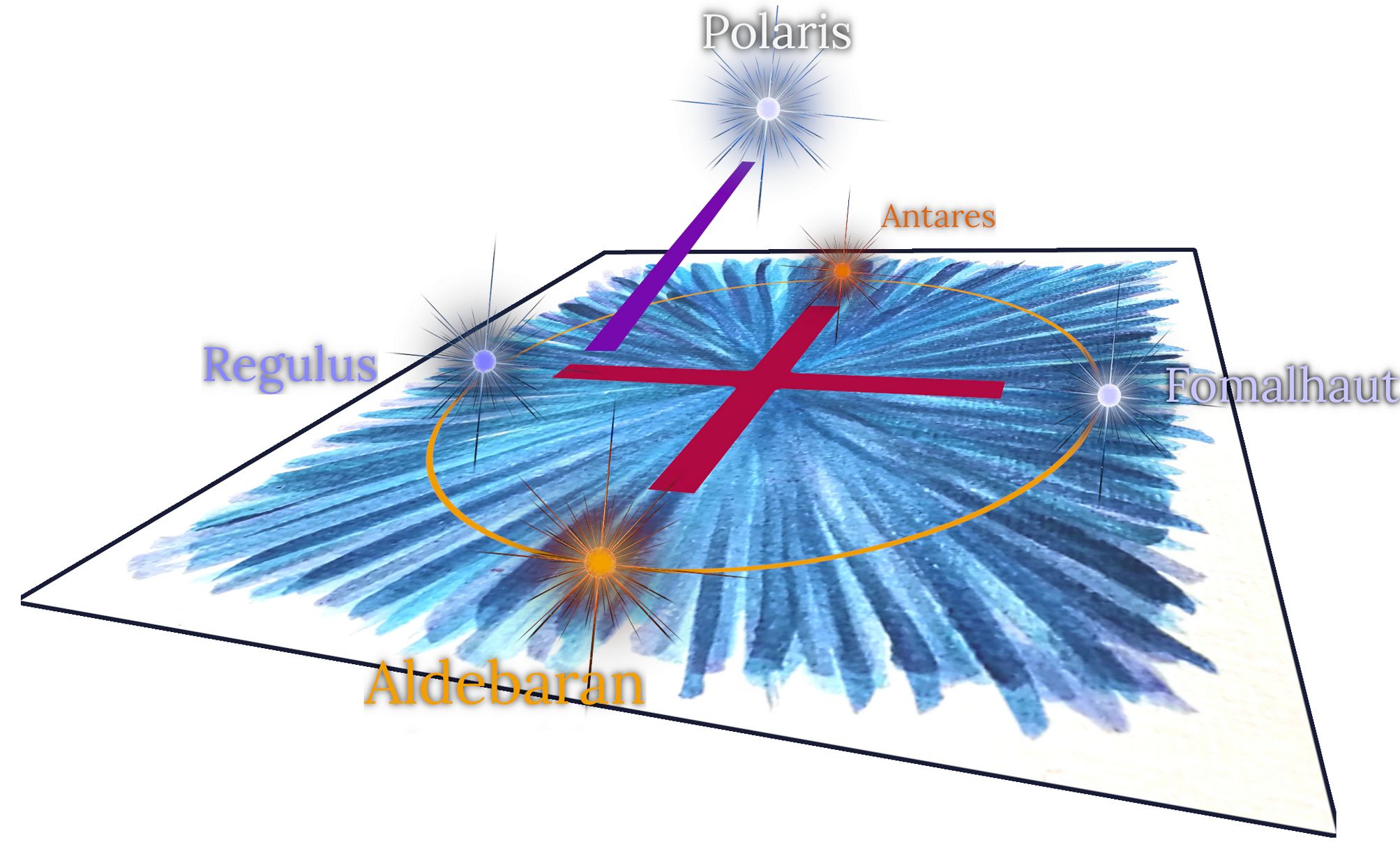
Figure 2: The number 4 and its celestial origins
and the slanting line connects the plane of the ecliptic with the polestar above. The observer is again at the centre. This creates a permanently fixed, rational, three-dimensional framework within which all other stars can be referred.
Al-de-bar-an: great – southern – pinnacle (bright star) – that contains (the ecliptic)
An-tarw-es: opposite – Taurus the bull (tarw – what breaks through, a bull)
All the ancient stars can be explained using this same system.
Perhaps a bull was chosen to represent this part of the heavens because of the Taurid meteor showers ‘breaking through’: quite a sight. This demonstrates that naming in the original language reflected observation.
The heavens could not be charted without having established this fixed three-dimensional framework anchored on bright, well-spaced stars about the ecliptic. This framework is not mythological in origin; it is operational. Without it, neither zodiacal division nor long-term stellar drift could be recognised.
In The Origin of Numbers, I show how all modern words for 4, including the English ‘four’, derive from the word ped-chwarvi. I perform this demonstration for all numbers, indicating the origin and extreme antiquity and disproving other explanations.
However, this framework needs a context within which to exist otherwise it is not anchored in time and space. The number that provides this contextual anchor has to be the first number — it can only be number 1— otherwise nothing works. The number one comes from un – ‘one, unique’ and an – to contain. The Sumerian creator god Anu, Uranus (Ouranos), Wodan (Odin), and Amun-Ra in Greek, Norse, and Egyptian mythology all derive from the root un/an. All these gods created and contained the universe.
The word Godde means ‘to design, intend’. Proto-Indo-European provides PIE *ghu-to- “poured,” from root *gheu- “to pour, pour a libation”vii
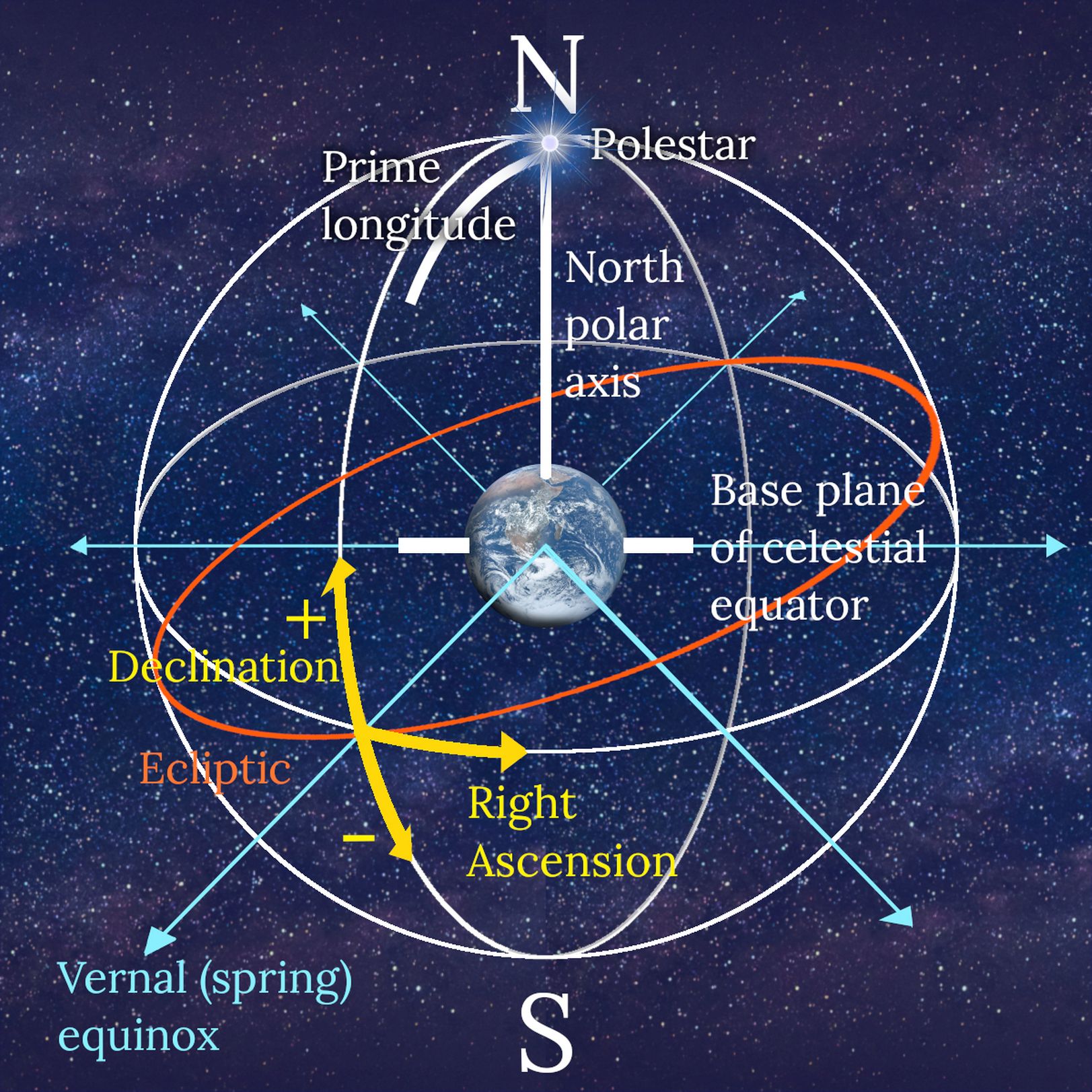
Figure 3: The number 1 and its celestial origins
The number 1 is designed to represent the universe. The upright line is the rotational axis of the universe, and the base is the plane of the celestial equator. The number 1 has a small nose; this is the prime longitude. We still use this system of charting the heavens today; it is called Right Ascension (the angle from the prime longitude around the celestial equator) and Declination (the angle above and negatively below the celestial equator). The brightest star in the heavens, the beautiful Sirius, is presently located at: Right Ascension 6hrs 45min 09sec, Declination -16o 42’ 58”viii.
Now the universe is defined with 1; the three-dimensional framework of 4 has a physical contextual anchor, but it cannot yet be employed to reference the stars without a contextual temporal anchor. This is provided by the number 2, which determines the physical operational movement of time from one moment to the next. Two, Tew, Dieu, Deus, all originally from dau/dwy meaning 2 and ‘a course, rule, order’ and the phonetically similar Dew/Duw/Dai, meaning ‘god’ from de meaning ‘the south, what is right’ and together implying the sun (god).
Now that the tick-tock movement of time has been defined by the sun with 2, the universe requires a holistic temporal frame: the number 3 creates the metaphysical planes of time: the PAST spirit-world of the preceding aeons, the PRESENT mortal world of our consciousness and the underworld, the FUTURE from our perspective, the last great journey back to the spirit-world: this brilliant metaphysical cycle of time repeats for eternity. The number 3 represents the journey of the soul, and the Milky Way; it is described and named as such in this ancient languageix. It implies that ancient people had a far more sophisticated understanding of themselves and the scales of time than we had given them credit. They believed the Milky Way was the repository of eternal spirit and that every star was an ancestor.
Now that the universe has been defined spatially in its entirety (1) and temporally by the constant momentary movement of time (2) and the aeons of time represented by (3), only now can the fixed framework of the heavens (4) be capable of measuring all the positions of the stars, completely anchored in space and time. Each number was created sequentially, relying on the accumulated definition of the previous numbers. 5 follows 4 and relies on 1, 2, 3, and 4 being predefined. This creates increasing explanation and sophistication in the celestial symphony. Once it is heard, it is like tuning away from the white noise of nothing to hear a great, all-encompassing orchestration. Once it is heard, it can’t be unheard.
Numbers are not merely abstractions or symbols, nor are they random or unrelated to each other; they are tools developed to solve specific problems. Each number adds a necessary dimension to understanding the universe.
One (1) establishes totality and orientation. Two (2) establishes movement and sequence. Three (3) establishes cyclical time and continuity beyond the present. Four (4) establishes spatial reference and division. Five (5) places the most obvious celestial objects in this framework, there being 5 visible planets. Only once these foundations exist can higher numbers operate coherently.
This sequential dependency is not mystical; it is functional. A fixed celestial framework cannot be used without time. Time cannot be tracked without sequence. Sequence cannot exist without distinction. The structure of a number reflects the structure of the cosmos as it was experienced.
Corroborative Domains: Geometry, Music, Science
Geometry, music, and the identification of natural elements are corroborative survivals of the same worldview. Each reflects an attempt to describe proportion, harmony, and structure using inherited conceptual tools that are common to and mutually dependent on one another. Change one, and all are changed; therefore, the complete system evolves to be resilient to change. Where later cultures recorded fragments of this knowledge, they often preserved results without preserving origins. The persistence of coherent naming and proportional relationships suggests continuity and inheritance by later cultures rather than rediscovery.
Geometry and Arithmetic
A+ rhif-me+tic – a+ prefix creating emphasis, similar to ‘very’x rhif – what divides, a number, me – an agent (mes -to measure), +tid suffix creating an abstract conceptxi.

Figure 4: Sphere defined by equal rays emanating from a centre
Etymonline.com states that sphere is “from Greek ‘sphaira’ globe, ball, a word of unknown origin.”xii It is no longer of unknown origin: cyrhaedd means sphere. There is no Greek Sph- sound in Welsh, and there is no Cyrh– sound in Greek. Cyrhaedd (sphere) means ‘reach, extent’ and is made of components: cyrch, rhae, rhaedd. Cyrch is ‘a centre’, rhae is a ‘constraint’, and rhaidd is a ray.
A sphere is ‘the extent of rays from a centre’.
This is a beautiful, perfect explanation with intrinsic meaning and celestial origin: a star is a point that emanates rays from a centre. Sphere has no origin in any other language. The origin of all the classic shapes and their attributes, including square, cube, diagonal, ratio and the Platonic solids, are explained in The Origin of Numbers.

Figure 5: The mathematical constant Pi
Pi π and Phi ɸ ‘Golden Ratio’
These universal constants were known and employed in constructions from great antiquity on all continents: the premise that pi π and phi ϕ were first identified by the Greeks does not survive scrutiny.
Pae means ‘ a constraint’, paw – ‘what extends around’, appropriate for a circle.
Ffai means ‘an extremity, a turn’, ffain means ‘what is conical’: a perfect explanation of phi ϕ the Golden Ratio.
Ffai-bon-arch-i means ‘conical-base/lineage-superior’, leaving us to wonder whether the Italian mathematician Fibonacci, who ‘discovered’ the series, existed at all!
Measurement of the Earth
Measurement systems attributed to later historical periods display remarkable coherence when examined against the dimensions of the Earth itself. This coherence is difficult to explain as a coincidence or a late invention. It is more plausibly understood as a refinement of a far older system derived from terrestrial observation. Units such as feet, cubits, and larger measures form interrelated families rather than isolated conventions. The persistence of ancient measurement modules and their ubiquitous application implies intentional proportionality rather than accidental agreement.
The ancient people who accurately measured the Earth derived and named the measurement system using their modular language. Ffe means ‘what is outward’, this root word is modified with the –ydd suffix creating an instrument or agent, and the compound suffix-fedd can be attached to any root word to denote a length measurementxiii. It is the origin of the foot and feet measurement module nomenclature. One second of arc of the Earth’s equatorial circumference is sublimely 100 feetxiv EXACTLY.
The Origin of Numbers explains the interrelation of all foot modules and their variables, and their derivation from the size of planet Earth, as well as the origins of other length measurement units, including the metre, cubit and megalithic yard, how they relate to the foot module, and related measurements of volume, fluid capacity, area and time.
Physics and Chemistry
Now, it is no surprise that, as ancient people surveyed and measured the night sky and the Earth to determine its nature, scale, and properties, the materials of ‘Earth’ were also identified and named. And so it is: the elements we know today are very ancient, or were named to reflect their properties in more modern times, using ancient nomenclature. The Origin of Numbers lists all elements and explains their naming origin, for example:
syl-ffw – sulphur – syl – earth, ffwr – burning (not Sanskrit गन्धकं gandhakam ‘smelly’)
ffodd-ffwr -phosphorus – ffos – splendour, bright, ffwr – burning.
Hydrogen was known to the Greeks, but it was likely isolated by a far more ancient people. Isolating hydrogen requires knowledge of acids and bases and/or electrolysis. Hei-dwr-gen means ‘quickly-water-makes’, which hydrogen makes quickly if isolated and ignited. The Greeks also understood basic electricity, referring to amber as electrum for its static electric properties, but electricity or electrum has no intrinsic meaning in Greek; the word simply exists. It is likely, therefore, that this knowledge was inherited from a previous civilisation that determined the physics of electricity and demonstrated that by naming it with intrinsic meaning. El – spirit, ech– ‘that yields, from, out of, that pervades and causes’, trech – superior passing, to overcome.

Figure 6: Silver dollar. Photo Windrain (CCBYSA4.0)
Ancient monies and precious metals were also named by these incredible ancient people. Let’s go straight to the sparkly stuff: gold. From gol, meaning covering, vesture and gole meaning splendour, with +ed suffix creating a noun. Gold is aur, eur the origin of all other languages. The origin of ‘Quid’, the British slang name for £1 sterling, is no longer uncertainxv: chwed-eg is 60, there are 60 silver groats to a pound sterling in old money. The Origin of Numbers explains the nomenclature of many ancient precious metals and monetary units from shekels to shillings, dollars to drachmas.
Music
Music is as old as self-consciousness. We were able to refer to ourselves from the earliest moments of language, and to associate existence with sound and music. It’s a wonderful thought that our ancestors were so aware, had so much capacity for thought, so long ago. The root word of music my also means ‘me’ in the language of first expression (and English today).
Conclusion: The Foundations of Civilisation, The Quadrivium and Trivium
We will not be able to reveal a lost civilisation in full detail. Instead, we can recover the structure of thought that made advanced ancient understanding possible. Fixed stars, long time, stable language, and coherent measurement together form a system capable of surviving catastrophe and forgetting. This is our inheritance; our ancient ancestors went to incredible effort to gift us this knowledge.
The Origin Series, Zodiac + Time (Astronomical) and Numbers demonstrate this ancient pre-Younger-Dryas people, and their legacy of the foundations of civilisation created over tens of thousands of years. This legacy was inherited by classical cultures such as the Mesopotamians, Egyptians, and Greeks, and recorded in writing for the first time, albeit in fragments.
The quadrivium represents complete understanding of the celestial and terrestrial worlds, and was achieved in one ancient language, represented today as Cymraeg, Welsh. This language represents the trivium, the three disciplines of grammar, rhetoric and logic: together being all seven ancient disciplines of the Quadrivium and Trivium.
References
ihttps://archive.org/details/pocketdictionary00rich/page/n181/mode/2up?q=gweud
iihttps://www.etymonline.com/word/celestial
iiihttps://www.etymonline.com/word/quadrivium
ivhttps://grahamhancock.com/evansh1/
vhttps://en.wikipedia.org/wiki/History_of_the_Hindu%E2%80%93Arabic_numeral_system
viThe Origin of Numbers by Hugh Evans, page 41 – 47
viihttps://www.etymonline.com/word/god
viiihttps://en.wikipedia.org/wiki/Sirius
ixThe Origin of Numbers by Hugh Evans, page 34-40
xhttps://en.wiktionary.org/wiki/a-#Welsh
xihttps://en.wiktionary.org/wiki/-tid#Welsh
xiihttps://www.etymonline.com/word/sphere
xiiihttps://en.wiktionary.org/wiki/-fedd#Welsh
xivThe Origin of Numbers by Hugh Evans, page 125
xvhttps://www.etymonline.com/word/quid