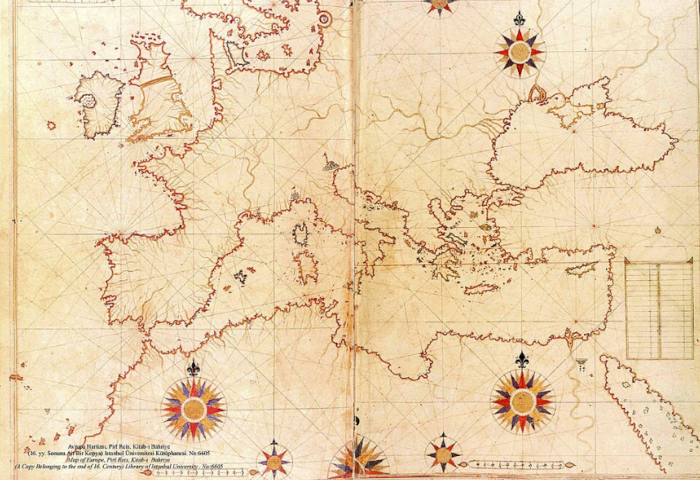







Abstract
What if the Biblical story of Adam and Eve isn’t original but represents the culmination of ancient mythological traditions that encoded astronomical knowledge into narrative form? Rather than being divine revelation, Genesis may represent humanity’s ancient attempt to preserve astronomical knowledge through storytelling, with creation myths serving as cultural vessels for star-based wisdom passed down through generations. This article traces the story back through Mesopotamian sources, as well as parallel Greek and Hindu myths, to reveal the foundations of the Adam and Eve myth.
The myth of Adam and Eve and the serpent (See Fig. 1) in the Biblical Genesis is by no means the original story. It was taken from earlier cultures. All these cultures were heavily involved in astronomy. In fact, their entire belief system revolved around it.
Fig 1: Adam and Eve in the Garden of Eden
Adam and Eve, Workshop of Jacob Jordaens, 1640s (Public Domain)
The Mesopotamians (Sumerian, Akkadian, Babylonian) had earlier traditions that resembled the later Adam and Eve story in the Book of Genesis. There are some parallels in themes of first humans, creation from clay, gardens, a snake, and a divine test.
1.0 MESOPOTAMIAN PRECURSORS
1.1 Adapa (Adamu)
In Akkadian myth (ca. 14th century BCE), Adapa—sometimes called Adamu—was the first man, created by the god Ea/Enki. Like Adam, he was a prototype of humanity, gifted with wisdom but denied eternal life. Summoned before the sky-god Anu, Adapa was offered the bread and water of life. On Ea’s advice, he refused, thereby losing immortality. His very name, Adapa/Adamu, resonates with the Hebrew Adam (1,2).
1.2 Dilmun Paradise (Enki and Ninhursag)
In the Sumerian Dilmun myth (3rd millennium BCE), the land of Dilmun was described as a deathless paradise. The god Enki, however, ate forbidden plants, leading the mother goddess Ninhursag to curse him. When Enki fell ill, she healed him by creating deities from his afflicted body parts. Here we find echoes of Eden: a lush garden, forbidden food, a divine transgression, and consequences for disobedience (3,4).
1.3 Atrahasis and the Creation of Humans
The Atrahasis Epic (ca. 18th century BCE) tells how the gods created humans from clay mixed with divine blood to relieve themselves of labour. Though not a story of temptation, the motif of humanity being fashioned from clay anticipates Genesis, where Adam is moulded from the dust of the earth (5).
1.4 Gilgamesh, Enkidu, and Shamhat
In the Epic of Gilgamesh (c. 1200 BCE), Enkidu’s seduction by Shamhat introduces him to sex, bread, wine, and civilization—losing his innocence and true nature, akin to Eden’s fall (6). Later, Gilgamesh’s search for the plant of life is thwarted when a serpent steals it and rejuvenates—again echoing loss of immortality despite a different serpent role (6).
2.0 ADAMA AND HAVYAVATI – BHAVISHYA PURANA
There is also a story similar to Adam and Eve in the Hindu epic Bhavishya Purana, where they are called Adama and Havyavati:
At that time the Kali-purusha prayed to Lord Narayana with his wife. The Lord appeared and said that Adama and Havyavati would be born and propagate generations of mlecchas. In a forest under a Papa-Vriksha (sinful tree), the serpent Kali-purusha deceived them; Adama ate the forbidden fruit of the tree.
The dating of the Puranas remains uncertain. While 5th-century CE inscriptions cite verses from Padma, Bhavishya, and Brahma Puranas, this does not confirm their present-form existence. Scholars argue the Puranas are layered, fluid compilations defying precise dating.
3.0 THE ASTRONOMY BEHIND THE MYTH
The Tree in Eden can be seen as a metaphor for the North Celestial Pole (NCP)—the pivot of the heavens.
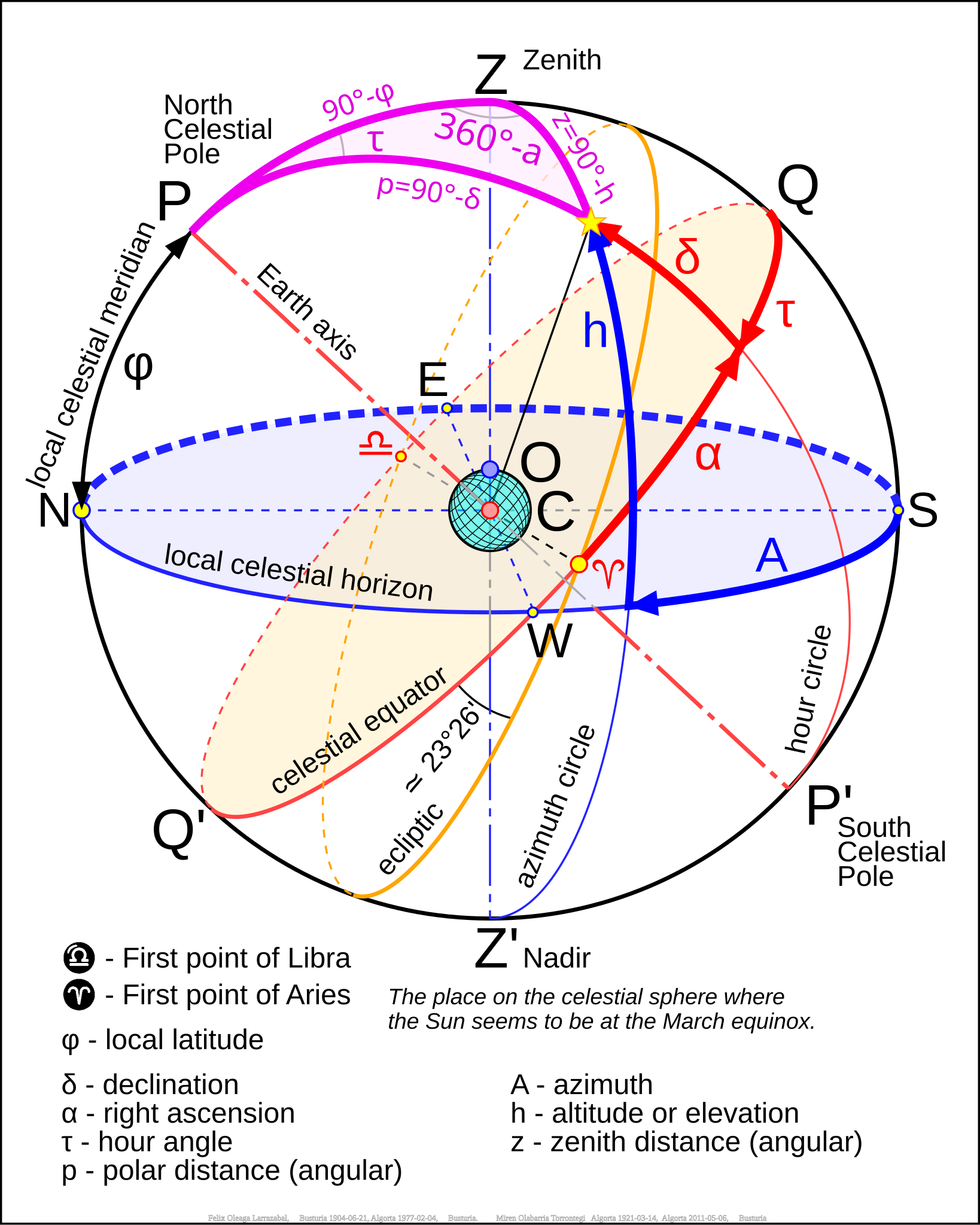
Fig. 2: Celestial Sphere, showing the North Celestial Pole
Image: Jon Peli Oleaga (CCBYSA4.0)
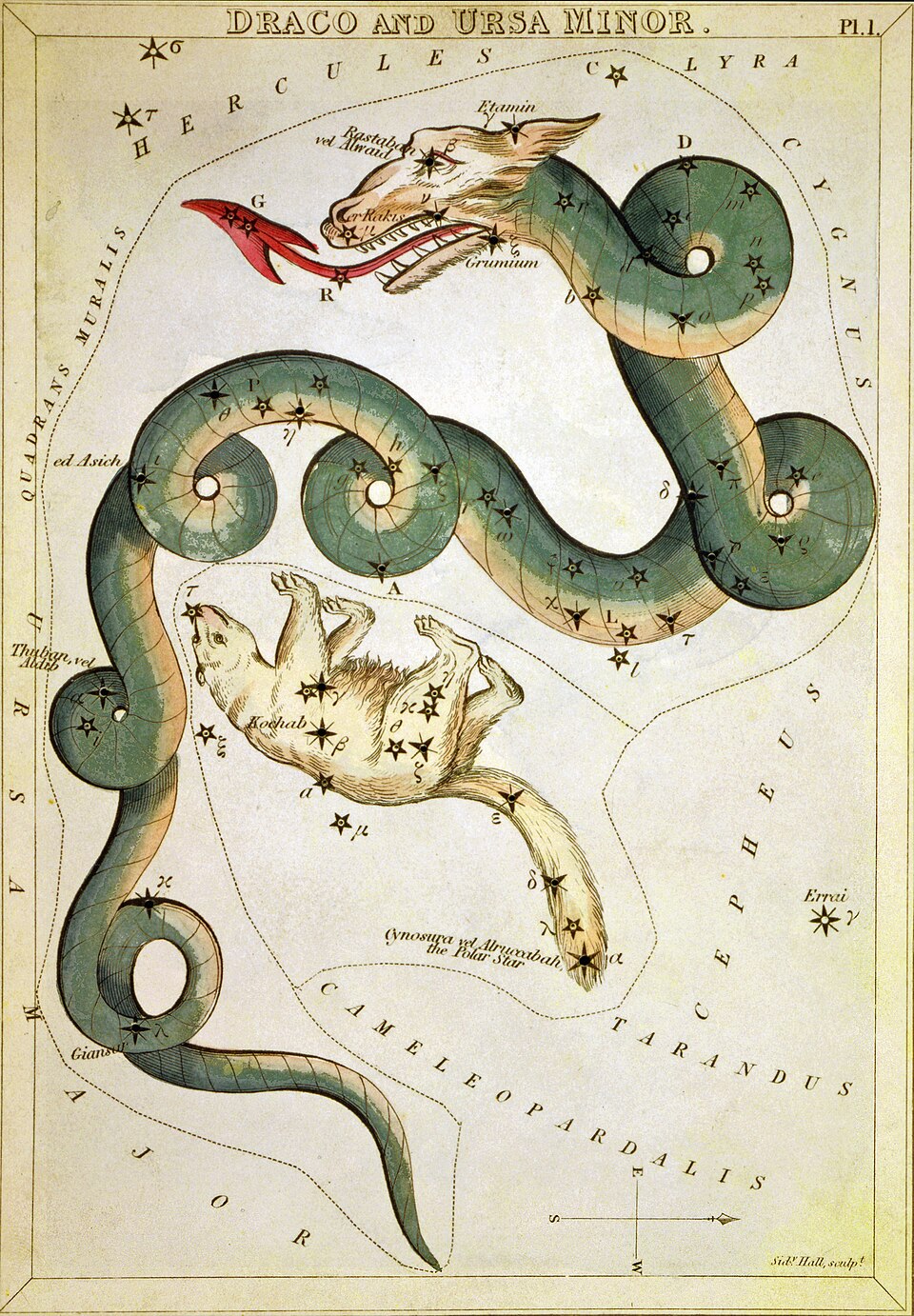
Fig. 3: Constellation Draco (Public Domain)
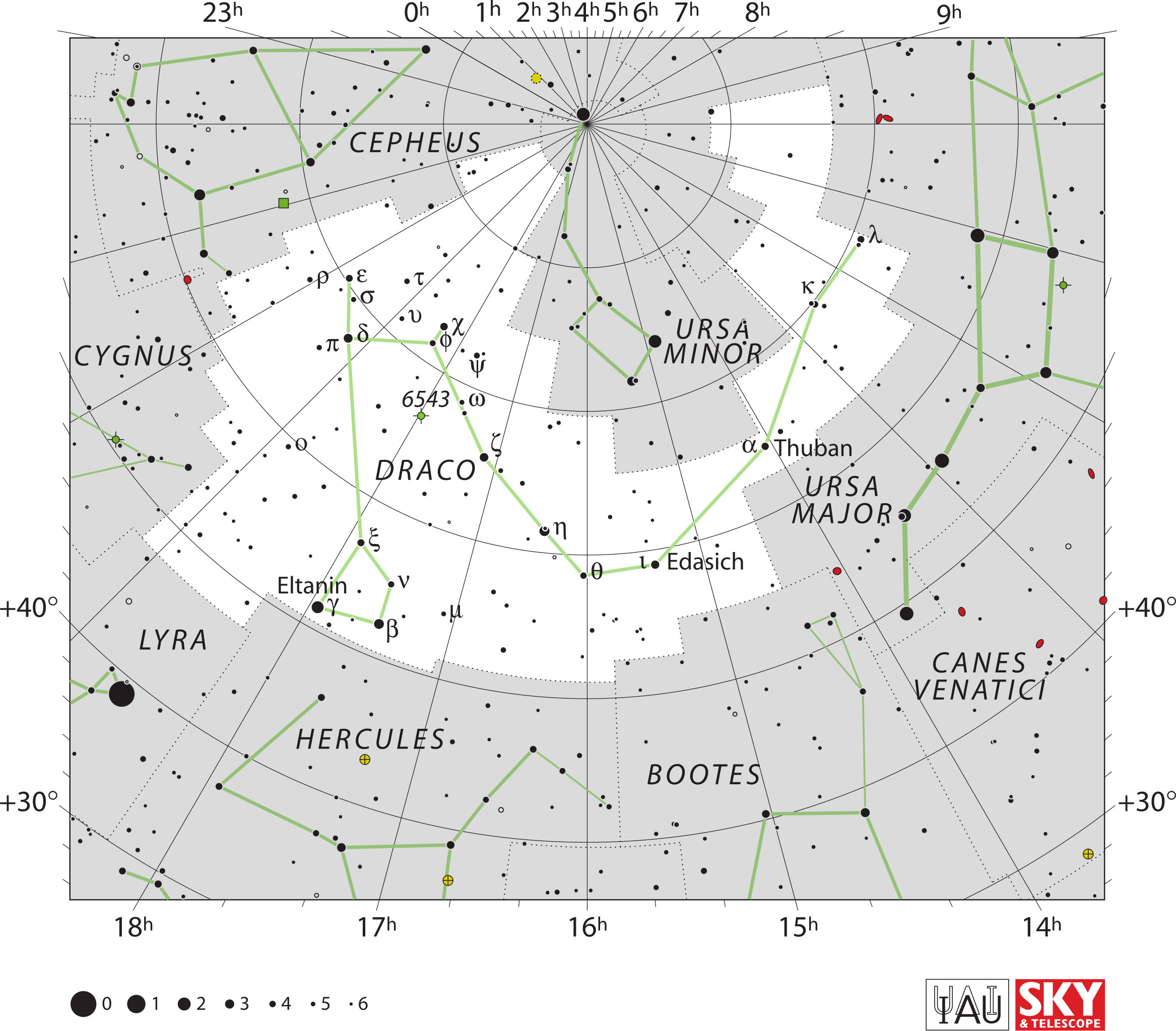
Fig. 4: Constellation Draco surrounding the Pole
Image: IAU and Sky & Telescope magazine (Roger Sinnott & Rick Fienberg) (CCBY3.0)
The serpent corresponds to the constellation Draco, coiling about the pole (See Fig. 3 & Fig. 4).
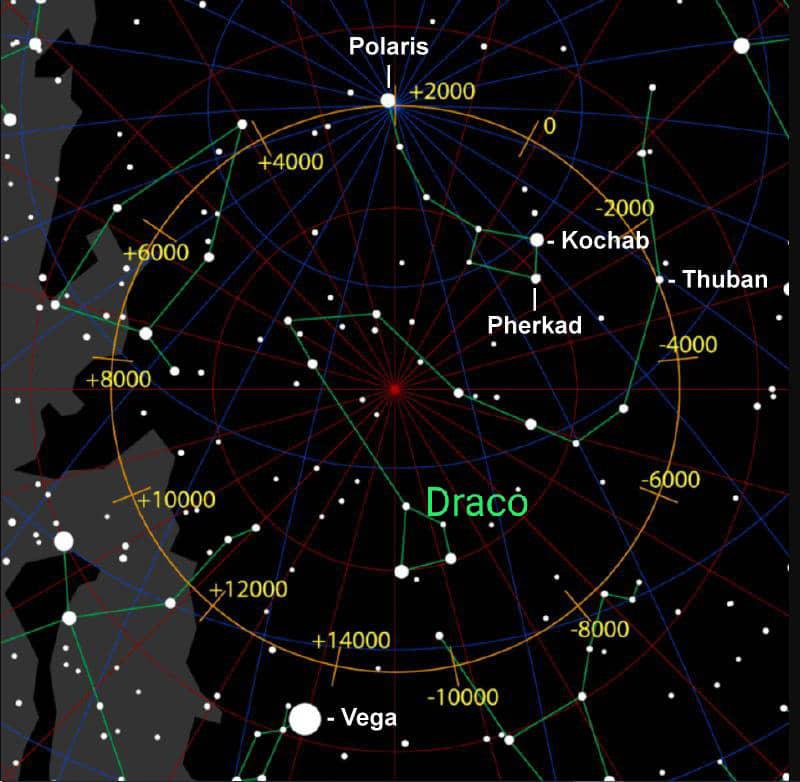
Fig. 5: Guardians of the Pole (Kochab & Pherkad) and Draco
Image: Tauʻolunga (CCBYSA2.5)
Kochab (β Ursae Minoris) and Pherkad (γ Ursae Minoris), dubbed the “Guardians of the Pole” [8], served as twin pole stars approximately between 1700 BCE and 300 CE (See Fig. 5). This span intriguingly overlaps with the period when the story of Adam and Eve was moving from oral tradition into written scripture.
- In the early second millennium BCE, Mesopotamian myths such as the Atrahasis and the Epic of Gilgamesh already spoke of paradises, serpents, and the loss of immortality [9,10].
- Between 1700 and 1000 BCE, Israelite oral traditions circulated similar motifs, just as Kochab and Pherkad were standing watch near the pole.
- Around 1000–900 BCE, the Yahwist writers first shaped these traditions into the Adam and Eve narrative [11].
- By the 6th–5th centuries BCE, during the Babylonian exile, the Priestly redactors gave the creation story its final form in Genesis—still under the guardianship of Kochab and Pherkad [11].
- Between 300 BCE and 300 CE, Jewish and early Christian thinkers reinterpreted Adam and Eve, developing themes of sin, redemption, and paradise lost, while the “Guardians” continued to frame the pole. Augustine of Hippo (354 CE – 430 CE), better known as St. Augustine, took scattered ideas and systemized them into a full doctrine called Original Sin.
This celestial pairing lends symbolic force: Kochab, the brighter star (apparent magnitude +2.07), can be likened to Adam, the more prominent figure in the Genesis account, while Pherkad, the fainter star (apparent magnitude +3.05), corresponds to Eve [12]. Together, they watch the cosmic tree while Draco, the serpent, coils about its trunk.
Before Kochab and Pherkad, Thuban (α Draconis) held sway around 2700 BCE, close to the pyramid-building age of Egypt and great Mesopotamian cultures such as Uruk, Jemdet Nasr, and Akkad. Each pole star era carried its own mythmaking, reshaped by the slow precession of the equinoxes every 26,000 years [8].
A parallel myth appears in Greece. In the tale of Heracles (Hercules), the hero is sent to obtain the golden apples from the Garden of the Hesperides, guarded by the dragon-serpent Ladon [13]. The poet Hesiod (c. 750–650 BCE) in his Theogony mentions the Hesperides and Ladon; later sources describe them as guardians of golden apples. Over time, this mythic imagery likely influenced the later European association of apples with the Eden story—though Genesis itself never mentions apples, referring only to the “fruit” of the tree.
In sum, the story of Adam and Eve is not an isolated narrative but the culmination of a long tradition of mythmaking rooted in the heavens. From Mesopotamian clay-born humans to serpents stealing immortality, from the paradise of Dilmun to the celestial coils of Draco, and from the Guardians of the Pole (Kochab as Adam and Pherkad as Eve) to the serpent’s eternal circling, the themes of creation, temptation, and loss of eternal life were written first in the stars before being inscribed in sacred texts. Genesis, then, can be seen not as an original revelation, but as a cultural inheritance—an astronomical allegory reshaped by generations, preserving humanity’s oldest attempt to anchor meaning in the movements of the sky.
GLOSSARY
Serpent – Constellation Draco
The serpent in Eden symbolizes Draco, a dragon-shaped constellation that coils around the North Celestial Pole.
Adam – Star Kochab (β Ursae Minoris)
One of the “guardians of the pole” stars in the Little Dipper (Ursa Minor).
Eve – Star Pherkad (γ Ursae Minoris)
The second “guardian of the pole” star, paired with Kochab, representing Eve.
Tree of Knowledge / Tree of Life – The Celestial Pole (Axis of Heaven)
The “tree” stands for the central axis of the sky –
the point around which all stars appear to revolve.
Garden of Eden – Circumpolar Sky (North Celestial Region)
The “garden” represents the eternal part of the sky that never sets — a celestial paradise.
In short:
The author believes the Adam and Eve story is a coded star map — showing constellations and stars near the northern sky’s centre, later turned into a moral and religious story.
References
- Sacred Texts. The Myth of Adapa [Internet]. Available from: https://sacred-texts.com/ane/adapa.htm
- Mark JJ. The Myth of Adapa [Internet]. World History Encyclopedia. 2011. Available from: https://www.worldhistory.org/article/216/the-myth-of-adapa/
- Al-Noori KA. The Myth of Dilmun: Features of Sumerian Mythological Literature. J Hum Sci. 2015;35–43.
- Sacred Texts. Sumerian Mythology: Enki and Ninhursag [Internet]. Available from: https://sacred-texts.com/ane/sum/sum07.htm
- Pinto JD. The Sacrificed God and Man’s Creation. Studia Antiqua. 2014 [Internet]. Available from: https://scholarsarchive.byu.edu/cgi/viewcontent.cgi?article=1224&context=studiaantiqua
- Sacred Texts.The Epic of Gilgamesh [internet] . Available from: https://sacred-texts.com/ane/eog/index.htm
- Bhavishya Purana (Pratisarga Parva, Adama & Havyavati story) [PDF on Archive.org] Available from: https://archive.org/download/ShivaPurana/Bhavishya%20Purana.pdf
- Howell E. Has Polaris always been the North Star? How Earth’s 26,000 year cycle changes the pole star [Internet]. Space.com. 2025 May 20. Available from: https://www.space.com/stargazing/has-polaris-always-been-the-north-star-how-earths-26-000-year-cycle-changes-the-pole-star
- Oxford Handbook of Heracles. Labor XI: The Apples of the Hesperides. [Internet]. Available from: https://journeytothewestresearch.com/wp-content/uploads/2025/08/The-Oxford-Handbook-of-Heracles-2021.pdf
- Ridpath I. Star Tales: Draco. Ian Ridpath’s Star Tales. Available from: https://www.ianridpath.com/startales/draco.html
- Lambert W.G., Millard A.R. Atra-ḫasīs: The Babylonian Story of the Flood. Oxford: Clarendon Press; 1969
- George A. The Epic of Gilgamesh: A New Translation. London: Penguin Classics; 1999.
- Friedman R.E. Who Wrote the Bible? New York: HarperOne; 1997.
- European Space Agency. Hipparcos and Tycho Catalogues. ESA SP-1200. 1997.
- Hesiod. Theogony. Trans. Evelyn-White H.G. Cambridge, MA: Harvard University Press; 1914.