





After the passing of International Yoga Day in June, it is a chance to reflect on how far the practice of yoga has evolved, and one of the biggest changes has been where we choose to go deeper. Over the recent years, yoga has gradually moved from something we practice in studios nearby or at home, to an experience people plan trips around and travel across the world for.
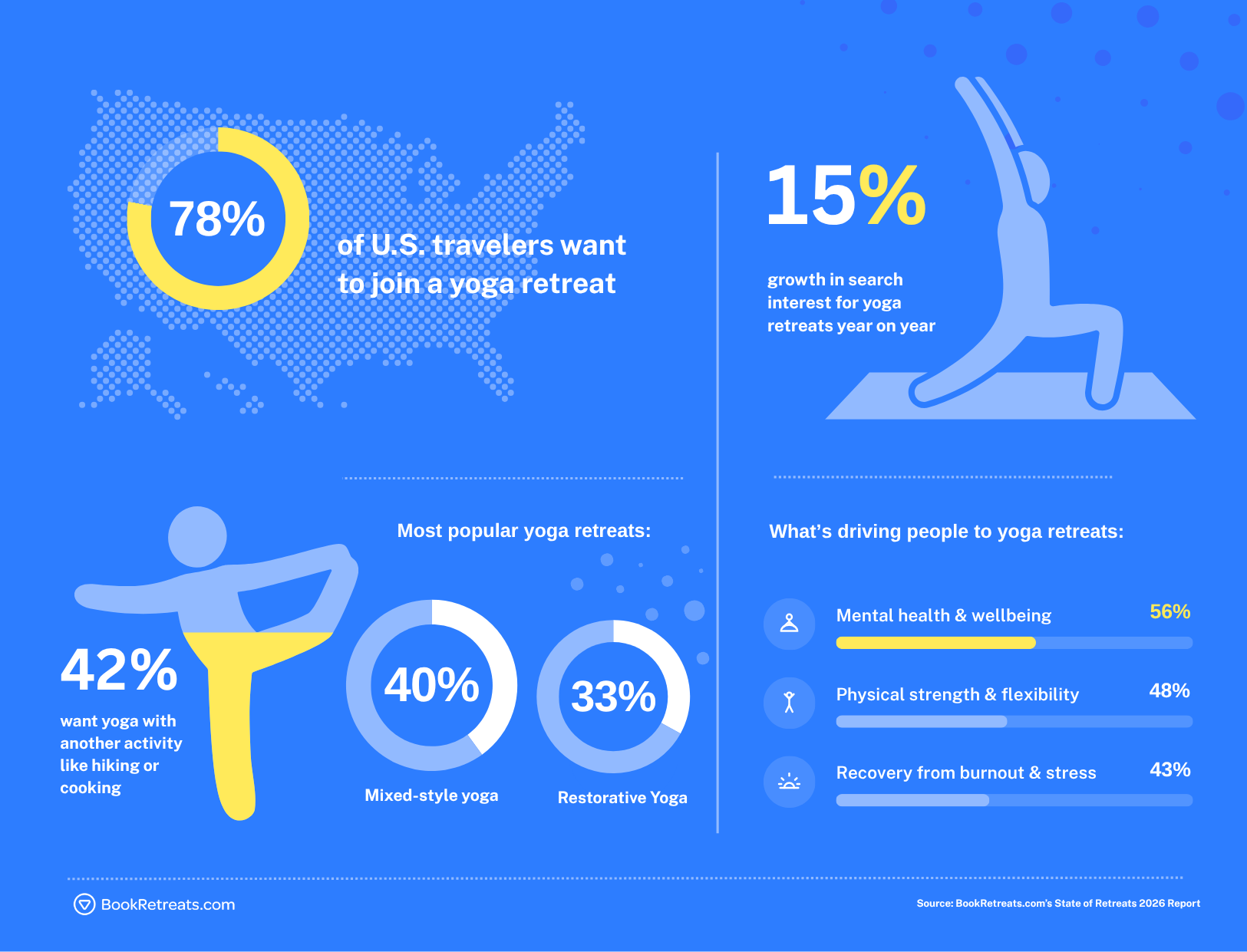
New data from BookRetreats.com, the world’s largest retreat marketplace, reveals how dramatic that shift now is. According to their State of Retreats 2026 Report, which draws on a decade of platform insights and a survey of 1,040 U.S. travelers, 78% are interested in joining a yoga retreat in the next 12 months, with searches for yoga retreats up 15% year on year.
For those who teach, host retreats, or are thinking about it, it’s good news that a growing number want to go deeper, and they’re booking trips to do it. But the more interesting question is why, and what they’re hoping to find when they get there. The report has some answers, so we dug into the numbers to find out where the yoga retreat industry is heading, and what it means for you.
People are booking yoga retreats for their heads, not their hamstrings.
Ask someone why they started yoga a decade ago and you’d often hear something physical, like flexibility or strength. But today, the reasons people practice yoga is becoming less about the physical benefits, and more about what it can do for their mental state.
Stress relief has overtaken flexibility as the top reason Americans practice, cited by 51% according to Yoga Alliance. And now that same shift is showing up in retreats.
Among those interested in joining a yoga retreat, BookRetreats.com found that the leading motivations are:
- Mental health and wellbeing – 56%
- Physical gains like strength and flexibility – 48%
- Recovery from burnout and stress – 43%
- Deeper spirituality – 27%
- Healing physical pain or injury – 21%
- Clarity on life decisions – 18%
Practitioners are joining yoga retreats for their mental and emotional benefits over their physical ones, and that’s especially true for the generations who are chronically online. The report shows that 50% of Gen Z and 57% of Millennials name burnout and stress recovery as their main reason for wanting to join a yoga retreat, against just 20% of Boomers.
It isn’t hard to see why. The always-on culture that technology promised would free us up has done the opposite for a lot of people, creating a level of burnout that more and more are now traveling to escape.
For yoga teachers and retreat hosts, that means the practitioners walking into your retreat are searching for support and the space to come back to themselves. How you hold space, slow things down, and create room to decompress matters as much as how you sequence.
Practitioners want rest. And they want options.
Arriving stressed is changing what people want once they’re on the mat. The gentlest styles are now the most sought-after: a third of travelers interested in yoga retreats want Restorative Yoga retreats, roughly double the interest in faster-paced Vinyasa or Hot Yoga. Demand for nervous-system reset retreats has also climbed 105% year on year on the platform.
But no single style can do it all. With dozens of styles practiced worldwide, variety itself has become a major draw. 40% of those interested in yoga retreats want a mixed-style retreat, and 42% want yoga paired with something else entirely, from surfing and cooking to Pilates and sound healing.
The rise of the stacked retreat.
In a screen-heavy life full of tasks and obligations, people are using their time away to put down their phones and do something different. Nearly two-thirds of U.S. travelers (65%) say they’re interested in a retreat built around a creative hobby or learning a new skill. Among Gen Z it rises to 73%, followed by 70% of Millennials.
Alongside yoga, people want to cook, paint, read, and write. The retreat becomes less a single-focus escape and more a chance to come home with something, whether it’s a new skill, a piece of art, or a quieter mind.
For teachers and hosts, it’s an opportunity. Pairing yoga with whatever else you bring, or with a collaborator who brings it, allows you to build something people not only need but are actively searching for.
Connection as the point (not the perk).
Connection has become a reason to travel in its own right. 42% of U.S. travelers say work and daily responsibilities leave them too stretched to connect, with as many as 91% now interested in joining retreats focused on building relationships or community.
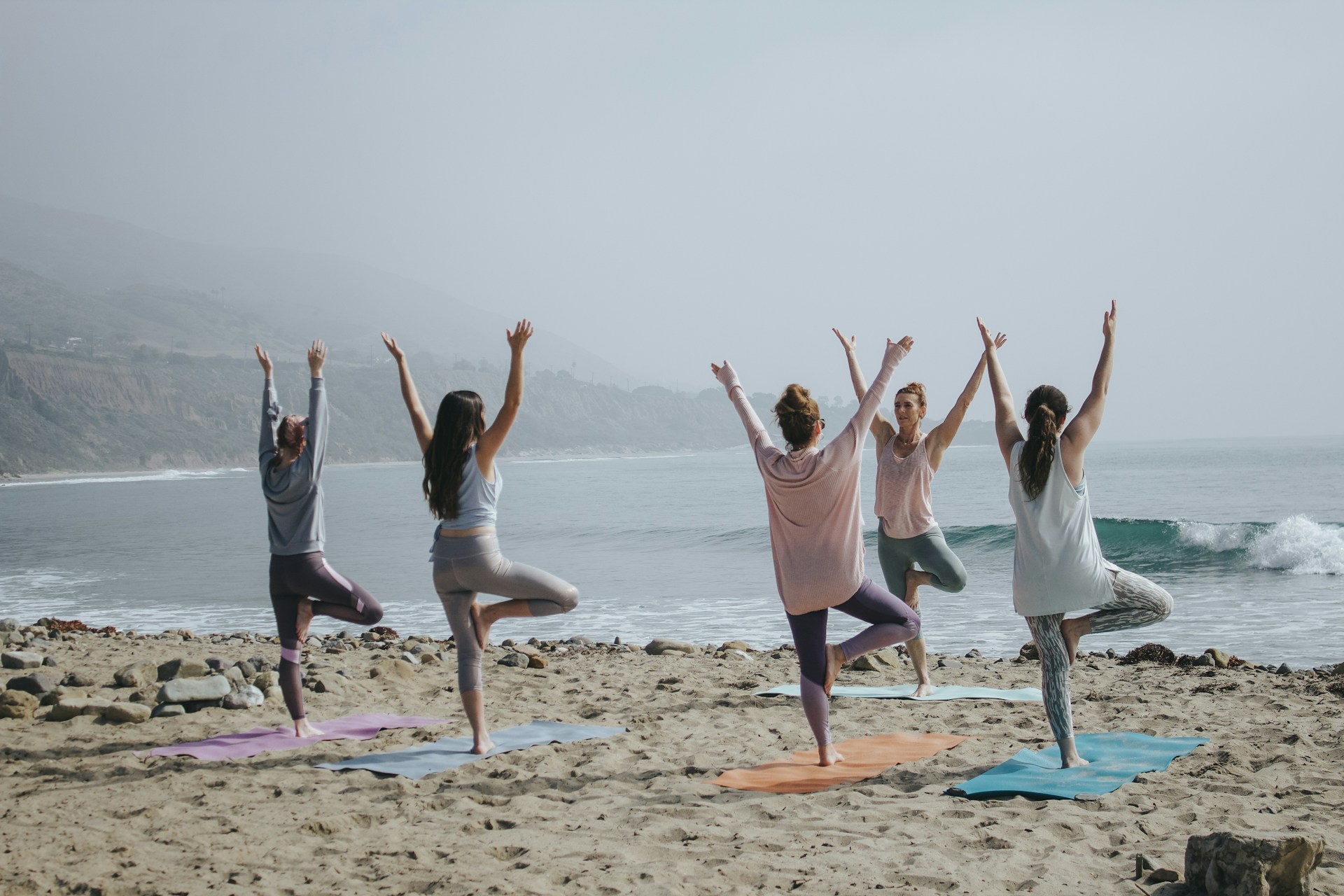
Solo retreats still lead the category. More than a third are interested in going alone, and women continue to drive much of that momentum. But going solo no longer means withdrawing. Mostly the opposite. The majority of solo travelers are motivated by connecting with other cultures, and reconnecting with themselves.
That said, the fastest-growing way people want to connect on a retreat in 2026 is together. Couples retreats are up 26% year on year on the platform, growing more than four times faster than solo retreats and well ahead of women’s retreats. Among those drawn to connection-focused retreats, 30% would join one as a couple.
What’s shaping how people find and plan retreats.
Overall, 46% of travelers still find retreat inspiration from friends and family, but for Gen Z, social media has overtaken word of mouth entirely. Instagram (55%), TikTok (52%), YouTube (42%), and Facebook (39%) all rank higher than personal recommendations. Travel booking platforms are the third most popular source of inspiration.
What about AI?
Most of us today use AI to complete certain tasks, and planning retreats is no exception. Just 16% of U.S. travelers say they wouldn’t use AI for retreat travel at all, meaning most are already using it or open to it. Gen Z leads, with 17% expecting AI to play a central role in how they plan a wellness trip.
The use cases are practical:
- 62% would use it to research destinations
- 47% to find local experiences
- 41% to compare flights and routes
For all the advances in how travelers find and plan a retreat, what they want once they get there is still rooted in the place and its people. 87% say traveling sustainably matters to them, and that’s showing up in the choices they’re making to give back and tread more lightly:
- 49% want to support local businesses
- 47% will avoid overcrowded hotspots
- 40% will travel off-peak
- 38% will choose local guides
- 26% want to give back through volunteering
Most popular yoga retreat destinations.
As the reasons to retreat change, so does where we go. This year, practitioners are looking closer to home, betting on affordable hotspots, and taking long-haul trips to try something new.
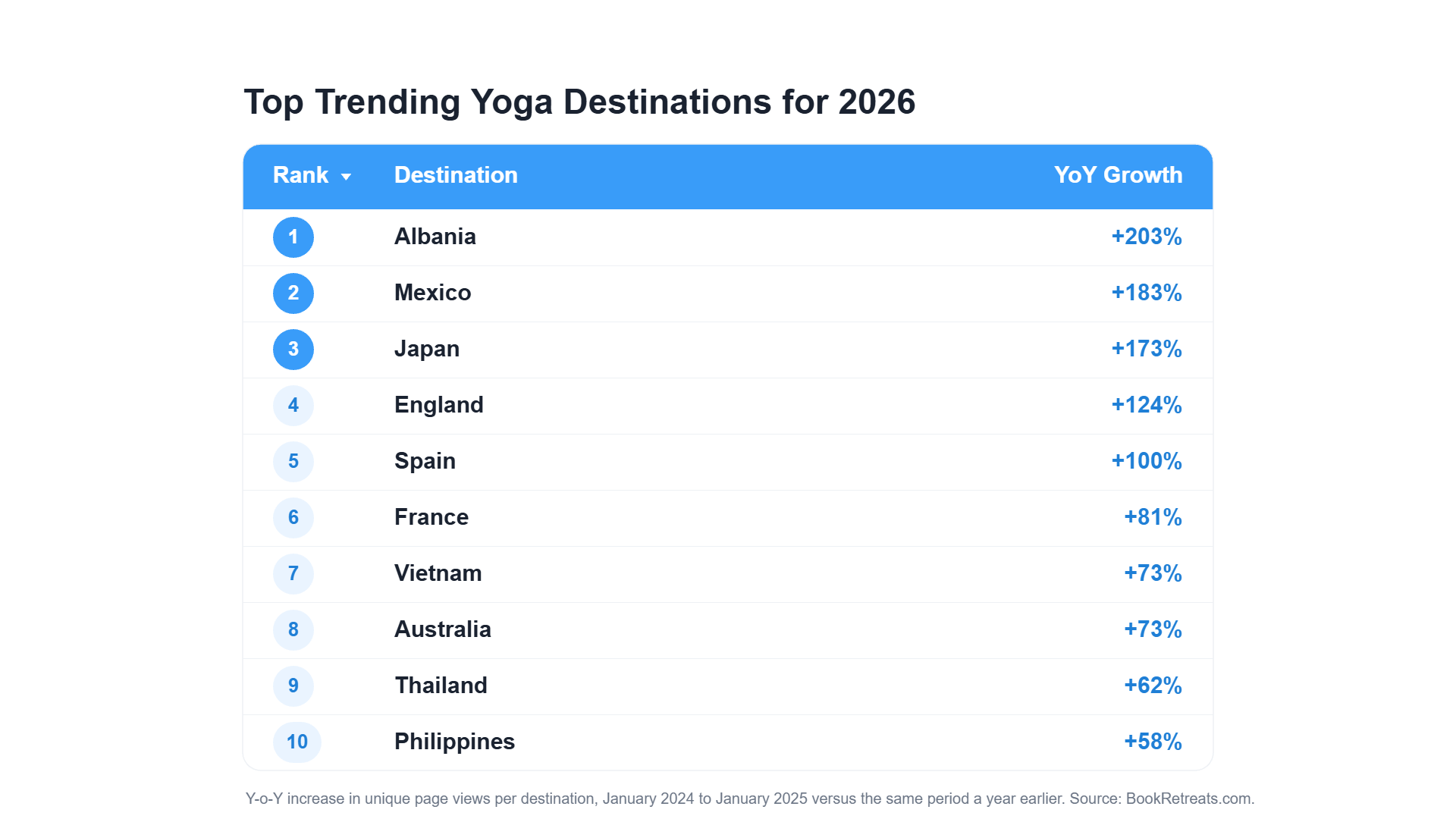
BookRetreats.com’s internal data crowns Albania the world’s top trending yoga destination of 2026, with traveler interest up 203%. Although not your typical yoga destination, its appeal is clear once you take a closer look.
Quiet alpine mountains for the hiking-and-yoga crowd, almost 300 miles of calm Adriatic and Ionian coast, and natural thermal springs in the south—all with far fewer crowds, and costs, than the rest of the Med.
Mexico (+183%) takes second, a Pacific surf-and-yoga hub with deep ancestral roots, from temazcal sweat lodges to plant-medicine ceremonies. Japan (+173%) is third, where forest bathing and onsen hot springs offer the slow, restorative reset the burnout numbers point to.
What all of this points to is a widening of what it means to teach and practice yoga. Retreats are becoming tied to changing identities and daily challenges, with how we spend our time on the mat driven by meaning and purpose.
The post Yoga Retreats in 2026: Trends, Motivations & the Future of Yoga Travel appeared first on Yoga Trade.